


Hitech Solar Supplier: Your Gateway to Intelligent Energy Independence
You've decided to go solar. It's a smart move, promising lower bills and a cleaner conscience. But as you start researching, you're bombarded with terms: Tier-1 panels, efficiency ratings, inverters, and… "hitech solar supplier." That last one sounds promising, but what does it really mean in 2024? Is it just marketing jargon, or does it represent a fundamental shift in how we generate and use power? Let's cut through the noise. Today's true hitech supplier doesn't just sell you hardware; they provide an integrated, intelligent energy ecosystem designed for resilience and maximum return on investment.
What Makes a Solar Supplier Truly "Hitech"?
Gone are the days when a supplier was judged solely on panel wattage. A modern hitech solar supplier distinguishes itself through a holistic technology stack focused on integration, intelligence, and independence.
- Hardware Excellence: This remains the foundation. It means high-efficiency, durable photovoltaic (PV) modules, often with performance guarantees of 25+ years. But it also extends to the supporting cast: advanced inverters that maximize DC-to-AC conversion and, crucially, sophisticated battery storage systems.
- Software & System Intelligence: This is the game-changer. A hitech system is managed by an intelligent Energy Management System (EMS). This software brain continuously monitors energy production, consumption, grid conditions, and weather forecasts. It autonomously decides when to store solar energy, when to use it, when to sell back to the grid, and when to draw from it—all to optimize for your specific goals, be it cost savings or carbon reduction.
- Grid Services & Market Participation: For commercial and industrial clients, a hitech supplier enables more than just offsetting bills. Advanced systems can participate in grid services like frequency regulation or demand response, turning your energy assets into a new revenue stream.
This is precisely where a company like Highjoule has carved its niche. Since 2005, we've evolved from a component provider to a global solutions architect. Our focus is on delivering intelligent, integrated storage-first systems. We don't just see a solar array; we see a potential microgrid. For a residential customer in California or a factory in Bavaria, our Highjoule HPS (Hybrid Power Station) series acts as the central nervous system, seamlessly coupling solar production with our high-cycle-life lithium iron phosphate (LiFePO4) batteries and our Adaptive EMS platform. This ensures every kilowatt-hour you produce is used with strategic intent.
Beyond Panels: The Hitech Heart is in the System Intelligence
Think of your solar panels as diligent workers harvesting raw materials (sunlight). The inverter is the foreman, converting it into something usable (AC electricity). But without a smart plan, that valuable output can be wasted. This is the critical challenge: solar production and energy demand are often out of sync.
The sun peaks at noon; many homes and businesses peak in demand in the early morning and evening. Without storage, excess solar energy is exported to the grid at low rates, only for you to buy back expensive power later. The U.S. Energy Information Administration (EIA) notes that retail electricity prices continue to exhibit volatility and time-of-use structures, making this mismatch costly.
A hitech supplier solves this at the system level. Here’s how an intelligent setup works:
| Time of Day | Solar Production | Energy Need | Action by Hitech System (e.g., Highjoule Adaptive EMS) |
|---|---|---|---|
| Midday | High | Low | Charges battery storage, powers immediate loads, exports excess only if grid price is favorable. |
| Evening Peak | Low/None | High | Discharges stored battery energy to avoid drawing from the high-priced grid. |
| Night | None | Low/Medium | Draws from battery reserve or grid (during low-cost, off-peak hours if battery is low). |
This dynamic optimization is what delivers true value. For our commercial clients, Highjoule's systems can be configured for peak shaving, dramatically reducing demand charges—a often-overlooked but substantial portion of industrial electricity bills.

Image: A modern commercial solar installation paired with intelligent monitoring software. (Source: Unsplash)
Case Study: A German Manufacturing Plant's Journey to Resilience
Let's ground this in reality with a project from our European operations. A mid-sized automotive parts manufacturer near Stuttgart faced twin pressures: rising energy costs and corporate mandates to reduce carbon footprint. Their existing rooftop solar, installed years prior, was underperforming relative to its potential.
The Challenge: High grid dependency, significant evening energy use, and no strategy for volatile energy markets.
The Hitech Solution from Highjoule: We conducted a full audit and proposed a system upgrade focused on integration and intelligence:
- We expanded the existing PV capacity with higher-efficiency bifacial modules.
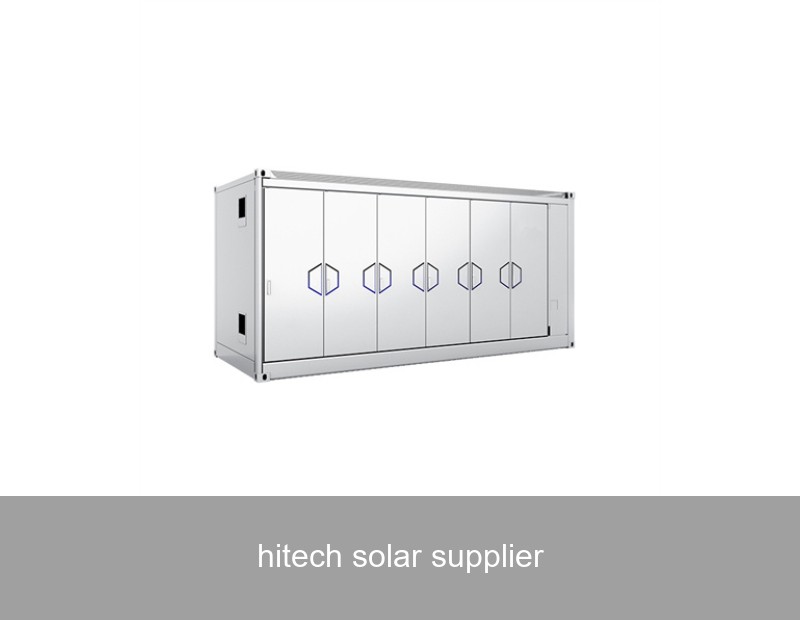
- The core upgrade was a containerized Highjoule C-BESS (Commercial Battery Energy Storage System) with 500 kWh capacity and a 250 kW inverter.
- The entire plant's energy flow was placed under the control of our Adaptive EMS, programmed with the client's specific cost and sustainability targets.
The Data-Driven Results (12 months post-installation):
- Grid Independence: Increased solar self-consumption rate from 35% to over 80%.
- Cost Savings: Achieved a 40% reduction in overall electricity costs, with demand charges slashed by 60%.
- Resilience: The system can island critical production lines during grid outages, preventing costly downtime.
- Sustainability: Achieved an additional 25% reduction in scope 2 carbon emissions.
This case exemplifies the hitech supplier difference: a legacy solar asset was transformed into a smart, revenue-protecting energy asset through integrated storage and intelligence.
Future-Proofing Your Investment: Key Trends from a Hitech Partner
Partnering with a forward-looking supplier ensures your system isn't obsolete in five years. Here are key trends we at Highjoule are integrating today:
1. AI-Optimized Energy Forecasting
Next-generation EMS platforms use machine learning to refine predictions of solar yield and consumption patterns, making dispatch decisions even more precise. The National Renewable Energy Laboratory (NREL) highlights AI's growing role in optimizing renewable integration.
2. Vehicle-to-Grid (V2G) Readiness
Your fleet or employee electric vehicles are mobile batteries. Hitech systems are being designed with bidirectional charging capabilities, allowing EVs to stabilize the building's microgrid or provide backup power.
3. Cybersecurity by Design
As energy systems become more connected, they become targets. A credible hitech supplier prioritizes hardware and software security from the ground up, ensuring your energy independence doesn't become a vulnerability.

Image: A technician commissioning a large-scale battery storage system, a core component of modern hitech solar projects. (Source: Unsplash)
Choosing Your Hitech Solar and Storage Partner
So, how do you select a partner who delivers on the "hitech" promise? Ask these questions:
- Do you offer integrated storage solutions with your solar designs, or are they separate, bolt-on components?
- What is the capability of your Energy Management Software? Can it perform automated, goal-based optimization?
- Can you provide case studies with verified performance data, not just installation photos?
- What is your long-term support and software update policy? Technology evolves, and your system should too.
At Highjoule, our conversations with clients—whether for a residential community in Texas or an industrial microgrid in the Netherlands—start with these principles. We believe in designing systems that are smart, efficient, and sustainable from day one, ensuring you own not just a solar array, but a future-proof energy asset.
Given the rapid evolution of energy markets and technology, what specific energy goal—be it absolute cost predictability, 100% backup for critical operations, or achieving net-zero status—is driving your consideration of a solar investment today?
 Inquiry
 Online Chat