


Understanding Home Battery Backup System Cost: A Smart Investment for Energy Independence
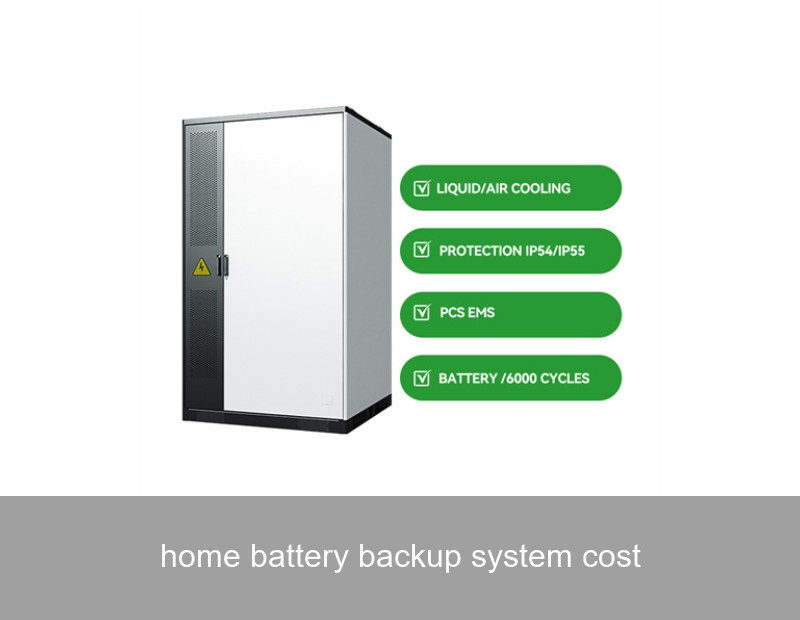
If you're a homeowner considering solar panels or simply worried about increasing power outages, you've likely asked the question: "What does a home battery backup system cost?" It's a common starting point, but the true value goes far beyond the initial price tag. Today, we're diving deep into the factors that shape the cost of home energy storage, transforming it from a mysterious expense into a clear, long-term investment for your comfort, security, and wallet. As a leader in advanced energy storage since 2005, Highjoule is here to guide you through this decision with clarity.
Table of Contents
- Breaking Down the Cost: More Than Just a Battery Box
- The Phenomenon: Why Home Battery Demand is Skyrocketing
- The Data: Real Numbers Behind the Investment
- Case Study: The Smith Family in California
- The Highjoule Solution: Intelligent, Efficient, and Sustainable
- Seeing the Long-Term Value: ROI and Peace of Mind
- Your Next Step Towards Energy Independence
Breaking Down the Cost: More Than Just a Battery Box
When we talk about home battery backup system cost, we're discussing a complete solution. Think of it like buying a car; the sticker price includes the engine, wheels, and interior, but the real cost of ownership involves fuel, maintenance, and insurance. Similarly, a battery system's total cost encompasses several key components:
- The Battery Itself (Storage Capacity): Measured in kilowatt-hours (kWh), this is your "fuel tank." A larger capacity (e.g., 10 kWh vs. 15 kWh) stores more energy for longer outages or greater daily use, directly impacting price.
- The Inverter/System Architecture: This is the brain and nervous system. It manages energy flow between the grid, your solar panels, the battery, and your home. Advanced, hybrid inverters that can do this seamlessly are a critical part of the package.
- Installation & Labor: This includes electrical work, mounting, permitting, and interconnection approval from your local utility. Complexity, home wiring, and local labor rates vary widely.
- Additional Equipment & Software: This includes critical load panels, upgraded electrical meters, and the all-important energy management system (EMS) software that lets you monitor and control your power.
For a robust and future-proof system, partnering with an experienced provider like Highjoule ensures all these components are expertly integrated. Our EcoSage Home series is designed for seamless compatibility, reducing integration complexity and hidden costs.
The Phenomenon: Why Home Battery Demand is Skyrocketing
Across Europe and the U.S., a perfect storm is driving homeowners to explore backup power. It's not just about occasional storms anymore. We're seeing more frequent grid instability, rising electricity rates, and a powerful desire to maximize self-consumption of rooftop solar energy. Without a battery, excess solar power you generate during the day often gets sold back to the grid at a low rate, only for you to buy it back at night at a higher price—a cycle that diminishes your solar investment.

Image: A modern home energy system with solar and storage. Credit: Unsplash.
The Data: Real Numbers Behind the Investment
Let's talk specifics. According to a 2023 report by the U.S. Department of Energy, the average installed cost for a residential battery storage system can range significantly. In the U.S., a typical 10-13 kWh system might have a gross cost between $12,000 and $20,000 before incentives. In Germany or the UK, prices are often comparable, influenced by local market dynamics and equipment choices.
However, the net cost is what truly matters. Governments are actively encouraging adoption through substantial incentives. In the U.S., the federal Investment Tax Credit (ITC) now covers 30% of the cost of a battery installed alongside solar. Many states, like California and Texas, have additional rebates. Similarly, countries like Italy, Austria, and parts of the UK offer grants or tax benefits. These can reduce your net home battery backup system cost by thousands.
| System Size (kWh) | Estimated Gross Cost Range (USD) | Potential Net Cost After 30% ITC* |
|---|---|---|
| 10 kWh | $12,000 - $16,000 | $8,400 - $11,200 |
| 13 kWh | $15,000 - $20,000 | $10,500 - $14,000 |
| 15+ kWh | $18,000 - $25,000+ | $12,600 - $17,500+ |
*Example based on U.S. Federal ITC. Local incentives will vary.
Case Study: The Smith Family in California
Let's make this real. The Smiths in Sacramento installed a 12.8 kWh Highjoule EcoSage Home battery alongside their existing solar panels in early 2023. Their total installed cost was $17,500.
- Federal ITC (30%): -$5,250
- California SGIP (Self-Generation Incentive Program) Rebate: -$3,000
- Net System Cost: $9,250
In its first year, the system provided backup during 4 grid outages totaling 22 hours. More importantly, by storing excess solar and using it at night, the Smiths reduced their electricity bill by an average of 85%, saving about $1,800 annually. This translates to a simple payback period on their net investment of just over 5 years—and the battery has a 12-year warranty. The peace of mind during wildfire-season blackouts? Priceless.
The Highjoule Solution: Intelligent, Efficient, and Sustainable
At Highjoule, we believe the right battery system is an intelligent asset, not just an expense. Our EcoSage Home series is engineered to optimize every dollar of your investment. What sets our systems apart in the cost-value equation?
- Ultra-High Efficiency (>96% Round-Trip): For every 10 kWh you put in, you get over 9.6 kWh out. Competitive systems can waste 10% or more. Over 15 years, this efficiency gap represents a massive amount of "lost" solar energy you've already paid for.
- Scalable & Modular Design: Start with what you need and afford. Our modular architecture allows you to easily add more battery capacity later as your needs or budget grow, protecting your initial investment.
- Advanced AI-Powered Energy Management: Our Horizon OS doesn't just react; it learns. It predicts your usage patterns, weather, and utility rate schedules to autonomously charge and discharge your battery, maximizing self-consumption and savings, especially in regions with time-of-use rates.
- Unmatched Durability & Warranty: Built with premium lithium iron phosphate (LFP) cells, our batteries are renowned for safety, longevity (over 6,000 cycles), and stable performance across a wide temperature range, ensuring your investment lasts.

Image: Professional installation of a home battery unit. Credit: Unsplash.
Seeing the Long-Term Value: ROI and Peace of Mind
So, when evaluating home battery backup system cost, shift your perspective from price to value. A Highjoule system delivers a multi-faceted return on investment (ROI):
- Financial ROI: Bill savings via peak shaving and self-consumption, increased property value, and protection against volatile energy prices.
- Reliability ROI: Uninterrupted power for critical loads (refrigeration, medical equipment, lighting, WiFi) during outages. As noted by the U.S. Energy Information Administration, the frequency and duration of power interruptions are a growing concern.
- Sustainability ROI: Maximizing your use of clean, self-generated solar power, reducing your carbon footprint, and contributing to grid stability.
Your Next Step Towards Energy Independence
The journey to understanding your specific home battery backup system cost is unique to your home, energy goals, and local landscape. The best way to move from a ballpark figure to a precise, personalized plan is to consult with an expert. Highjoule's network of certified installers can provide a detailed assessment of your home's energy profile, explain all applicable incentives, and show you a clear projection of costs and savings.
What specific energy challenge—be it unpredictable bills, frequent outages, or a desire to go greener—is motivating you to look into a home battery backup system today?
 Inquiry
 Online Chat