


Home Solar System Energy Storage Cabinet: The Key to Unlocking Energy Independence
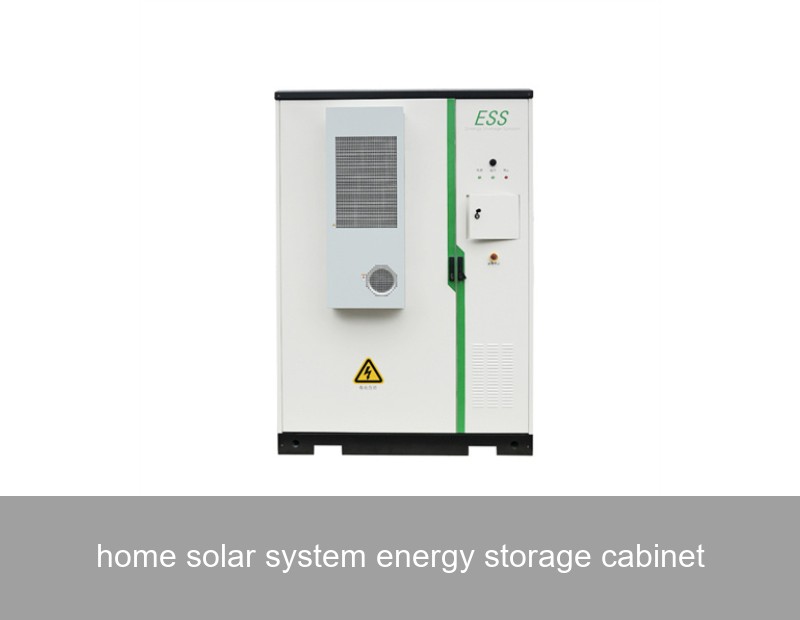
You've made the smart investment in solar panels for your home. You see them on your roof, silently converting sunlight into electricity, and you feel good about lowering your carbon footprint and your energy bills. But have you ever wondered what happens to all that beautiful, clean energy when the sun goes down, or when your household consumption is low? This is where the modern home solar system energy storage cabinet comes in—transforming a simple solar array into a resilient, 24/7 power plant for your home. Let's explore how this technology is reshaping energy independence across homes in Europe and the United States.
Table of Contents
- The Solar Dilemma: Generating Power When You're Not Home
- What Exactly is a Home Solar Energy Storage Cabinet?
- The Tangible Benefits: More Than Just Backup Power
- A Real-World Case: The Smith Family in California
- Choosing the Right System: Key Considerations
- The Highjoule Solution: Intelligent Storage for Modern Homes
- The Future of Home Energy: What's Next?
The Solar Dilemma: Generating Power When You're Not Home
Here's a common scenario for solar homeowners: peak solar production happens between 10 AM and 3 PM. For many families, this is when the house is empty—parents are at work, kids are at school. Without a storage solution, this excess energy is fed back to the grid, often at a lower rate than the cost to purchase electricity later in the evening. Then, as the sun sets and everyone returns home, turning on lights, appliances, and heating systems, the home must draw expensive power from the grid. This mismatch is the fundamental challenge a home solar system energy storage cabinet is designed to solve.

According to data from the U.S. Department of Energy, the residential solar market continues to grow, but the addition of storage is what truly maximizes the value of these installations, both economically and in terms of grid resilience.
What Exactly is a Home Solar Energy Storage Cabinet?
Think of it as a sophisticated, high-capacity battery bank for your entire house, packaged in a safe, sleek, and self-contained unit. Unlike a collection of loose batteries, a modern energy storage cabinet is an integrated system. It typically includes:
- Battery Modules: The core, using advanced lithium-ion (like LiFePO4) chemistry for safety, longevity, and high cycle life.
- Built-in Power Conversion System (PCS): The "brain" that manages converting DC power from the batteries and solar panels to AC power for your home.
- Advanced Battery Management System (BMS): Continuously monitors cell voltage, temperature, and health to ensure optimal performance and safety.
- Thermal Management: An integrated cooling/heating system to keep the batteries at their ideal operating temperature.
- Grid Interface & Safety Features: Meets all local codes to safely disconnect from the grid during an outage (forming a "microgrid" for your home).
This all-in-one approach makes installation cleaner, safer, and more efficient than ever before.
The Tangible Benefits: More Than Just Backup Power
While keeping the lights on during a blackout is a huge advantage, the benefits of adding storage are multifaceted:
- Maximized Self-Consumption: Store your excess solar energy for use at night, increasing your energy independence from 30-50% to 70-90% or more.
- Reduced Electricity Bills: Avoid drawing power from the grid during peak, high-rate periods. This is crucial in regions with Time-of-Use (TOU) pricing.
- Backup Power Resilience: Provide essential or whole-home backup during grid outages, keeping your family safe and comfortable.
- Grid Support & Sustainability: By storing and using your own power, you reduce strain on the public grid and decrease reliance on fossil-fuel peaker plants.
A Real-World Case: The Smith Family in California
Let's look at a concrete example. The Smith family in Sacramento, California, installed a 10 kW solar system in 2020. Despite having solar, their bills remained high in the summer evenings due to air conditioning and California's TOU rates. In early 2023, they added a 13.5 kWh home solar system energy storage cabinet.
| Metric | Before Storage (2022 Avg.) | After Storage (2023 Avg.) | Change |
|---|---|---|---|
| Monthly Grid Import | 450 kWh | 85 kWh | -81% |
| Monthly Bill (Summer) | $220 | $22 (min. connection fee) | -90% |
| Self-Consumption Rate | 48% | 92% | +44 percentage points |
Furthermore, during a planned public safety power shutoff (PSPS) event in October 2023, the Smith's home remained fully powered for 14 hours. Their system automatically switched to backup mode, powering lights, refrigeration, internet, and critical circuits without interruption. This real data shows the transformative impact of integrating storage.
Choosing the Right System: Key Considerations
Not all storage cabinets are created equal. When evaluating options for your home, consider these factors:
- Usable Capacity & Power Rating: Capacity (kWh) is your "energy tank" size. Power (kW) determines how many appliances you can run at once. Ensure both match your home's needs.
- Battery Chemistry: Lithium Iron Phosphate (LiFePO4) is now the gold standard for home storage due to its superior thermal stability, long cycle life (often 6,000+ cycles), and lack of cobalt.
- Scalability: Can you easily add more battery modules later if your needs change (e.g., buying an EV)?
- Software & Intelligence: The system's software should allow for smart energy management—scheduling, monitoring, and potentially participating in grid services like virtual power plants (VPPs).
- Warranty & Degradation Guarantee: Look for a long warranty (10+ years) with a guaranteed end-of-warranty capacity (e.g., 70% after 10 years).

The Highjoule Solution: Intelligent Storage for Modern Homes
This is where Highjoule's expertise comes into play. As a global leader in advanced energy storage since 2005, we've engineered our Residential Energy Cabinet (REC Series) specifically to meet the demands of discerning homeowners in Europe and North America. Our systems are built on a foundation of safety, intelligence, and seamless integration.
The Highjoule REC cabinet features a modular LiFePO4 battery design, allowing for configurations from 10 kWh to 30 kWh to suit any home size. Its high-cycle, stable chemistry is backed by a 15-year warranty. What truly sets it apart is the Highjoule EnergyOS—an intelligent software platform that learns your household's energy patterns and automatically optimizes storage and discharge schedules to maximize savings. It can also integrate with smart home systems and, where available, connect to utility demand-response programs, turning your storage into a potential revenue stream.
Our cabinets are designed for easy installation, with a compact, outdoor-rated enclosure that fits discreetly next to your home. For homeowners looking to move beyond simple solar and toward true energy autonomy, the Highjoule REC provides a robust, future-proof solution. The International Energy Agency highlights the critical role of behind-the-meter storage in the clean energy transition, and Highjoule is proud to be at the forefront of this technology.
The Future of Home Energy: What's Next?
The integration of the home solar system energy storage cabinet is just the beginning. We are rapidly moving towards the "smart, electrified home," where storage acts as the central hub. Imagine your system automatically charging your electric vehicle with excess solar, or using your battery to support the local grid during a shortfall (and getting paid for it), all while ensuring your home has priority during an emergency. This level of integration and intelligence is the future.
So, as you consider the next step for your home's energy system, ask yourself: Is your solar investment working as hard as it could be for you, your wallet, and the planet? What would true energy security mean for your family?
 Inquiry
 Online Chat