


How Much Are Kehua Inverters? A Deep Dive into Cost, Value, and System Performance
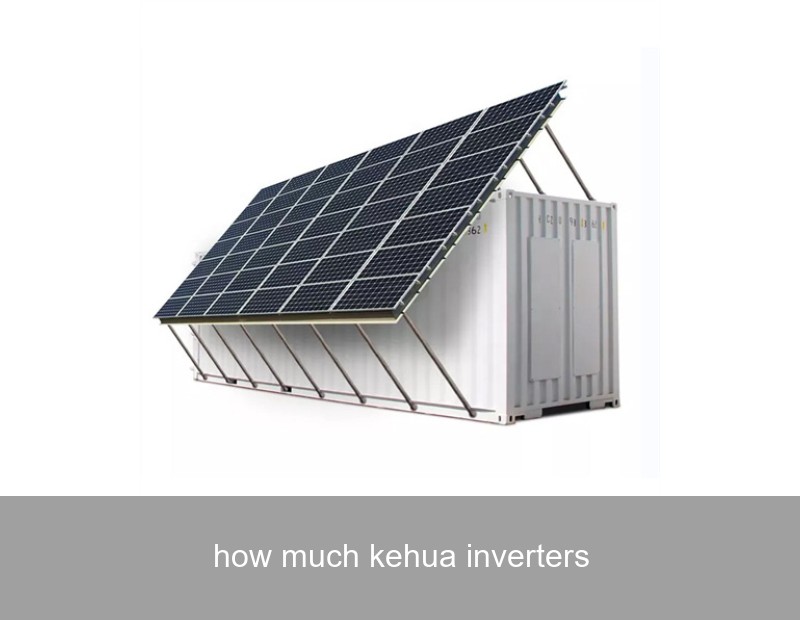
If you're planning a solar or solar-plus-storage installation, one question is almost inevitable: "How much are Kehua inverters?" It's a logical starting point. As a key component converting solar DC power to usable AC power, the inverter is the brain of your photovoltaic system. However, focusing solely on the upfront price of a single component like a Kehua, SMA, or SolarEdge inverter can be misleading. The true cost—and value—is found in the system's long-term performance, reliability, and seamless integration with batteries. As a global leader in advanced energy storage since 2005, Highjoule understands that the right inverter choice is critical for maximizing return on investment for commercial, industrial, and residential projects across Europe and the US.
Key Factors Influencing Kehua Inverter Prices
Kehua offers a range of inverters, from residential string inverters to large-scale commercial solutions. Their pricing isn't a single number but a spectrum influenced by several interconnected factors. Let's break them down.
1. Power Rating and System Scale
This is the most straightforward factor. Inverter capacity, measured in kilowatts (kW), directly correlates with cost. A residential 5-8 kW Kehua inverter for a home system will naturally cost significantly less than a 250 kW central inverter for a commercial warehouse. It's crucial to size your inverter correctly—oversizing can lead to unnecessary expense, while undersizing will clip your solar production and lose you money.
2. Inverter Type and Technology
The technological architecture of the inverter plays a huge role. Kehua produces:
- String Inverters: The most common for residential and commercial use. Prices vary based on efficiency ratings (e.g., 98% vs. 99%) and features.
- Hybrid Inverters: These are designed with built-in battery connectivity. A Kehua hybrid inverter will have a higher price point than a standard string model because it includes the sophisticated controls needed to manage energy flow from solar, batteries, and the grid. This is where system planning becomes vital.
3. Advanced Features & Functionality
Think of this as the "trim level" on a car. Inverters with advanced grid-support functions (critical for utility approval), superior weatherproofing (IP65 ratings), integrated monitoring software, or the ability to form a microgrid will command a premium. These features, however, often pay for themselves in system resilience and operational insight.
4. Market, Logistics, and Installation
The "how much" also depends on where you are. A Kehua inverter's base price in Europe may differ from the US due to import duties, local distributor margins, and shipping costs. Furthermore, the quoted price rarely includes installation, electrical work, permits, and the essential balance of system (BOS) components. According to the National Renewable Energy Laboratory (NREL), soft costs like installation, permitting, and customer acquisition can constitute a major portion of total system expenses.
| Inverter Type | Power Range | Primary Application | Key Consideration |
|---|---|---|---|
| Residential String | 3-10 kW | Single-family homes | Often part of a packaged system price; ensure battery compatibility if planning future storage. |
| Commercial String | 10-250 kW | Small/Medium Businesses, Agri-solar | Scalability and remote management features are crucial for operational efficiency. |
| Hybrid Inverter | 5-30 kW | Homes & Businesses with Storage | Price is higher, but enables energy independence. Must be paired with a compatible battery system. |

Image: Proper installation and integration are key to inverter performance and safety. (Source: Unsplash)
Real-World Case Study: A German Bakery's Sweet Savings
Let's move from theory to practice. A family-owned bakery in Bavaria, Germany, was facing rising energy costs and wanted to stabilize operations. They installed a 45 kW solar array with a Kehua commercial string inverter. The inverter equipment cost was a clear line item, but the real story unfolded over time.
The system generated ample solar power during the day, but the bakery's highest energy demand for ovens and cooling started before sunrise and continued after sunset. They were still reliant on the grid during peak hours. Simply asking "how much is the Kehua inverter?" didn't solve their core problem. The solution was integrating a Highjoule H2 Series Battery Energy Storage System (BESS). Our smart storage system, coupled with advanced energy management software, was seamlessly integrated with their existing Kehua inverter. The system now stores excess solar energy produced midday and dispatches it during the bakery's morning and evening peaks.
The Result? The bakery achieved a 70% reduction in grid electricity consumption during expensive peak tariff periods. Their overall energy bill was cut by over 40% annually, protecting them from volatile energy prices. The initial investment in the integrated solar-plus-storage system, including the Highjoule BESS, is projected to pay for itself in under 7 years—a figure that became far more meaningful than the isolated cost of any single component.
Thinking Beyond the Inverter: The System Integration Imperative
The bakery's case highlights the pivotal lesson: an inverter is a component, not a complete solution. Its ultimate value is determined by how well it communicates and collaborates with other system parts, especially batteries. A mismatch can lead to inefficiency, reduced battery lifespan, or even system failure.
This is the challenge Highjoule was founded to solve. We don't just supply batteries; we provide intelligent, integrated storage systems. Our expertise lies in ensuring that whether you choose a Kehua, SMA, or another leading inverter, it works in perfect harmony with our storage technology to deliver reliability, safety, and maximum financial return.
The Highjoule Solution: Intelligence That Maximizes Your Investment
For clients considering Kehua inverters, Highjoule adds the critical layer of intelligence and optimization. Our Energy Management System (EMS) acts as the master conductor, making real-time decisions to optimize energy flow. It considers solar production, battery state of charge, building load, and even utility rate structures (like time-of-use rates common in California or parts of Europe) to decide when to store, when to discharge, and when to import.
Our H-Series BESS products, designed for commercial and industrial scale, feature high-cycle life batteries and modular architecture. They are built to interface smoothly with a wide range of inverters, providing the flexibility system designers need. For residential and small commercial applications, our integrated storage solutions take the guesswork out of compatibility, offering a pre-engineered, high-performance package.

Image: A modern battery energy storage system (BESS) like Highjoule's H-Series, crucial for maximizing solar investment. (Source: Unsplash)
Making the Right Choice for Your Energy Future
So, how much are Kehua inverters? The answer is: it depends on your specific needs, but that's only the first question. The more important questions are: What is the total cost of achieving my energy resilience and savings goals? How will all the components work together over the next 20+ years?
As you evaluate your project, we encourage you to shift the conversation from component cost to system value. What specific energy challenges are you hoping to solve—reducing demand charges, achieving backup power, or meeting sustainability targets?
What would your energy profile look like if you could intelligently control every kilowatt-hour, and how might that transform your operational costs or energy independence?
 Inquiry
 Online Chat