


How Much Solar Panels Cost: A Realistic Guide for Homeowners and Businesses
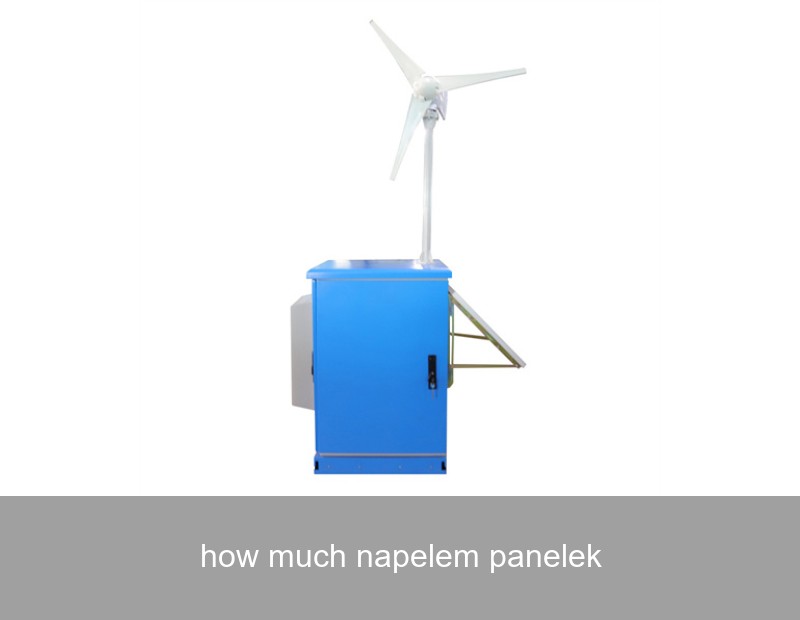
So, you're thinking about going solar. It's a smart move, promising energy independence and lower bills. But the first question that pops up is almost always: "How much do solar panels cost?" It's a great question, but the answer isn't a single number. The final price tag depends on a fascinating interplay between your energy needs, your property, local incentives, and the quality and intelligence of the system itself. As a product expert at Highjoule, a leader in advanced energy storage since 2005, I see this daily. Let's demystify the costs, look beyond just the panels, and explore how a smart system design can maximize your return.
Table of Contents
Breaking Down the "Sticker Shock": System Components & Variables
Asking "how much for solar panels" is like asking "how much for a car." The range is vast. In the U.S. and Europe, a typical residential installation can range from $15,000 to $35,000 before incentives, while commercial systems scale from six to seven figures. Why such a spread? Let's look at the key factors.
1. Core Hardware: The Visible Parts
This is what most people think of:
- Solar Panels (PV Modules): Prices vary by efficiency and type (monocrystalline, polycrystalline). Higher efficiency panels cost more but produce more power in limited space.
- Inverters: The brain that converts DC solar power to usable AC power. String inverters are cost-effective; microinverters or power optimizers (better for shaded roofs) add cost but increase yield and monitoring.
- Mounting & Racking: The unsung hero that secures everything to your roof or ground. Quality here ensures longevity.
2. The "Soft Costs": Installation & Permits
Often 50-60% of the total! This includes labor, permitting fees, grid connection applications, and the installer's profit margin. These costs are highly regional.
3. The Game Changer: Energy Storage
This is where the conversation evolves. A battery storage system, like those we specialize in at Highjoule, is an additional investment but fundamentally changes your solar economics. It allows you to store excess daytime energy for use at night, during peak rate periods, or during a grid outage.
Beyond the Panels: The Critical Role of Storage and Intelligence
Think of solar panels as a fantastic energy generator. But without a way to manage and time-shift that energy, you're leaving significant value on the table—especially with time-of-use rates becoming common. This is where an integrated Battery Energy Storage System (BESS) becomes crucial.
A high-quality BESS doesn't just store energy; it intelligently manages it. For example, Highjoule's Home Energy Hub uses advanced algorithms to learn your consumption patterns, weather forecasts, and utility rate schedules. It automatically decides when to charge the batteries, power your home, or export to the grid for maximum financial return. This intelligence turns your system from a passive generator into an active energy asset.
Image: A modern home solar plus storage installation. Source: Unsplash

A Real-World Case Study: The Munich Bakery
Let's move from theory to practice with a real example from our European operations. A family-run bakery in Munich, Germany, faced rising energy costs and wanted to stabilize overheads. They installed a 50 kWp solar array.
- Phenomenon: Their ovens and refrigeration ran heavily in the early morning and evening, times with little solar production.
- Data: Without storage, they were self-consuming only 35% of their solar generation, exporting the rest at a lower feed-in tariff and buying expensive grid power during peak hours.
- Solution: They added a Highjoule C&I Stack 100, a modular commercial battery system with 100 kWh of storage capacity. Our intelligent energy management system (EMS) was programmed to prioritize charging the batteries during midday solar peaks and discharging during their morning and evening operational peaks.
| Metric | Before Highjoule BESS | After Highjoule BESS |
|---|---|---|
| Solar Self-Consumption | 35% | 85% |
| Grid Energy Purchase During Peak Hours | Reduced by 78% | |
| Estimated Payback Period | ~10 years (solar only) | ~6.5 years (solar + storage) |
Insight: The added cost of the storage system was offset by dramatically higher savings, shortening the overall payback period and providing backup power—a critical need for a business with refrigerated goods. This case shows that the optimal system cost is the one that delivers the highest long-term value, not the lowest upfront price.
The Highjoule Solution: Integrated Intelligence for Optimal Value
At Highjoule, we don't just sell components; we provide intelligent, integrated power solutions. For over 18 years, we've focused on how storage and software unlock the full potential of renewable energy.
For homeowners, our Home Energy Hub is a seamless, all-in-one unit combining a hybrid inverter, scalable battery storage, and our proprietary OS. For businesses and microgrids, our C&I Stack series offers modular, containerized solutions that can scale from hundreds of kWh to MWh, all managed by our advanced EMS platform.
Our systems are designed to future-proof your investment. With software-upgradable features, they can adapt to new utility tariffs, participate in grid services (like virtual power plants), and integrate with upcoming smart home technologies. When calculating "how much solar panels cost," considering a system with this level of intelligence is key to a resilient and profitable energy future.
Image: A technician monitoring a commercial-scale battery storage system. Source: Unsplash

Calculating Your True Cost: It's About Value, Not Just Price
To move towards a realistic quote, you need to assess your unique situation:
- Analyze Your Energy Bill: Look at your consumption (kWh) and, crucially, your rate structure (flat, tiered, or time-of-use). The U.S. Energy Information Administration provides great context on electricity price factors.
- Evaluate Your Site: Roof space, orientation, shading. A professional site audit is essential.
- Define Your Goals: Maximize savings? Achieve backup power? Reduce carbon footprint? Your goals dictate the ideal system design.
- Research Local Incentives: This is huge. In the U.S., the federal Investment Tax Credit (ITC) covers 30% of solar + storage costs. Many states and utilities offer additional rebates. In Europe, programs vary by country but can be equally significant.
Ultimately, the most cost-effective system is one perfectly tailored to your load profile and local conditions. A cheap, oversized, or poorly integrated system will underperform for decades. A slightly higher initial investment in quality components and intelligent software, like that built into Highjoule systems, pays dividends in performance, reliability, and total lifetime value.
So, What's Your Next Step?
Instead of just searching for "how much napelem panelek," I encourage you to ask a more powerful question: "What is the value of achieving true energy resilience and control for my home or business, and what system design will deliver that most effectively over the next 25 years?" What energy challenge is most pressing for you right now—unpredictable bills, reliability concerns, or simply taking a tangible step towards sustainability?
 Inquiry
 Online Chat