


How Much New Power Can Solar Energy Realistically Generate for Your Grid?
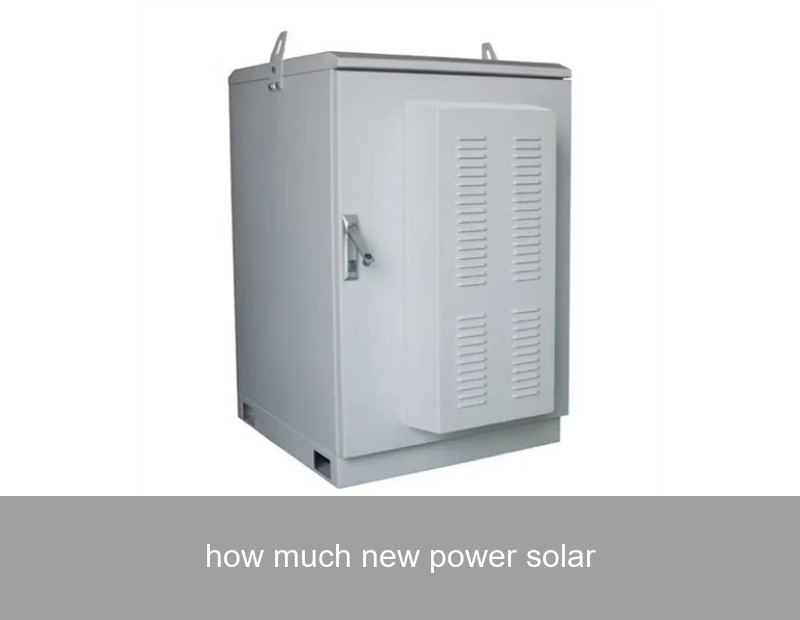
You've seen the headlines: solar capacity is booming. Rooftops are gleaming with panels, and vast solar farms are cropping up. But when you're a business owner, facility manager, or an energy-conscious homeowner, the big question isn't just about installation—it's about how much new power solar can truly deliver to your operation. The answer goes far beyond the panels themselves. It's about unlocking the full, reliable potential of every kilowatt-hour the sun provides, and that's where the future of energy truly shines.
Table of Contents
- The Phenomenon: The Solar Surge and Its Hidden Challenge
- The Data: Quantifying Solar's Potential and the Intermittency Gap
- The Case Study: A European Logistics Hub's Journey to True Energy Independence
- The Solution: Beyond Generation to Intelligent Energy Management
- Highjoule's Role: Delivering the Complete Power Solution
- The Future of Your Energy: Questions to Consider
The Phenomenon: The Solar Surge and Its Hidden Challenge
Across Europe and the U.S., the transition to renewables is accelerating. Solar photovoltaic (PV) technology is at the forefront, praised for its decreasing costs and clean energy profile. However, a fundamental mismatch exists. Solar generation peaks during midday, while energy demand for many commercial and industrial operations often spikes in the morning, evening, or remains constant. This creates a critical dilemma: you can generate a lot of new solar power, but if it's not available when you need it most, its value diminishes. This intermittency is the single largest barrier to understanding how much new power solar can *reliably* contribute.

Image Source: Unsplash - A visual representation of solar generation timing.
The Data: Quantifying Solar's Potential and the Intermittency Gap
Let's look at the numbers. In 2023, the U.S. added a record 32.4 gigawatts (GW) of solar capacity, enough to power millions of homes *in theory*. Similarly, Europe saw solar become its fastest-growing energy source. Yet, the "capacity factor" – the ratio of actual output to potential output – for utility-scale solar in the U.S. hovers around 24%. This isn't an efficiency flaw; it's a physics fact. The sun doesn't shine 24/7.
This means without storage, a 1 MW solar array might only provide an average of 0.24 MW of power to the grid consistently. The "new power" is real, but its delivery is time-constrained. For an entity wanting to maximize self-consumption, reduce peak demand charges, or ensure backup power, this gap is where financial and operational goals meet a technical roadblock.
| Time of Day | Solar Generation | Commercial Building Demand | Result without Storage |
|---|---|---|---|
| 6:00 - 9:00 AM | Low to Rising | High (Start of Operations) | Grid Import Needed |
| 10:00 AM - 3:00 PM | Peak | Moderate to High | Potential Surplus, Grid Export |
| 4:00 - 8:00 PM | Falling to Low | High (Late Operations, Lighting) | Significant Grid Import |
The Case Study: A European Logistics Hub's Journey to True Energy Independence
Consider the real-world example of a major logistics distribution center in Germany. Facing rising energy costs and ambitious sustainability targets, they installed a 2.5 MW rooftop solar array. Initially, they were exporting over 40% of their midday generation to the grid at low feed-in tariffs, while still purchasing expensive peak power in the early evening for their sorting operations.
Their goal shifted from simply generating new power solar to *controlling* it. By integrating a 1.8 MWh/1 MW Highjoule IntelliBESS battery storage system with advanced energy management software, they transformed their energy profile. The system now:
- Stores midday surplus for use during the high-demand evening peak, slashing demand charges.
- Provides backup power for critical cooling systems, enhancing resilience.
- Participates in grid-balancing programs for additional revenue.
The result? Their on-site solar consumption rate jumped from 60% to over 92%. They reduced their annual energy costs by 31% and secured a predictable energy budget. This case illustrates that the true measure of how much new power solar provides is not in raw generation, but in usable, dispatchable energy.
The Solution: Beyond Generation to Intelligent Energy Management
Maximizing solar's value requires a system-level approach. The key components are:
- Advanced Battery Energy Storage Systems (BESS): The heart of the solution. Modern lithium-ion batteries, like those in Highjoule systems, offer high efficiency, long cycle life, and rapid response.
- Intelligent Energy Management System (EMS): The brain. This software platform forecasts solar production and load demand, optimizing charge/discharge cycles for economics and resilience.
- Seamless System Integration: The nervous system. Ensuring inverters, meters, and building management systems communicate flawlessly is critical for performance.

Image Source: Unsplash - Representative image of a commercial BESS installation.
Highjoule's Role: Delivering the Complete Power Solution
Since 2005, Highjoule has been at the forefront of solving this exact challenge. We don't just supply components; we provide intelligent, integrated systems that answer the core question of how much new power solar can work for you. Our flagship IntelliBESS platform is designed for commercial, industrial, and microgrid applications, featuring:
- Scalable Architecture: From 100 kWh to multi-megawatt installations, systems can grow with your needs.
- All-Climate Resilience: Engineered for reliable performance from Scandinavian winters to Southern U.S. summers.
- Grid Services Ready: Hardware and software capable of participating in frequency regulation and virtual power plant (VPP) programs, turning your storage asset into a revenue stream.
- Comprehensive Support: From initial feasibility analysis and system design to commissioning and long-term monitoring via our Highjoule Energy Portal.
For a large-scale agricultural cooperative in California, a Highjoule microgrid solution combining 4 MW of solar with 6 MWh of storage allows them to power irrigation and processing facilities entirely on renewable energy, even after sunset, fundamentally redefining their energy independence.
Key Technologies in a Highjoule Solar-Storage System
Understanding the technology stack helps clarify the value proposition:
- DC-Coupled Design (Optional): Increases overall system efficiency by directly storing solar DC power, reducing conversion losses.
- AI-Powered Forecasting: Our EMS uses weather and historical data to predict solar yield and optimize battery scheduling.
- Cybersecurity & Safety: Multi-layered protection protocols and UL-certified battery enclosures ensure safe, secure operation.
The Future of Your Energy: Questions to Consider
The conversation is evolving from kilowatts installed to kilowatt-hours managed. As you contemplate your organization's or community's energy future, the pivotal query isn't merely "how much new power solar can we generate?" but rather:
"How can we design an energy ecosystem that captures, stores, and intelligently deploys every bit of renewable power we produce, ensuring it's available precisely when and where we need it most?"
What is the single largest energy constraint you face today that a smarter, more resilient power system could solve?
 Inquiry
 Online Chat