


How Much Power Does Your Company Really Need? A Guide to Right-Sizing Energy
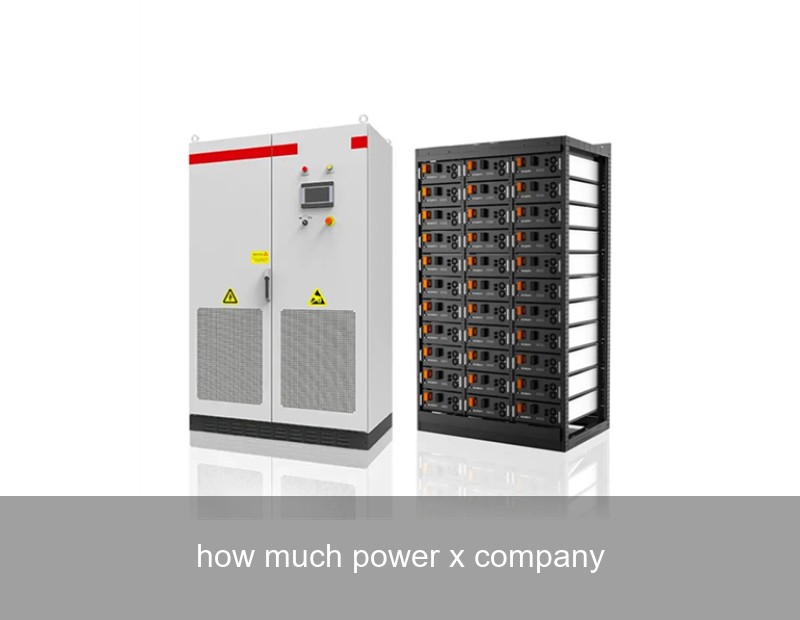
Table of Contents
If you're a business leader, facility manager, or homeowner investing in energy infrastructure, one question inevitably rises to the top: how much power does my company (or property) actually need? It's a deceptively simple query. Underestimate, and you risk operational disruption and costly upgrades. Overestimate, and you're saddled with oversized, inefficient systems and inflated capital expenditure. In today's climate of volatile energy prices and a push for sustainability, getting this calculation right isn't just about engineering—it's a critical financial and strategic decision.
The Universal Power Question: More Than Just a Number
Asking "how much power?" is like asking "how big should our warehouse be?" It depends on your daily flow, peak seasons, and growth plans. In energy terms, we separate two key concepts:
- Power (kW): The rate at which you use electricity at any instant—your demand. Think of it as the speed of a car. A large machine starting up creates a high power "spike."
- Energy (kWh): The total amount of electricity consumed over time—your consumption. This is the distance the car travels. It's what you see on your utility bill.
Most businesses focus only on energy (kWh) costs, but utility charges for peak power (kW) demand can constitute up to 30-50% of a commercial bill. This is where the real savings opportunity lies.
Understanding Your True Power Needs: The PAS Framework
Phenomenon: The Costly Double Bind
Businesses face a dual challenge: unpredictable demand charges from the grid and the increasing frequency of grid instability. A single monthly peak, often caused by coincidental operation of multiple high-power equipment, can set a punishing demand charge for the entire billing cycle. Simultaneously, to ensure resilience, many oversize their backup generators or solar arrays, leading to poor utilization and low ROI.
Data: The Numbers Behind the Strain
According to the U.S. Energy Information Administration (EIA), commercial electricity demand charges in some U.S. regions can exceed $15 per kW per month. For a facility with a 500 kW peak, that's $7,500 monthly, before energy consumption costs. In Europe, volatile wholesale prices have made peak shaving equally critical. The International Renewable Energy Agency (IRENA) highlights that integrating storage can reduce the levelized cost of electricity for commercial sites by up to 40% by optimizing self-consumption and grid interaction.
Case Study: A German Manufacturing Plant's Data-Driven Answer
Let's look at a real-world example. A mid-sized automotive parts manufacturer in Bavaria faced annual electricity costs of over €450,000, with nearly €140,000 attributed to demand charges. Their peak load of 800 kW occurred only 2-3 times a month, during simultaneous HVAC, compressor, and press line operation.
The Solution & Outcome: Instead of accepting these peaks, they deployed a tailored Highjoule Industrial BESS. The system's intelligent software continuously monitors facility load. When it detects a rapid rise toward the historical peak, it instantaneously discharges stored energy to "shave" the peak drawn from the grid.
| Metric | Before Highjoule BESS | After Highjoule BESS |
|---|---|---|
| Monthly Peak Demand | 800 kW | 650 kW (controlled) |
| Annual Demand Cost | ~€140,000 | ~€91,000 |
| Annual Energy Cost Savings | N/A | €18,000 (via time-of-use arbitrage) |
| ROI Period | N/A | 4.2 years |
Furthermore, the system provides seamless backup power for critical control systems during brief grid outages, preventing production line halts. The plant now has a clear answer to "how much power do we need from the grid?"—significantly less than before.

Image: A modern industrial battery energy storage system installation. Source: Unsplash (representative image)
The Smart Solution: Battery Energy Storage Systems (BESS)
A modern BESS is the cornerstone of answering the power question intelligently. It transforms a static power infrastructure into a dynamic, responsive asset. Here’s how:
- Peak Shaving: As seen in the case study, it cuts costly demand charges.
- Load Shifting: Stores cheap energy (e.g., from nighttime rates or solar midday surplus) for use during expensive peak periods.
- Backup Power: Provides instantaneous, clean backup, bridging gaps until generators start or as a primary UPS.
- Grid Services: For larger systems, revenue streams like frequency regulation can be explored.
Choosing the right BESS, however, is paramount. System chemistry, power rating (kW), energy capacity (kWh), degradation profile, and software intelligence must align perfectly with your specific load profile and goals.
How Highjoule Tailors the Answer to "How Much Power?"
Since 2005, Highjoule has been helping businesses across Europe and North America move from asking the question to implementing the solution. We don't believe in one-size-fits-all answers.
Our process begins with a deep dive into your energy analytics. Using granular utility data and, where possible, submetering, we build a digital twin of your energy consumption. This reveals not just "how much," but "when, where, and why" you use power.
We then design a system from our modular product lines:
- Highjoule Commercial & Industrial Series: Scalable, containerized or rack-mounted LiFePO4 systems (100 kW to 5 MW+) built for high-cycle, high-reliability duty.
- Highjoule Residential & Community Series: Integrated AC-coupled systems that optimize self-consumption of rooftop solar, provide whole-home backup, and participate in virtual power plants.
- Highjoule Microgrid Controller: The brain that orchestrates solar, storage, generators, and the grid, ensuring resilience and cost-optimal operation.
Our proprietary energy management software (EMS) is the key. It doesn't just react; it learns and forecasts, using weather data and schedule information to pre-charge batteries before a predicted peak or solar dip.

Image: Commercial solar plus storage installation. Source: Unsplash (representative image)
A Simple Framework to Start Calculating Your Needs
While a professional audit is essential, you can start with this framework:
- Gather Data: Collect 12 months of utility bills. Identify the highest "demand" or "capacity" charge (in kW).
- List Critical Loads: What equipment must run during an outage? Note their power ratings (kW) and estimated runtime.
- Analyze Solar (if applicable): Compare your solar production curve to your consumption curve. How much excess solar are you exporting?
- Define Goals: Prioritize: Is it bill savings (peak shaving), backup duration, or maximizing renewable use?
This exercise will clarify your priorities and provide a solid basis for a conversation with an expert.
So, What's the Next Question You Should Ask?
We've explored how to answer "how much power does my company need?" The more strategic question becomes: How can we transform our power profile from a fixed cost into a flexible, resilient, and efficient asset? The answer lies not in a single number, but in a smart system designed around your unique fingerprint of energy use.
What single energy cost or reliability issue keeps you up at night, and what would solving it enable your business to achieve?
 Inquiry
 Online Chat