


How Much Solar Plant Should I Install? A Data-Driven Guide for Businesses
"How much solar plant should I install?" It's the fundamental question every business owner, facility manager, or energy consultant faces at the start of their renewable journey. The answer, as you might suspect, is not a simple one-size-fits-all number of kilowatts. It's a strategic calculation that balances your energy appetite, your site's potential, your financial objectives, and increasingly, your need for energy resilience. In this guide, we'll demystify the process, moving from basic concepts to a practical framework, complete with real-world data, to help you determine the optimal size for your commercial or industrial solar installation.
Key Factors That Determine Your Solar Plant's Size
Think of sizing a solar plant like designing a custom irrigation system. You need to know how much water your crops need, how much rain falls locally, and the size of your storage tank for dry spells. Let's break down the equivalent factors for solar.
Your Actual Energy Needs (Load Profile)
The primary driver is your electricity consumption. But it's not just about the total annual kilowatt-hours (kWh). The pattern of your consumption is critical.
- Annual Consumption: Your yearly kWh usage from utility bills sets the baseline scale. Daily & Seasonal Load Profile: Do you operate mostly during daylight hours? Is your consumption flat, or does it peak in the morning and evening? A facility with high daytime usage (e.g., a factory) can directly consume more solar energy than one that operates mostly at night.
- Future Growth: Are you planning to expand operations, add electric vehicle (EV) fleets, or electrify heating processes? Your solar plant should have some headroom for this.

Credit: Unsplash / American Public Power Association. A commercial roof's potential is defined by space, structure, and load profile.
Your Local Solar Resource
Not all sunshine is created equal. A business in Southern Spain will generate significantly more energy per installed kilowatt-peak (kWp) than one in Northern Germany. This is measured in peak sun hours.
- Peak Sun Hours: The equivalent number of hours per day when sunlight intensity averages 1,000 watts per square meter. You can find maps and data from sources like the Global Solar Atlas or the National Renewable Energy Laboratory (NREL).
- Shading and Orientation: A perfect south-facing (in the Northern Hemisphere), unshaded roof is ideal. East-west orientations or partial shading will reduce output and affect the optimal system size.
System Efficiency and Technology
Not every photon that hits a panel becomes usable electricity. Losses occur in:
- Panels: Modern monocrystalline panels typically have 19-22% efficiency.
- Inverters: Convert DC from panels to AC for your building. High-quality inverters operate at 97-99% efficiency.
- Other Factors: Temperature (panels lose efficiency when hot), wiring, and soiling (dirt on panels).
Financial and Regulatory Goals
Your "why" directly impacts the "how much."
- Maximize ROI vs. Maximize Self-Consumption: In regions with attractive Feed-in Tariffs (FiTs), you might want to maximize generation and sell most of it. Today, with falling power purchase agreement (PPA) prices and rising grid costs, the goal is often to maximize self-consumption—using the solar energy directly on-site to offset expensive grid power.
- Net Metering Policies: These rules dictate how you get credited for excess solar energy sent to the grid. "Net billing" or less favorable rates make larger systems less economical unless paired with storage.
- Sustainability Targets: A company aiming for 100% renewable operation may size a system to match 100% of its annual load, even if not all is consumed directly at the moment of generation.
A Practical Calculation Framework
Let's create a simplified example for a U.S.-based warehouse:
- Annual Energy Need: 500,000 kWh.
- Local Solar Resource: (e.g., New Jersey) ~ 4 peak sun hours per day average.
- Target: Cover 70% of annual consumption (~350,000 kWh).
Basic Formula: System Size (kWp) ≈ (Annual Target kWh) / (Peak Sun Hours per Day * 365 Days * System Performance Ratio)
Where the Performance Ratio accounts for losses (let's use 0.85).
Calculation: 350,000 kWh / (4 * 365 * 0.85) ≈ 350,000 / 1241 ≈ 282 kWp.
This means you'd need approximately a 282 kWp solar plant. Given today's panel power, that's roughly 500-600 panels, requiring about 15,000-18,000 square feet of suitable roof space.
From Theory to Reality: A Case Study from Germany
Let's examine a real project to see these factors in play. A medium-sized automotive parts manufacturer in Bavaria, Germany, faced rising energy costs and sought to stabilize its operational expenses.
| Factor | Data |
|---|---|
| Annual Consumption | 1.2 GWh (1,200,000 kWh) |
| Load Profile | High daytime load, two production shifts |
| Local Peak Sun Hours | ~3.2 hours/day (Southern Germany) |
| Primary Goal | Maximize self-consumption, reduce grid dependence |
| Secondary Goal | Provide backup for critical processes |
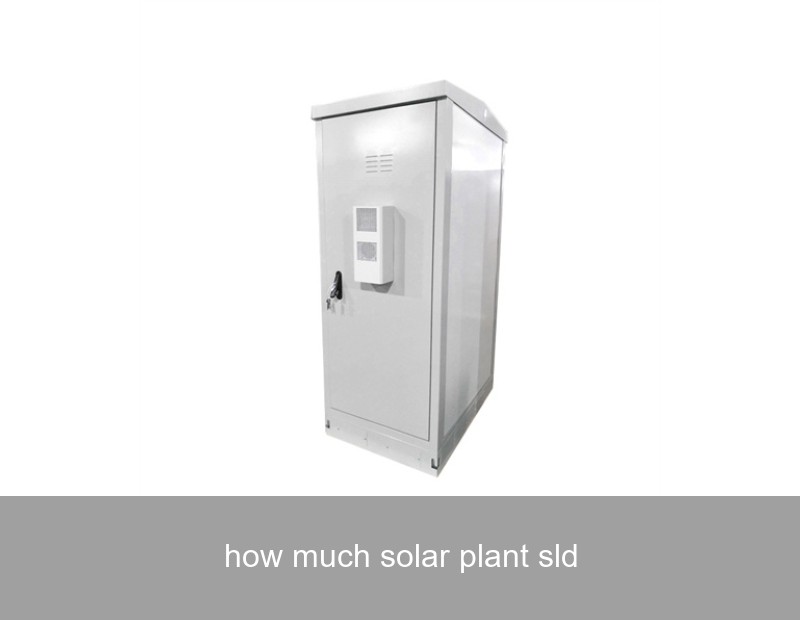
| Solution Installed | 850 kWp rooftop solar plant + a 500 kWh / 250 kW Highjoule CubeStack BESS |
| Result | Solar covers ~28% of annual demand directly. The integrated battery increases self-consumption of solar power by over 40%, shifting excess midday production to evening shifts. The system also provides critical load backup for up to 4 hours. |
This case highlights that the question "how much solar?" is increasingly intertwined with "how much storage?" The battery didn't change the solar plant's physical size but drastically increased its economic value and operational utility.
Beyond Generation: The Critical Role of Energy Storage
As the German case shows, a standalone solar plant often leaves value on the table. Here’s why integrating a Battery Energy Storage System (BESS) is a game-changer for sizing logic:
- Maximizes Self-Consumption: Stores excess solar generated at noon for use at peak evening rates, effectively allowing you to "use more" of the solar plant you built.
- Enables Right-Sizing: In areas with grid export limitations or unfavorable net metering, you can install a solar plant that meets 100% of your daytime needs and use storage to manage the excess, rather than curtailing (wasting) it.
- Provides Resilience: Solar alone typically shuts off during a grid outage for safety reasons. A solar-plus-storage system with islanding capability can keep your lights on and operations running.

Credit: Unsplash / ThisisEngineering. A modern BESS is key to unlocking the full value of a solar investment.
The Highjoule Advantage: Smart Sizing with Storage in Mind
At Highjoule, we don't just see a solar plant; we see an integrated energy system. Since 2005, we've specialized in providing intelligent storage solutions that make renewable energy projects more viable, efficient, and resilient. When you partner with us to answer "how much solar plant should I install?", our analysis always considers the synergy with storage.
Our CubeStack Commercial & Industrial BESS is designed for this exact purpose. Its modular design allows it to be perfectly sized to your solar excess and load-shifting needs. Coupled with our Energy Management System (EMS), it intelligently decides when to store solar energy, when to discharge to avoid peak demand charges, and when to provide backup power. This holistic approach often leads to a more optimized and cost-effective overall system size than considering solar in isolation.
For microgrid or large-scale industrial applications, our MegaGrid utility-scale storage solutions provide the grid-forming stability needed to support high penetration of solar PV, ensuring reliability even when the sun isn't shining.
Your Next Step: From "How Much" to "What's Next"?
The journey to your optimal solar plant size starts with data: your utility bills, your roof space, and your operational goals. The most forward-thinking approach is to model solar and storage as a single, integrated asset from the outset.
So, the most pertinent question for your business might no longer be just "How much solar plant should I install?" but rather "What is the optimal mix of solar and storage to achieve my specific goals for cost savings, sustainability, and energy independence?"
What is the single biggest energy challenge you hope a solar-plus-storage system could solve for your facility?
 Inquiry
 Online Chat