


How Much Wind Generators Can Power Your World (And How to Harness Every Kilowatt)
You’ve seen them on the horizon—graceful, towering wind turbines turning steadily in the breeze. For businesses, communities, and homeowners looking to achieve energy independence and sustainability, a critical question arises: how much wind generators do we actually need, and how much power can they truly deliver? The answer, while rooted in physics and engineering, is becoming increasingly empowered by another transformative technology: advanced energy storage. As a global leader in this field, Highjoule understands that unlocking the full potential of wind energy means looking beyond the turbine itself.
The Wind Power Phenomenon: More Than Just Blades Spinning
The sight of wind farms is now common across landscapes in Europe and the United States. This isn't just an aesthetic trend; it's a direct response to the urgent need for clean, renewable power. Wind energy has moved from a niche alternative to a mainstream power source, accounting for over 15% of electricity generation in the EU and a growing share in the U.S. But if you're considering investing in wind power, whether for a large industrial facility or a community microgrid, the initial query is deceptively simple. You don't just want to know how tall the turbine is; you need a clear picture of its output: how much wind generators can produce for your specific needs, and crucially, when they can produce it.
How Much Power Do Wind Generators *Actually* Produce? The Data Behind the Blades
Let's demystify the numbers. A modern onshore wind turbine with a capacity of 3 to 4 Megawatts (MW) can typically generate enough electricity to power approximately 1,500 average European households for a year. But that's under optimal conditions. The actual output, known as the capacity factor, is where reality sets in.
- Capacity is Not Constant: A 4 MW turbine doesn't produce 4 MW 24/7. Its output depends entirely on wind speed.
- The Capacity Factor: This is the ratio of actual energy produced over time to its maximum potential. For onshore wind, this typically ranges from 25% to 45%, depending on location. In the windy North Sea, offshore turbines can achieve factors above 50%.
- The Power Curve: Every turbine has a "power curve." It doesn't generate power below a cut-in speed (~3-4 m/s), output rises dramatically with wind speed, plateaus at its rated capacity, and shuts down at very high speeds to prevent damage.
So, calculating how much wind generators yield involves complex site assessments, historical wind data, and an understanding of this variable nature. The challenge then becomes not just generation, but alignment. The wind doesn't always blow when energy demand is at its peak. This mismatch between supply and demand is the single biggest hurdle to maximizing the value of wind investments.
The Storage Imperative: Why "How Much" is Only Half the Question
Asking "how much wind generators produce" is vital, but the more strategic question is: "How can I use every kilowatt-hour they generate?" This is where the energy landscape is fundamentally shifting. The true potential of wind power is unlocked not at the turbine's nacelle, but in the intelligent battery storage system it's paired with.
Think of it this way: without storage, excess wind energy generated during a stormy night when demand is low may be curtailed—essentially wasted. Conversely, on a calm, hot afternoon when the grid is strained, your turbines might be still. An integrated Battery Energy Storage System (BESS) solves this by:
- Time-Shifting Energy: Storing surplus wind power for use during periods of high demand or low wind.
- Stabilizing the Grid: Providing rapid frequency response and voltage support, which is crucial as more variable renewables come online.
- Ensuring Reliability: Acting as a backup power source, ensuring critical operations continue even when the wind stops.

Image Source: Unsplash. Wind farms generate clean power, but its full value is realized when paired with storage and smart management.
This is the core of Highjoule's mission. Since 2005, we have specialized in designing and deploying intelligent, high-efficiency BESS solutions for commercial, industrial, and microgrid applications. Our systems are engineered to seamlessly integrate with renewable sources like wind, transforming intermittent generation into a dependable, dispatchable asset. By asking us not just "how much wind generators" but "how to best utilize their output," our clients move from passive consumers of green energy to active managers of a resilient power ecosystem.
Case Study: Bridging the Gap in a German Industrial Park
Let's look at a real-world example from Lower Saxony, Germany. A mid-sized industrial park with two 3.6 MW wind turbines faced a classic problem. Their wind assets provided about 40% of their annual power needs on paper, but in practice, timing mismatches meant they were still heavily reliant on the grid during peak tariff periods, and they faced curtailment losses.
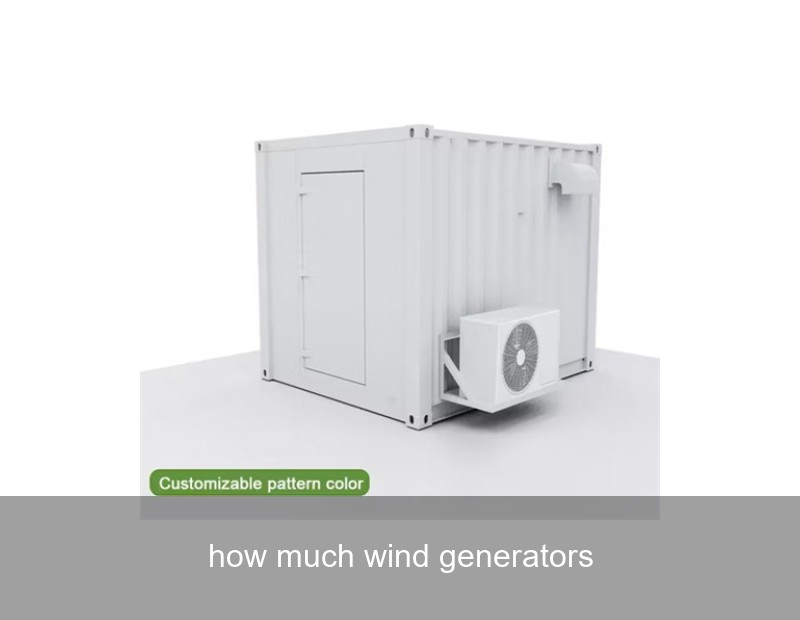
The Solution: Highjoule deployed a containerized, 2.5 MW / 5 MWh lithium-ion battery storage system integrated with our proprietary energy management software (EMS).
The Data-Driven Outcome (12-month post-installation):
| Metric | Result |
|---|---|
| Wind Energy Self-Consumption | Increased from 35% to over 80% |
| Peak Grid Demand Charges | Reduced by 65% |
| Curtailment Losses | Virtually eliminated |
| ROI Period | Estimated at under 5 years |
This case illustrates that the question of how much wind generators can power a facility is ultimately answered by the sophistication of the storage and control system behind them. The Highjoule BESS didn't change the turbines' output, but it dramatically increased the utility and economic value of every megawatt-hour produced.
Optimizing Your Wind Investment with Intelligent Energy Management
So, for your project, what should you consider beyond the turbine specs?
- Conduct a Detailed Load-Wind Analysis: Don't just look at annual averages. Analyze hourly and seasonal patterns of your load versus local wind generation profiles.
- Size Your Storage Correctly: Storage isn't one-size-fits-all. It requires careful sizing based on your goals: arbitrage, demand charge reduction, backup power, or grid services. Highjoule's technical team excels at this precise optimization.
- Choose a System with Smart Forecasting: The best BESS uses advanced software that forecasts both wind generation and load demand, making autonomous decisions to charge, discharge, or hold. Our Highjoule EMS uses AI and real-time data to maximize financial returns.
- Plan for the Long Term: Consider battery degradation, warranty, and service. Highjoule's solutions are built with industry-leading cycle life and come with comprehensive monitoring and support packages.

Image Source: Unsplash. A technician monitoring a modern BESS. Intelligent control is key to unlocking value.
The Future of Wind Energy is Predictable and Controllable
The journey to a sustainable energy future isn't just about building more wind turbines. It's about building a smarter, more flexible grid where every electron from a renewable source is captured and utilized effectively. The question of how much wind generators can do is evolving into a more powerful conversation about system-wide resilience and intelligence.
At Highjoule, we provide more than just batteries; we provide the brain that turns variable wind into a firm, reliable power source. Whether for a remote microgrid needing 24/7 renewable power, a factory aiming to slash energy costs, or a utility seeking grid stability, our solutions are the critical link.
Are you ready to move beyond simply measuring your wind potential and start maximizing its value for your business or community? What would a 50% increase in the usability of your wind energy do for your operational costs and sustainability goals?
 Inquiry
 Online Chat