


Demystifying the Hybrid Inverter Without Battery: Your Solar Gateway to the Future
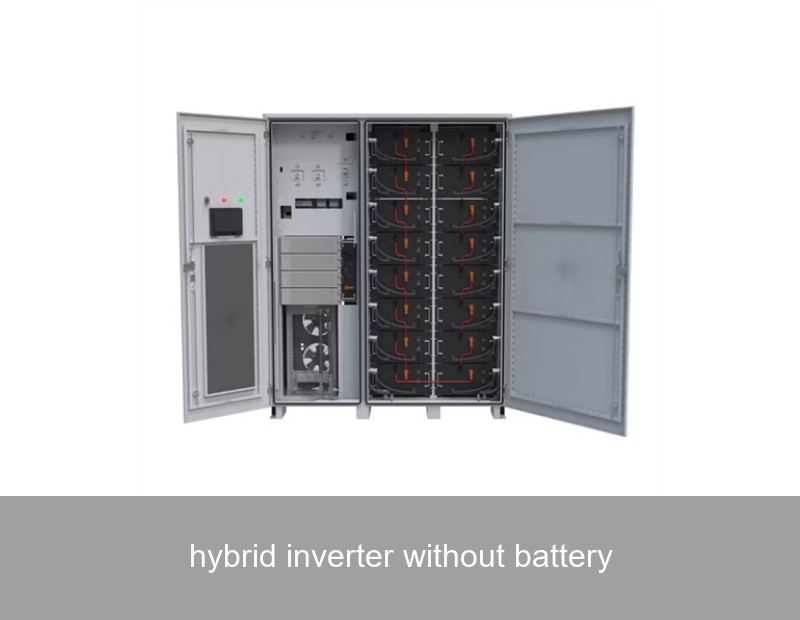
You've decided to go solar. You're researching panels, calculating potential savings, and then you encounter a crucial piece of hardware: the inverter. Suddenly, you're faced with terms like "string inverter," "microinverter," and "hybrid inverter." The last one often comes with an automatic assumption: it needs a battery. But what if we told you that a hybrid inverter without battery is not only possible but a brilliant strategic choice for many homeowners and businesses? This article cuts through the confusion, exploring the smart, cost-effective world of battery-ready hybrid systems and how they future-proof your energy independence.
Table of Contents
- What is a Battery-Less Hybrid Inverter?
- The Smart Logic: How It Works Without a Battery
- Key Benefits of a Battery-Ready System
- A Real-World Case: The German Bakery Model
- How Highjoule Enables Smarter Hybrid Solutions
- Is a Hybrid Inverter Without Battery Right for You?
What Exactly is a Hybrid Inverter Without a Battery?
Let's break it down simply. A hybrid inverter, at its core, is a multi-talented device. Unlike a standard solar inverter that only converts DC (Direct Current) from your panels to AC (Alternating Current) for your home, a hybrid inverter has additional built-in circuitry and intelligence. Think of it as a universal energy manager. Its key feature is the ability to connect to both solar panels and a battery storage system. However, the "hybrid" functionality doesn't vanish without the battery installed.
When deployed as a hybrid inverter without battery, it operates in a sophisticated, grid-tied mode. It maximizes self-consumption of your solar energy by intelligently directing solar power to your home's circuits in real-time. Any excess energy is seamlessly exported to the utility grid. The critical advantage? The system is pre-wired and pre-configured. Adding a battery later becomes a simple, plug-and-play upgrade, not a costly and disruptive system overhaul.
The Smart Logic: How It Works Day-to-Day
So, how does this clever device manage your power without a storage bank? It's all about intelligent prioritization and real-time monitoring.
- Priority One: Power Your Home. At dawn, your solar panels start generating electricity. The hybrid inverter instantly converts it to usable AC power and feeds it directly to your appliances. Your washing machine, fridge, and lights run on free, clean solar energy.
- Priority Two: Export the Surplus. On a sunny afternoon, you're likely producing more solar power than you can use. The hybrid inverter automatically channels this excess to the public grid. In many regions in Europe and the US, this earns you credits or a feed-in tariff, putting money back in your pocket.
- Priority Three: Grid Supplement. At night or on cloudy days, when solar production dips, the inverter seamlessly draws the shortfall from the utility grid, ensuring an uninterrupted power supply.
This entire process is managed by advanced software within the inverter, optimizing for self-consumption and efficiency every second of the day. It's a set-and-forget system that delivers immediate savings.
Why Go Battery-Ready? The Tangible Benefits
Choosing a hybrid inverter without battery installation offers a compelling, phased approach to energy independence.
| Benefit | Explanation |
|---|---|
| Lower Upfront Cost | The most significant barrier to solar + storage is often the initial investment. By deferring the battery purchase, you can install a premium solar system today and add storage when you're ready, spreading out the cost. |
| Future-Proofing | Technology evolves, and battery prices are falling. Installing a hybrid inverter now locks in your system's capability. When you decide to add a battery—whether next year or in five years—the integration is simple and cost-effective. |
| Maximized Self-Consumption | Even without a battery, modern hybrid inverters from leaders like Highjoule use smart load management features. They can temporarily shift non-essential loads (like water heating) to periods of high solar production, boosting your direct usage and savings. |
| Grid Resilience Foundation | You have the core hardware for backup power already on your wall. Once a battery is added, many systems can automatically provide emergency power during a grid outage, a feature standard inverters cannot offer. |
A Real-World Case Study: The German Bakery Model
Let's look at a concrete example from Bavaria, Germany. A family-run bakery, "Brotzeit Meister," installed a 30kW solar PV system in 2021. Their goal was to reduce high daytime energy costs from running ovens and refrigeration. However, the capital for a full battery system was out of reach initially.
The Solution: They installed a system built around three Highjoule HPS-10K Hybrid Inverters operating without batteries. These inverters were chosen for their robust grid-support functions and seamless battery readiness.
- Immediate Self-Consumption Rate: The system's smart logic helped the bakery use 68% of its solar generation directly on-site, dramatically cutting grid electricity purchases during peak tariff hours.
- Financial Payback: The reduced energy bills created a strong cash flow, which the owners used to fund the next phase.
- Phase Two (2023): After 18 months, they easily integrated two Highjoule HES-20 battery units. The existing inverters recognized them immediately. Their self-consumption rate jumped to 94%, and they now have backup power for critical cold storage, securing their business against grid instability. This phased approach, centered on the hybrid inverter without battery first, de-risked the investment and proved the financial model before the larger storage commitment.

Image Source: Unsplash (Representative image of a commercial solar installation)
Highjoule's Role: Engineering Your Phased Energy Journey
At Highjoule, with nearly two decades of expertise since 2005, we understand that the energy transition is a journey. Our product philosophy is built on flexibility and intelligence. Our HPS Series Hybrid Inverters are designed precisely for the scenario we've described. They are the cornerstone of a battery-ready system.
When you choose a Highjoule hybrid inverter without battery, you're not getting a stripped-down product. You're getting the full intelligent platform:
- Highjoule Energy OS: Our proprietary operating system constantly optimizes energy flow, whether you have two batteries, ten, or none yet. It's the brain that makes phased growth effortless.
- Scalable Architecture: Start with a single inverter for your home. As your needs grow—perhaps you buy an EV—you can easily add more inverters and batteries in parallel, creating a powerful, integrated storage network.
- Grid Services Ready: For our commercial and microgrid clients, our inverters are engineered to provide grid-stabilizing services (like frequency response), a feature increasingly valuable to utilities in both Europe and North America. You can learn more about these advanced grid capabilities from independent research bodies like the National Renewable Energy Laboratory (NREL).
Our approach empowers you to start saving today while building a tangible path toward complete energy autonomy, all within a single, unified ecosystem.

Image Source: Unsplash (Representative image of a modern hybrid inverter installation)
Is a Hybrid Inverter Without Battery the Right Choice for You?
This strategy isn't a one-size-fits-all, but it's perfect for a significant number of situations. Consider this path if:
- You want to install solar now but need to manage initial investment costs.
- You believe battery technology will improve or prices will drop further (a view supported by market trends from sources like the International Energy Agency).
- Your local utility offers favorable net metering rates today, but you anticipate this policy might change in the future.
- You desire the option for backup power but don't currently face frequent outages.
Ultimately, installing a hybrid inverter without battery is a statement of foresight. It's about choosing a platform over a point solution, ensuring your energy system can evolve as your life and the energy landscape do.
Your Next Step in Energy Intelligence
The energy world is shifting from a one-way flow to an interactive, intelligent network. By starting with a hybrid inverter, you're not just buying a device; you're securing a pivotal role in that network. So, we leave you with this question to ponder: When you look at your energy bills and your goals for sustainability and resilience, what is the first phase you need to build to make that future a reality today?
 Inquiry
 Online Chat