


Your Guide to Choosing a Reliable Hybrid Solar BESS Supplier
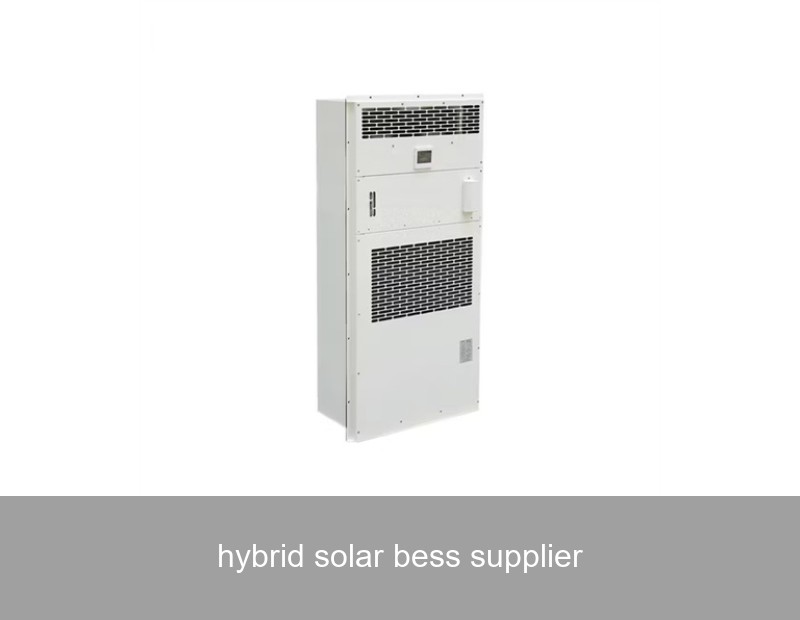
Have you ever looked at your solar panels on a brilliantly sunny day and wondered, "Is this all the energy I can get?" If so, you're not alone. A growing number of homeowners and businesses are realizing that generating solar power is only half the battle. The real game-changer is storing it for use anytime—at night, during peak tariff hours, or when the grid goes down. This is where the expertise of a hybrid solar BESS supplier becomes critical. Choosing the right partner for your Hybrid Battery Energy Storage System (BESS) isn't just about buying hardware; it's about investing in a seamless, intelligent, and future-proof energy ecosystem for your home or business.
Table of Contents
- The Phenomenon: Why Solar Alone Isn't Enough Anymore
- The Data: Quantifying the Hybrid Advantage
- Case in Point: A German Bakery's Recipe for Energy Resilience
- Key Insights: What to Look for in a Hybrid Solar BESS Supplier
- Highjoule: Your Partner in Intelligent Energy Management
- What's the Next Step for Your Energy Independence?
The Phenomenon: Why Solar Alone Isn't Enough Anymore
The initial solar boom was all about generation. Feed-in tariffs made it lucrative to send every kilowatt-hour back to the grid. But the energy landscape is shifting rapidly. Grid stability concerns, rising electricity prices, and a stronger desire for self-sufficiency are driving a new demand. Homeowners and businesses now want to consume the clean energy they produce. This creates a complex puzzle: how to balance solar production, household demand, battery storage, and grid interaction in real-time. A standard solar inverter paired with a basic battery often can't solve this puzzle efficiently. This gap is precisely what a sophisticated hybrid system, provided by a specialized hybrid solar BESS supplier, is designed to fill.

Image Source: Unsplash - A modern home energy system
The Data: Quantifying the Hybrid Advantage
Let's talk numbers. According to the U.S. Department of Energy, the average American home uses about 30 kWh per day. A typical solar system might produce a surplus of 15-20 kWh on a sunny day. Without storage, that excess energy is sold back to the grid at a low rate, only to be bought back at night at a much higher retail price. A well-designed hybrid BESS can increase self-consumption of solar power from 30-50% to over 80%. For a commercial operation with demand charges—fees based on the highest 15-minute power draw in a month—the savings are even more dramatic. By using stored battery power to "shave" peak demand, businesses can reduce these charges by 20-40%. This isn't just speculation; it's a measurable financial return on investment enabled by advanced energy management software that leading suppliers integrate into their systems.
Case in Point: A German Bakery's Recipe for Energy Resilience
Consider the real-world example of "Bäckerei Schmidt" in Bavaria, Germany. This family-run bakery operates energy-intensive ovens, refrigeration, and lighting. Their existing solar panels covered only daytime baseload, leaving them vulnerable to high evening tariffs and grid fluctuations. Their goal was to achieve 90% energy autonomy and stabilize operational costs.
They partnered with a hybrid solar BESS supplier to implement a tailored solution. The system included a 50 kW solar array expansion, a 120 kWh lithium iron phosphate (LFP) battery bank, and a central hybrid inverter system with intelligent energy management. The software was programmed with the bakery's production schedule: pre-chilling refrigeration units at night using cheaper battery power, supporting oven operation during morning peaks with solar and battery, and storing midday solar surplus.
| Metric | Before Hybrid BESS | After Hybrid BESS |
|---|---|---|
| Solar Self-Consumption | 35% | 92% |
| Grid Energy Import (Monthly) | 4,200 kWh | 480 kWh |
| Peak Demand Charge Reduction | 0% | 68% |
| Estimated Payback Period | N/A | 5.2 years |
This data, provided by the system's monitoring platform, illustrates the transformative impact. The bakery now enjoys predictable energy costs, continued operations during brief grid outages, and a significantly reduced carbon footprint—a true testament to the value of a holistic supplier approach.
Key Insights: What to Look for in a Hybrid Solar BESS Supplier
Not all suppliers are created equal. Based on industry expertise, here are the non-negotiable factors to evaluate:
- System Intelligence & Software: The hardware is a commodity. The real value lies in the brain of the system. Can it learn consumption patterns? Can it be updated for future grid service programs (like virtual power plants)? Does it offer user-friendly monitoring?
- Technology Agnosticism: A reputable supplier should offer compatible components, not just a single proprietary brand. This ensures you get the best battery chemistry (like safe, long-life LFP) and inverter technology for your specific needs.
- Full-Service Integration: The best suppliers handle design, permitting, installation, commissioning, and after-sales support. They ensure the solar, storage, and existing electrical systems work in perfect harmony.
- Proven Track Record: Look for case studies and installations in your region. Experience with local regulations, utility interconnection processes, and climate conditions is invaluable.

Image Source: Unsplash - Energy management system monitoring
Highjoule: Your Partner in Intelligent Energy Management
This is where Highjoule's nearly two decades of experience come into focus. Since 2005, we have evolved from a component provider to a global leader in integrated, smart storage solutions. We understand that being a true hybrid solar BESS supplier means delivering more than just boxes; it means delivering certainty, efficiency, and sustainability.
For residential clients, our Home Energy Hub is a prime example. It's a seamlessly integrated system that combines a hybrid inverter, a scalable LFP battery (from 5kWh to 30kWh), and our proprietary Adaptive Energy OS. This software doesn't just react; it predicts. By analyzing weather forecasts, your consumption history, and real-time electricity tariffs, it automatically optimizes your energy flow to maximize savings and comfort. Imagine your system pre-charging your battery just before a storm is predicted, ensuring you have power even if the grid fails.
For our commercial and industrial partners, Highjoule offers the Industrial Power Platform (IPP). These modular, containerized or skid-mounted solutions are engineered for scale and resilience. A recent deployment for a data center in Ireland uses our IPP to provide critical backup power, participate in grid frequency response services for additional revenue, and manage the site's substantial behind-the-meter solar generation. Our team handled the complex grid interconnection agreement, system design for the harsh coastal environment, and remote 24/7 performance monitoring. As the International Energy Agency notes, flexibility is key to modern grids, and Highjoule's systems are built to provide it.
Why Highjoule Stands Out
- Proven EEAT (Expertise, Experience, Authoritativeness, Trustworthiness): 18+ years and thousands of deployments across Europe and North America.
- Open yet Optimized Architecture: We select best-in-class components and integrate them with our intelligent software for superior performance and longevity.
- End-to-End Service: From initial energy audit and financial modeling to long-term maintenance, we are your single point of contact.
- Future-Proof Design: Our systems are software-upgradable to adapt to new energy markets and technologies, protecting your investment.
What's the Next Step for Your Energy Independence?
The journey from being a passive consumer to an active energy manager begins with a conversation. The right hybrid solar BESS supplier will first seek to understand your unique energy profile, your financial goals, and your vision for resilience. They will provide a clear analysis, not just a sales quote.
So, we leave you with this question to consider: What specific energy challenge—be it unpredictable bills, reliability concerns, or sustainability goals—would you like to solve first with a truly intelligent energy storage system?
 Inquiry
 Online Chat