


Integrated Energy BV and SPV Solutions: Unlocking Financial and Operational Synergies
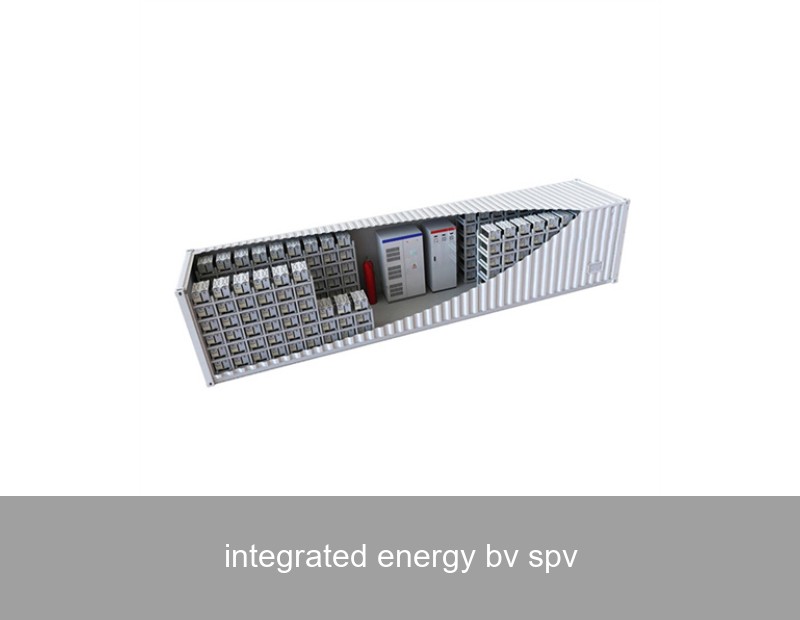
In the evolving landscape of renewable energy, two powerful concepts are converging to create robust, bankable projects: Integrated Energy and the Special Purpose Vehicle (SPV). For developers, investors, and energy managers in Europe and the US, understanding the synergy between a holistic technical approach and a sound financial structure is key to de-risking investments and maximizing returns. This article delves into how integrating advanced storage with solar PV within a dedicated SPV framework is transforming commercial and industrial energy projects.
Table of Contents
- The Phenomenon: From Silos to Synergy
- The Data: Quantifying the Integration Advantage
- The Case Study: A Dutch Agrivoltaics Project
- The Technical Architecture of an Integrated System
- The Critical Role of the SPV
- How Highjoule Enables Integrated Energy SPVs
- Looking Ahead: The Future of Integrated Projects
The Phenomenon: From Silos to Synergy
Traditionally, energy projects were often developed in silos. A solar PV (SPV) installation might be planned separately from backup generators or demand management systems. This fragmented approach leads to inefficiencies—solar energy might be curtailed when production exceeds demand, and grid dependency remains high. The modern solution is Integrated Energy, a philosophy that combines generation (like solar PV), storage, smart management, and sometimes even complementary sources into a single, optimized asset. When this integrated technical system is housed within a legally distinct Special Purpose Vehicle (SPV or SPV company), it creates a clean, investable, and manageable entity. This is the powerful duo: Integrated Energy BV SPV.
The Data: Quantifying the Integration Advantage
Why does integration matter? The numbers speak for themselves. According to a study by the National Renewable Energy Laboratory (NREL), adding storage to a solar PV system can increase the value of solar by up to 30% for commercial entities, depending on the utility rate structure. This value comes from:
- Increased Self-Consumption: Storing excess solar for use at night, reducing grid purchases.
- Peak Shaving: Discharging the battery during periods of high, expensive grid demand.
- Grid Services: In some markets, providing frequency regulation or capacity reserves for additional revenue.
Furthermore, the SPV structure mitigates risk. By isolating the project's assets and cash flows from the operating company's balance sheet, it protects the parent company and attracts project finance at more favorable terms. It turns a capital expenditure into a predictable operational expense with a clear ROI.

Credit: Photo by American Public Power Association on Unsplash. Modern solar farms are increasingly designed with integrated battery storage from inception.
The Case Study: A Dutch Agrivoltaics Project
Let's examine a real-world application in the European market. A large horticultural cooperative in the Netherlands aimed to achieve energy independence and stabilize operating costs. They established a project SPV (a Besloten Vennootschap or BV, the Dutch equivalent of a private limited company) to develop a 4.2 MWp rooftop solar array across their greenhouses.
The Challenge: Solar production peaked during midday, but energy for supplemental LED lighting and climate control was needed most in the early morning and evening. Without storage, they would sell excess solar at low prices and buy back expensive power later.
The Integrated Solution: The SPV invested not just in PV panels, but in a fully integrated system featuring a 2.4 MWh battery energy storage system (BESS). The BESS was programmed to store the midday solar surplus and discharge it during the high-price evening peak and for critical lighting loads.
The Results (Data after 12 months):
| Metric | Result |
|---|---|
| Self-Consumption of Solar | Increased from 55% to 89% |
| Peak Grid Demand | Reduced by 62% |
| Annual Energy Cost Savings | €218,000 |
| Project Payback Period (within SPV) | Estimated under 7 years |
This case perfectly illustrates the Integrated Energy BV SPV model: a dedicated legal entity owning a synergistic blend of solar and storage, delivering direct financial and operational benefits.
The Technical Architecture of an Integrated System
So, what's under the hood? A best-in-class integrated system is more than just panels and a battery box. It's an intelligent ecosystem:
- High-Efficiency Solar PV: The primary generation asset.
- Advanced Battery Storage: Typically lithium-ion phosphate (LFP) for safety and longevity.
- Bi-Directional Inverter/Converter: The "heart" that manages AC/DC conversion for both charging and discharging.
- Energy Management System (EMS): The "brain." This software platform uses algorithms and sometimes AI to forecast generation and load, optimizing dispatch based on weather, tariffs, and consumption patterns.
The EMS is crucial. It decides in real-time whether to use solar power directly, store it, sell it, or combine it with grid power—all to meet a predefined goal, like minimizing costs or maximizing self-sufficiency.
The Critical Role of the SPV
Why is the SPV/BV structure so complementary to this technical setup?
- Risk Isolation: The project's liabilities and performance are ring-fenced.
- Investment Attraction: Clear cash flows from energy savings and/or sales make it ideal for third-party investors.
- Simplified O&M: The SPV can contract operation and maintenance (O&M) as a single package for the entire integrated asset.
- Regulatory & Market Agility: In markets with complex energy rules, the SPV can participate in grid programs without affecting the core business.
How Highjoule Enables Integrated Energy SPVs
This is where a technology partner with deep system integration expertise becomes invaluable. Since 2005, Highjoule has been at the forefront of designing and deploying intelligent storage solutions that form the core of successful integrated energy projects. For an SPV focused on predictable returns, reliability is non-negotiable.
Highjoule's product suite is engineered for integration. Our H-Series commercial battery storage systems feature modular, scalable architecture from 100 kWh to multi-MWh, allowing an SPV to size the storage perfectly to the solar asset. The integrated Highjoule Neuron EMS is the central intelligence, capable of managing not just our batteries, but also interfacing with third-party solar inverters and building management systems. This ensures the entire asset operates as one cohesive unit.
For developers forming an Integrated Energy BV, Highjoule provides more than hardware. We offer comprehensive feasibility studies, system design, and long-term performance guarantees. Our solutions help de-risk the project for financiers by providing reliable, data-backed performance projections. We act as the technical backbone, allowing the SPV to focus on its primary goal: delivering stable, low-cost energy and strong financial returns.

Credit: Photo by ThisisEngineering RAEng on Unsplash. Centralized monitoring and control are key to managing an integrated energy asset.
Looking Ahead: The Future of Integrated Projects
The trend is clear. As grid dynamics become more volatile and the economics of storage continue to improve, the standalone solar PV project is giving way to the solar-plus-storage model. When housed in an SPV, this model becomes a standardized, replicable financial instrument. We're beginning to see the emergence of funds dedicated to acquiring portfolios of such integrated energy SPVs, much like the solar fund boom of the past decade.
Furthermore, integration is expanding beyond just solar and storage. The next frontier includes electric vehicle charging infrastructure, hydrogen electrolyzers, and advanced thermal storage, all managed by a single, sophisticated platform. The Integrated Energy BV will be the legal and operational vessel for these complex, multi-technology assets.
Is your organization evaluating a solar project where the economics are challenged by low self-consumption or complex tariffs? Have you considered how forming a dedicated project vehicle could attract new capital and simplify management? The synergy of Integrated Energy and the SPV structure might be the key to unlocking its full potential. What's the first step you will take to explore this model for your next energy asset?
 Inquiry
 Online Chat