


Intelligent Energy Management Systems: The Brain Behind Modern Power Resilience
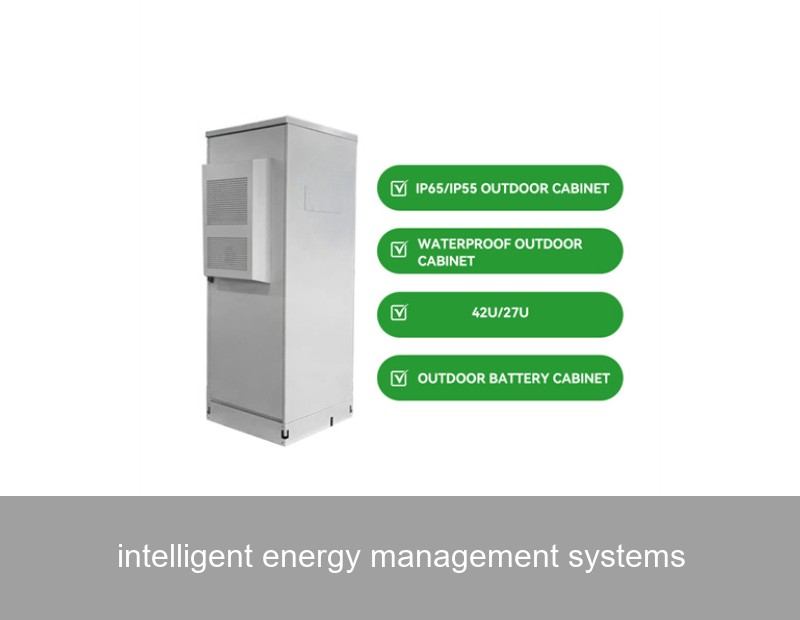
Have you ever wondered how modern businesses and homes seamlessly integrate solar panels, battery storage, and the grid, all while maximizing savings and minimizing carbon footprint? The answer lies not just in the hardware, but in the intelligent energy management system (iEMS) – the digital brain that orchestrates it all. As energy prices fluctuate and renewable adoption soars, these systems have evolved from a luxury to a necessity for energy resilience. Let's explore how this intelligent technology is transforming how we generate, store, and consume electricity.
Table of Contents
- What is an Intelligent Energy Management System?
- The Data Imperative: Why Intelligence is Non-Negotiable
- Core Components of a Robust iEMS
- Case Study: A German Manufacturing Plant's Journey to Autonomy
- Highjoule's Approach: Smart Storage Meets Smarter Intelligence
- Future Trends: Where is Intelligent Energy Management Heading?
What is an Intelligent Energy Management System?
At its core, an Intelligent Energy Management System is a sophisticated software platform that uses real-time data, weather forecasts, price signals, and consumption patterns to autonomously control energy assets. Think of it as the conductor of an orchestra, where each musician—your solar array, battery storage, building loads, and the grid—plays in perfect harmony. Unlike simple timers or basic controllers, a true iEMS employs algorithms and machine learning to make predictive decisions, optimizing for cost, efficiency, sustainability, or a blend of all three.
Image Source: Unsplash - Visual representation of energy management and data analytics.
The Shift from Passive to Active Management
For decades, energy management was reactive. We consumed power when needed and paid the bill. The rise of distributed energy resources (DERs) like rooftop PV changed the game. Suddenly, you were both a consumer and a producer—a "prosumer." A basic inverter can't handle this complexity. An iEMS actively manages the bidirectional flow of energy, deciding the optimal moment to store solar power, draw from the battery during peak tariff periods, or even sell excess back to the grid when prices are high.
The Data Imperative: Why Intelligence is Non-Negotiable
The effectiveness of an iEMS is directly tied to the quality and breadth of data it processes. Let's look at the numbers that define the modern energy challenge.
| Challenge | Supporting Data / Trend | Impact |
|---|---|---|
| Solar & Wind Intermittency | Renewables accounted for ~30% of global electricity generation in 2023 (IEA). | Creates grid instability without smart forecasting and balancing. |
| Energy Price Volatility | EU electricity prices for non-household consumers saw fluctuations exceeding 200% in some regions between 2021-2023 (Eurostat). | Makes financial planning difficult; highlights need for price-driven arbitrage. |
| Demand Charges | Can constitute 30-50% of a commercial electricity bill in the U.S. | Requires precise load shaping and peak shaving capabilities. |
This data paints a clear picture: managing energy without intelligence is financially and operationally risky. The system must be predictive, not just reactive.
Core Components of a Robust iEMS
Not all management systems are created equal. A truly intelligent platform for commercial and industrial applications typically includes:
- Advanced Forecasting Engines: Uses AI to predict local energy generation (from weather) and consumption patterns (from historical data).
- Real-Time Monitoring & Control: A unified dashboard providing visibility into every kWh produced, stored, and consumed.
- Optimization Algorithms: The core logic that balances multiple objectives (e.g., minimize cost, maximize self-consumption, reduce carbon) and executes setpoints.
- Open API & Interoperability: The ability to integrate with existing building management systems (BMS), SCADA, and a wide range of hardware from different manufacturers.
- Cybersecurity Foundations: End-to-end encryption and secure communication protocols are paramount, as energy systems are critical infrastructure.
Case Study: A German Manufacturing Plant's Journey to Autonomy
Let's ground this in reality. A mid-sized automotive parts supplier in Bavaria, Germany, faced steep energy costs and stringent sustainability targets. Their existing 500 kWp rooftop solar system was sending excess energy to the grid at low feed-in tariffs, while they simultaneously purchased expensive power during morning and evening peaks.
The Solution: In 2022, they deployed a comprehensive upgrade: a 280 kWh battery energy storage system (BESS) governed by a cloud-based intelligent energy management system. The iEMS was integrated with their solar inverters, the new BESS, and the plant's main load meters.
The Data-Driven Results (12-month period):
- Self-Consumption of Solar Power: Increased from 35% to over 80%.
- Peak Grid Demand (Power): Reduced by 40%, slashing demand charges.
- Total Energy Costs: Decreased by 32% despite volatile market prices.
- Carbon Footprint: Reduced by an additional 58 tonnes of CO2 annually.
The iEMS achieved this by learning the plant's operational schedule, forecasting solar yield, and pre-charging the battery with cheap night-time grid power or midday solar surplus to perfectly "cover" the high-power machinery start-ups at shift change. This is the power of intelligent orchestration.

Image Source: Unsplash - Commercial solar and storage installation.
Highjoule's Approach: Smart Storage Meets Smarter Intelligence
At Highjoule, we believe the hardware and software must be co-engineered for peak performance. Our experience since 2005 in deploying systems across Europe and North America has taught us that seamless integration is key. That's why our Highjoule HORIZON BESS is natively paired with our HELIOS iEMS platform.
The HELIOS platform isn't an afterthought; it's the core of the value proposition. It provides:
- Adaptive Learning: Our algorithms continuously refine forecasts and strategies based on site-specific data.
- Multi-Market Functionality: Configurable for various utility rate structures (time-of-use, demand charges, feed-in tariffs) common in the U.S. and European markets.
- Scalable Architecture: From a single residential unit to a complex industrial microgrid, HELIOS manages the complexity so the user doesn't have to.
- Proactive Health Monitoring: Beyond energy, it oversees the battery's state of health, providing early warnings and scheduling maintenance to ensure 15+ years of reliable service.
For a hospital in California, this meant ensuring critical loads remained powered during Public Safety Power Shutoffs (PSPS), with HELIOS seamlessly islanding the facility. For a retail chain in the UK, it meant automating participation in grid flexibility schemes, turning their distributed storage assets into a new revenue stream.
Beyond Cost Savings: The Resilience Dividend
While the financial ROI is clear, the resilience enabled by an iEMS is increasingly priceless. Whether it's weathering a winter storm in Texas or navigating grid constraints in continental Europe, the ability to autonomously disconnect and operate independently—a feature known as islanding—is a game-changer. Highjoule's systems are designed with this primary function in mind, ensuring continuity for businesses and communities.
Future Trends: Where is Intelligent Energy Management Heading?
The future is interconnected and transactional. We're moving towards Virtual Power Plants (VPPs), where thousands of decentralized systems—homes, businesses, EV chargers—are aggregated and controlled by an iEMS to act as a single, grid-stabilizing power plant. This requires a new layer of intelligence and secure, two-way communication with grid operators.
Furthermore, the integration of electric vehicle (EV) fleets as mobile storage assets ("vehicle-to-grid" or V2G) will add another layer of complexity and opportunity that only a sophisticated iEMS can unlock. Standards like OpenADR are crucial for this communication, and forward-looking platforms are already incorporating them.
As you consider your own energy resilience strategy, ask yourself this: Is your current system merely storing energy, or is it intelligently thinking ahead, adapting to market signals, and securing your operations against an uncertain energy landscape? The difference between the two defines the leaders of tomorrow.
What is the single biggest energy challenge your business or home faces that you wish a smarter system could solve?
 Inquiry
 Online Chat