


Intelligent Solar Energy: Powering a Smarter, More Resilient Future
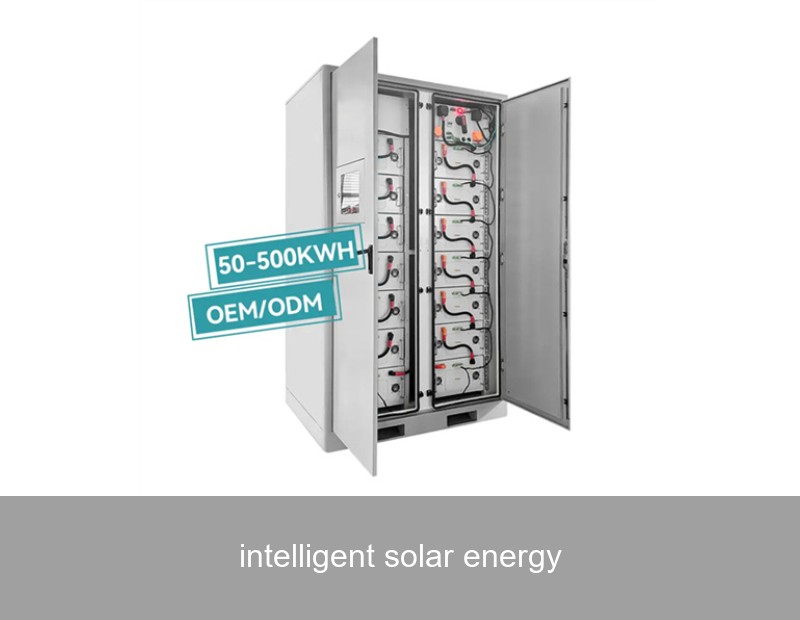
Imagine a solar energy system that doesn't just generate power, but thinks for itself. It predicts your energy needs, seamlessly interacts with the grid, and ensures every kilowatt-hour is used with maximum efficiency. This isn't a vision of the distant future; it's the reality of intelligent solar energy available today. For homeowners and businesses across Europe and the U.S., moving beyond basic photovoltaic (PV) panels to smart, integrated systems is the key to unlocking true energy independence, resilience, and cost savings. This article explores how intelligence is transforming solar power from a simple source of electricity into the brain of a modern, sustainable energy ecosystem.
Table of Contents
- The Phenomenon: From Dumb Panels to Smart Ecosystems
- The Data: Why Intelligence is No Longer Optional
- The Case Study: A German Bakery's Recipe for Resilience
- The Insight: Core Components of an Intelligent Solar System
- Highjoule's Role: Engineering Intelligence into Every Electron
- The Future: Where Do We Go From Here?
The Phenomenon: From Dumb Panels to Smart Ecosystems
Traditional solar installations are, frankly, a bit one-dimensional. Panels produce DC electricity, an inverter converts it to AC for your home, and any excess is often fed back to the grid. When the sun sets, you're back to buying power from your utility. The system operates in a simple, reactive manner. The problem? Solar generation is intermittent, and energy demand is dynamic. This mismatch leads to wasted potential and leaves users vulnerable to grid outages and volatile energy prices.
Intelligent solar energy systems solve this by adding layers of smart control, communication, and storage. Think of it as the difference between a basic calculator and a supercomputer. The intelligent system continuously monitors energy production, consumption patterns, weather forecasts, and even grid signals to make real-time decisions on where to direct power—whether to your appliances, into a battery, or back to the grid for optimal financial return.

Credit: Photo by Vivint Solar on Unsplash. Modern solar-plus-storage installations are the physical foundation for intelligent energy management.
The Data: Why Intelligence is No Longer Optional
The economic and practical case for intelligent solar is compelling. Let's look at some key drivers, particularly in our target markets:
| Market Factor | Impact | How Intelligence Helps |
|---|---|---|
| Falling Feed-in Tariffs (EU) | Reduced revenue for exported solar power. | Maximizes self-consumption, stores excess for later use instead of low-value export. |
| Time-of-Use (TOU) Rates (U.S./EU) | Electricity costs 2-3x more during peak evening hours. | Discharges batteries during expensive peak periods, slashing bills. |
| Grid Instability & Outages | Increasing frequency due to extreme weather and grid strain (IEA Report, 2023). | Provides automatic backup power, islanding capability for critical loads. |
| Electric Vehicle Adoption | Creates a large, flexible new load at home. | Smart charging schedules EV charging to coincide with solar surplus, avoiding grid draw. |
As you can see, without intelligence, a solar owner misses out on these optimization opportunities. The system works for you, not with you.
The Case Study: A German Bakery's Recipe for Resilience
Let's make this concrete with a real-world example from Bavaria, Germany. Bäckerei Schmidt (a mid-sized family bakery) installed a 50 kWp solar array in 2018. While it reduced daytime grid consumption, the bakery's highest energy demands were in the early morning (oven pre-heating) and after sunset, missing solar production entirely. They also faced reduced feed-in tariffs.
In 2022, they upgraded to an intelligent solar energy system centered around a high-capacity battery storage unit and an advanced energy management system (EMS). The results after one year were transformative:
- Self-Consumption Rate Increased: From 35% to over 85%.
- Energy Cost Savings: Total electricity costs reduced by 62%, despite rising market prices.
- Peak Demand Shaving: The system intelligently capped grid power draw during expensive peak times, eliminating "demand charges."
- Backup Power: The bakery's cold storage and essential lighting can now run for over 8 hours during a grid outage, protecting perishable inventory.
"Our solar panels used to be an extra income stream. Now, with the intelligent system, they are the heart of our energy strategy," said the owner. "We've insulated ourselves from price shocks and gained peace of mind. It's a competitive advantage."
The Insight: Core Components of an Intelligent Solar System
So, what makes a system "intelligent"? It's the integration of four key components:
1. Advanced Power Electronics & Hybrid Inverters
This is the system's nervous system. Modern hybrid inverters don't just convert DC to AC. They are bi-directional gateways that can manage power flow between solar panels, batteries, the home, and the grid simultaneously, all based on pre-set algorithms.
2. Integrated Battery Storage
The battery is the cornerstone of intelligence, providing the temporal shift that makes optimization possible. Lithium-ion phosphate (LFP) batteries, known for safety and long cycle life, are now the industry standard for residential and commercial storage.
3. The Energy Management System (EMS) - The "Brain"
This is the software intelligence. A sophisticated EMS uses machine learning to understand your usage patterns, integrates weather forecasts, and can respond to external signals (like grid requests or real-time electricity prices). It makes the millisecond-by-millisecond decisions to achieve your goals—whether that's maximizing savings, maximizing green energy use, or ensuring backup readiness.

Credit: Photo by Alex Perz on Unsplash. User-friendly dashboards put the power of intelligent energy management in the homeowner's hands.
4. Smart Load Control & Integration
True intelligence extends to the loads themselves. The system can communicate with smart circuits, EV chargers, and even heat pumps to schedule their operation for times of abundant solar or stored energy, creating a fully synchronized and efficient home or business energy environment.
Highjoule's Role: Engineering Intelligence into Every Electron
At Highjoule, with nearly two decades of experience since 2005, we don't just sell components; we engineer integrated, intelligent energy solutions. Our approach is to design systems where the intelligence is baked in from the start, not bolted on as an afterthought.
For residential clients, our HelioSmart Home suite combines high-efficiency PV modules with our proprietary Neuron hybrid inverter and QuantumCore LFP battery storage. The entire system is managed by our Highjoule Horizon EMS platform, which offers an intuitive app for users to set preferences and monitor performance in real-time, from anywhere.
For commercial and industrial (C&I) applications, like the bakery in our case study, our GridSynergy C&I solutions are scalable and robust. They feature advanced grid-support functions and are designed to manage complex load profiles, demand charge reduction, and even participate in grid services programs where available, turning a cost center into a potential revenue stream.
Our core philosophy is that an intelligent system must be adaptable, resilient, and user-centric. We ensure our systems are future-proof, capable of integrating new technologies like additional storage or EV charging hubs as our customers' needs evolve.
The Future: Where Do We Go From Here?
The evolution of intelligent solar energy is moving towards even greater grid interaction and community-level benefits. Concepts like virtual power plants (VPPs), where thousands of distributed home batteries are aggregated to act as a single, grid-stabilizing resource, are already being piloted in California, Germany, and Australia (NREL Report on VPPs, 2023). Intelligence will allow your home system to not only serve you but also contribute to broader grid stability and decarbonization goals.
The question is no longer if you should go solar, but how smart your solar installation should be. As energy markets continue to evolve and the push for electrification grows, a basic system may leave significant value on the table.
Is your current energy setup simply reacting to the market, or is it intelligently planning and adapting to secure your financial and energy future?
 Inquiry
 Online Chat