


Inverter 300 kW: How Much Does It Cost and What Determines the Price?
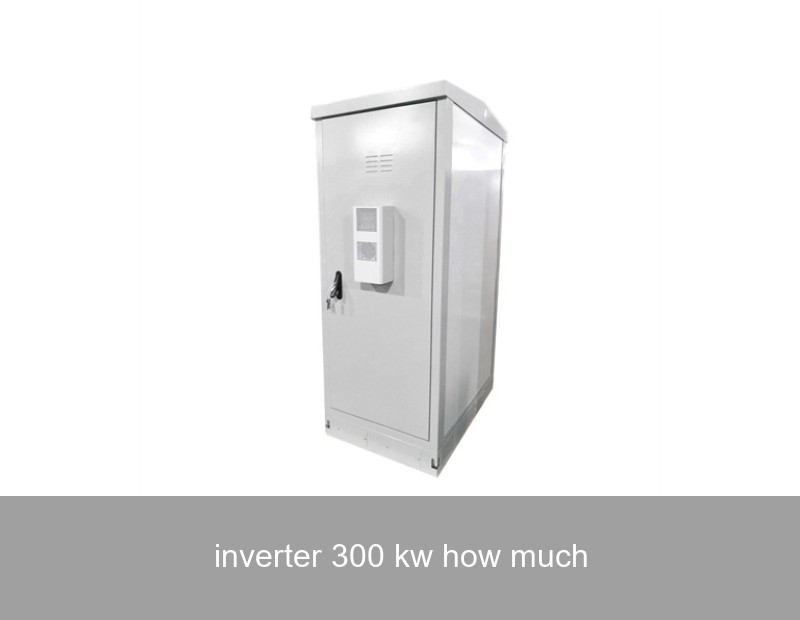
If you're planning a commercial solar installation, a large-scale residential project, or a microgrid, you've likely encountered the need for a powerful 300 kW inverter. This critical component sits at the heart of your energy system, converting the DC power from your solar panels into usable AC power for your facility. The immediate question that follows is almost always: "A 300 kW inverter—how much does it actually cost?" The short answer is, it's not a simple one-size-fits-all price tag. The cost can range significantly, typically between $30,000 and $70,000+ USD or €28,000 to €65,000+ EUR, depending on a matrix of factors. In this guide, we'll demystify the pricing, explore what you're really paying for, and show you how investing in the right technology, like Highjoule's advanced systems, translates to long-term value and reliability.
Table of Contents
- The Price Breakdown: More Than Just a Box
- Key Factors That Influence the Cost of a 300 kW Inverter
- A Real-World Case Study: The ROI of a Quality 300 kW System
- The Highjoule Advantage: Smart Technology for Maximum Value
- Looking Beyond Purchase Price: The Total Cost of Ownership
- Your Next Step: What's Your Energy Transformation Goal?
The Price Breakdown: More Than Just a Box
When you ask "inverter 300 kW how much?", you're essentially asking about the cost of the entire power conversion solution. The core inverter unit is a major part, but it's rarely the only expense. Think of it like buying a high-performance engine for a car—you need the supporting systems for it to run optimally.
- Core Inverter Unit: This is the primary cost driver. Prices vary by brand, technology (central vs. string), and features.
- Balance of System (BOS): This includes critical components like combiner boxes, DC disconnects, AC disconnects, communication hardware, and mounting systems.
- Software & Monitoring: Advanced energy management software, performance monitoring platforms, and grid integration features can add to the cost but are crucial for optimization.
- Installation & Labor: Electrical work, wiring, commissioning, and grid interconnection require skilled labor, which is a significant part of the project budget.
- Warranty & Support: A comprehensive, long-term warranty (e.g., 10+ years) and reliable technical support are invaluable and reflected in the initial investment.
Key Factors That Influence the Cost of a 300 kW Inverter
Understanding these variables will help you decode quotes and make an informed decision.
| Factor | Impact on Cost | Why It Matters |
|---|---|---|
| Inverter Topology | Central inverters for 300 kW may have a lower per-watt cost but are less flexible. Modular string inverter solutions (e.g., multiple 50-100 kW units) can offer higher resilience and easier maintenance. | System design, redundancy, and future expansion capabilities. |
| Efficiency Rating | A premium inverter with 98.5%+ peak efficiency may cost 10-20% more than a 97.5% efficient model. | Directly impacts energy yield over 20+ years. A small efficiency gain can translate to tens of thousands of dollars in additional electricity. |
| Grid Support Features | Advanced features like reactive power support (VAr), voltage and frequency ride-through, and black-start capability add cost. | Essential for grid compliance in many regions (especially Europe and parts of the US) and for enabling microgrid applications. |
| Brand & Quality | Established, tier-1 brands with proven field reliability command a price premium over generic or lesser-known options. | Long-term reliability, availability of spare parts, and manufacturer stability reduce operational risk. |
For example, the European Union's strict grid codes, as outlined by ENTSO-E, require inverters to provide sophisticated grid services. An inverter meeting these standards inherently carries more technology—and cost—than a basic model.
A Real-World Case Study: The ROI of a Quality 300 kW System
Let's move from theory to practice. Consider a mid-sized manufacturing plant in Bavaria, Germany, facing high energy costs and seeking sustainability goals.
- Challenge: The plant needed a reliable 300 kW solar PV system to offset daytime energy consumption and ensure stable operations, even during grid fluctuations.
- Solution: They opted for a system built around a premium 300 kW-class string inverter solution, known for high efficiency and robust grid support features. The total installed cost for the inverter and related BOS was approximately €48,000.
- Data & Outcome: The system's 98.6% peak efficiency and superior low-light performance generate an estimated 320,000 kWh annually. At Germany's industrial electricity price of ~€0.28/kWh (source: BDEW), this creates over €89,000 in annual savings. The inverter-related portion of the investment paid for itself in well under a year. Furthermore, the inverter's reactive power capability helps the plant avoid grid utility fees for power factor correction, adding another layer of savings.

Image: Commercial and industrial rooftop solar installations, like this one, commonly utilize 300 kW-scale inverter solutions. (Credit: Unsplash)
The Highjoule Advantage: Smart Technology for Maximum Value
At Highjoule, we understand that the question "inverter 300 kW how much?" is fundamentally about value, not just upfront price. Since 2005, we've engineered our H-Series Commercial Energy Storage and Conversion Systems to deliver superior lifetime value. Our 300 kW power conversion solutions are not just inverters; they are integrated, intelligent energy hubs.
What sets a Highjoule system apart?
- Hybrid-Ready Architecture: Our inverters are designed from the ground up to seamlessly integrate with battery storage. This future-proofs your investment, allowing you to easily add Highjoule battery packs later for energy shifting, backup power, and enhanced grid independence.
- Predictive Grid Interaction: Leveraging AI-driven software, our systems don't just respond to the grid—they anticipate. They can optimize energy dispatch based on real-time electricity prices (crucial in volatile European and US markets) and predicted weather patterns.
- Modular & Scalable Design: Our approach often uses multiple, synchronized inverter units to achieve the 300 kW scale. This offers built-in redundancy—if one module needs service, the others continue operating—minimizing downtime risk for commercial and industrial users.
By choosing Highjoule, you're investing in a system that maximizes energy harvest, unlocks revenue streams through grid services, and provides operational resilience, thereby justifying its position in the market.
Looking Beyond Purchase Price: The Total Cost of Ownership
The smartest financial analysis looks at the Total Cost of Ownership (TCO). A cheaper inverter with lower efficiency, shorter warranty, and poor support can become the most expensive asset over 20 years.
- Energy Losses: A 1% difference in efficiency on a 300 kW system operating for 1,500 hours/year can mean losing 4,500 kWh annually. Over 20 years, that's a significant amount of paid-for sunlight never converted to useful energy.
- Maintenance & Downtime: Robust components and design reduce failure rates. Easy serviceability and a responsive support team, like Highjoule's global technical network, minimize costly downtime.
- Warranty Length & Terms: A 10-year or longer warranty on parts and labor provides financial predictability and peace of mind, protecting your investment long-term.

Image: Professional monitoring and maintenance are key to minimizing the total cost of ownership for a 300 kW inverter system. (Credit: Unsplash)
Your Next Step: What's Your Energy Transformation Goal?
So, "inverter 300 kW how much?" The true cost is a blend of technology, quality, and the intelligence built into the system. It's an investment in the foundational brain of your energy assets for the next decade or more. The more pertinent question is: What financial and operational outcomes do you need this system to deliver? Is it purely about reducing your electricity bill today, or is it about building a resilient, adaptive energy infrastructure that can handle the dynamic grid and market demands of tomorrow?
We invite you to share your project's specific parameters—your location, load profile, and sustainability targets—with Highjoule's energy consultants. Let's calculate not just a price, but the precise value a smart 300 kW solution can bring to your operation.
 Inquiry
 Online Chat