


Inverter Generator with Solar Panels: A Modern Hybrid Power Solution
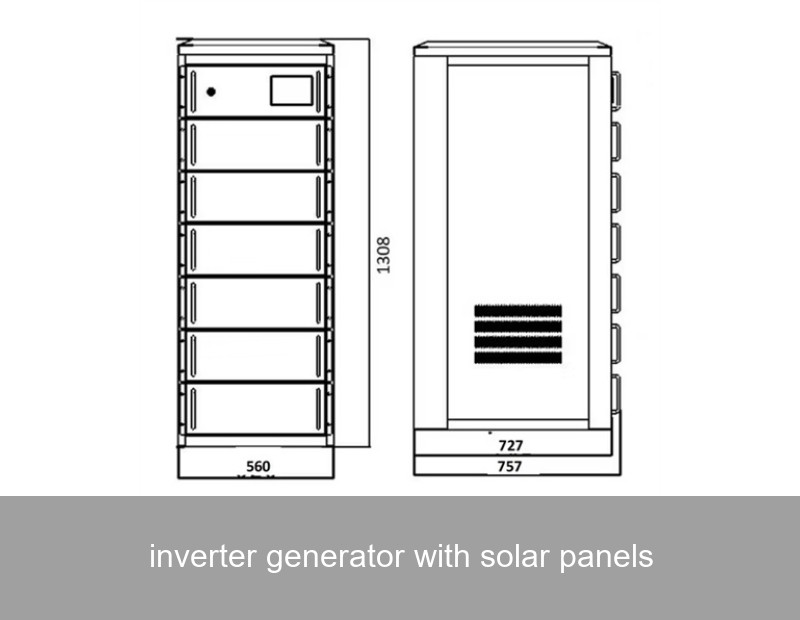
a storm knocks out the grid. Your traditional backup generator roars to life, providing power but also noise, fumes, and a constant worry about fuel. Now, reimagine that scene. The backup power is silent, the fuel consumption is minimal, and the sun is actively helping to recharge your system. This isn't a distant future—it's the practical reality of pairing an inverter generator with solar panels. For homeowners and businesses across Europe and the US, this hybrid approach is redefining resilience, slashing energy costs, and paving the way for a more sustainable energy independence.
The Noise and Fuel Problem with Traditional Backup
Conventional standby generators are reliable workhorses, but they come with significant drawbacks. They must run at a constant 3600 RPM to produce the 60Hz AC power our appliances need, leading to high fuel consumption, substantial noise pollution (often 65-75 decibels or more), and uneven power quality that can be harsh on sensitive electronics like computers and medical equipment. In an era of rising fuel costs and increasing environmental awareness, these limitations are becoming harder to ignore. The question emerges: is there a smarter, cleaner way to ensure backup power?
Hybrid Power Evolved: Inverter Generators Meet Solar
Enter the inverter generator. Unlike its conventional cousin, an inverter generator uses advanced electronics to produce AC power, convert it to DC, and then invert it back to a perfectly clean, stable sine wave. This process allows the engine to run only as fast as needed to meet demand, resulting in:
- Quiet Operation: Noise levels can be as low as 50-60 decibels—quieter than a normal conversation.
- Superior Fuel Efficiency: Variable engine speed can reduce fuel consumption by up to 40%.
- Clean Power: "Pure sine wave" output is safe for all your sensitive gadgets.
Now, take this efficient platform and integrate it with a solar panel array. You've created a dynamic duo. During an outage, the solar panels can directly power your critical loads or, crucially, recharge the generator's battery buffer or fuel cell. This synergy dramatically extends runtime, reduces generator cycles, and can keep essential systems running almost indefinitely on sunny days. It’s a bridge technology that offers the reliability of fuel-based generation with the efficiency and sustainability of renewables.

Image: A modern hybrid energy setup combining solar panels with a quiet inverter generator. Credit: Unsplash.
How a Solar-Inverter Generator Hybrid System Works
The intelligence of this system lies in its management. A smart energy management system (EMS) or a hybrid inverter acts as the brain. Here’s a typical flow:
| Condition | System Action | Benefit |
|---|---|---|
| Grid Normal | Solar panels power the home and export excess to the grid. Generator is off. | Reduced electricity bills, net metering credits. |
| Grid Outage, Daytime | EMS isolates the home (islanding). Solar powers loads directly. Any excess solar charges a battery or the generator's start battery. | Silent, fuel-free backup power. Generator may not need to start. |
| Grid Outage, Night or High Demand | EMS signals the inverter generator to start. It runs at optimal load to power the house and recharge buffers. Solar assists when the sun rises. | Extended runtime, optimal fuel efficiency, seamless power. |
This isn't just theory. The U.S. Energy Information Administration (EIA) notes that power outages are becoming more frequent and longer-lasting, making smarter backup solutions a critical investment.
A Real-World Case: The California Winery Project
Let's look at a concrete example. A mid-sized winery in Sonoma County, California, faced dual challenges: frequent public safety power shutoffs (PSPS) to prevent wildfires and a desire to reduce its carbon footprint. Their critical loads included refrigeration tanks, server infrastructure, and security systems.
Their solution was a hybrid system designed by Highjoule:
- Solar Array: A 50kW rooftop solar system.
- Storage & Intelligence: A Highjoule HES-30 commercial energy storage system with integrated hybrid inverter and EMS.
- Backup Generation: A 45kW natural gas-ready inverter generator.
The system was programmed with a "generator-last" logic. During a grid outage, the battery storage would service all loads. Only when the battery reached a 30% state of charge would the quiet inverter generator start, running at peak efficiency to recharge the battery bank. Solar input during the day would immediately reduce or eliminate generator runtime.
The Results (12-month period):
- Outage Coverage: Survived 7 grid outages totaling 140 hours with zero operational disruption.
- Fuel Savings: Generator runtime was reduced by an estimated 85% compared to a traditional generator-only setup.
- Economic Payback: Combined with solar self-consumption and demand charge management, the system projected a return on investment in under 6 years.
This case demonstrates that the inverter generator with solar panels model is a viable, efficient, and commercially astute strategy for critical business operations.
Beyond Backup: The Highjoule Smart Hybrid Ecosystem
At Highjoule, we see this hybrid configuration as a core component of a modern, intelligent energy profile. Our solutions are designed not just for emergencies, but for daily optimization. For instance, our Highjoule Home Energy Hub can seamlessly orchestrate between solar, battery storage, a compatible inverter generator, and the grid. It uses predictive weather data and consumption algorithms to pre-charge batteries ahead of a storm or to strategically use the generator during off-peak fuel price windows.
For commercial and industrial clients, our HES Series provides scalable, containerized solutions that integrate large-scale solar, multi-MWh battery storage, and prime power inverter generators to create resilient microgrids. These systems ensure continuity for factories, data centers, and communities, while actively participating in grid services programs to generate revenue, as documented in microgrid studies by authorities like the National Renewable Energy Laboratory (NREL).

Image: A Highjoule HES energy storage system providing resilient power for industrial applications. Credit: Unsplash (Representative Image).
Making the Switch: Key Considerations
If you're considering a hybrid system, here are essential factors to discuss with your installer:
- System Sizing: Your solar array and battery should be sized to cover your "critical load" profile. The inverter generator is then sized to efficiently recharge the battery and handle peak loads.
- Fuel Type: Inverter generators are available for propane, natural gas, or diesel. Natural gas offers a nearly endless supply if lines are buried, while propane is storable on-site.
- Communication & Control: Ensure all components (solar inverter, battery, generator) can communicate with the central EMS. This integration is key to achieving true efficiency. Highjoule systems are built with open-protocol compatibility in mind.
- Local Codes & Incentives: Many regions in the US and Europe offer tax credits, rebates, or favorable financing for adding solar and battery storage. A qualified installer can help navigate these, as seen in the EU's renewable energy directives.
So, as you think about your energy resilience, ask yourself: Is your current backup plan a noisy, fuel-guzzling relic, or is it a smart, integrated system that works silently with the sun to protect your home or business?
 Inquiry
 Online Chat