


Unlocking Energy Independence: The Ultimate Guide to Inverter Hybrid Off-Grid Systems
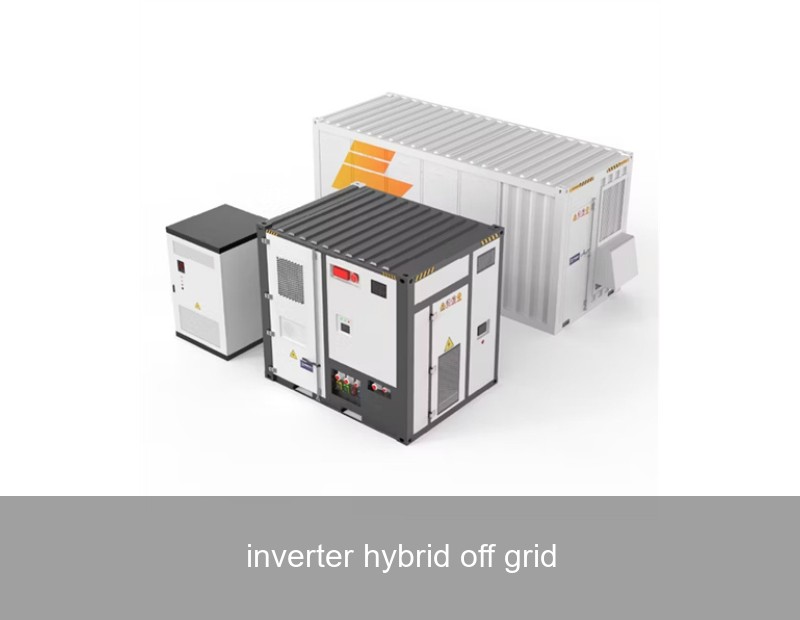
Have you ever watched the utility bill climb and wondered, "What if I could break free?" Or perhaps you've experienced the frustration of a power outage right in the middle of something important. For homeowners and businesses across Europe and the US, these aren't just hypotheticals—they're daily realities pushing people to seek true energy independence. The solution gaining remarkable traction is a sophisticated yet practical technology: the inverter hybrid off-grid system. This isn't just a backup generator; it's a complete, intelligent energy ecosystem that manages solar power, battery storage, and grid interaction seamlessly. Let's explore how this technology works and why it's becoming the cornerstone of modern, resilient power.
Table of Contents
- What is a Hybrid Off-Grid Inverter System?
- How Does It Work? The Intelligent Energy Manager
- Real-World Impact: A Case Study from California
- Choosing the Right System for Your Needs
- Highjoule's Role in Advanced Hybrid Solutions
- The Future of Home and Business Energy
What Exactly is a Hybrid Off-Grid Inverter System?
Let's demystify the term. A hybrid off-grid inverter is the brain and heart of a modern energy-independent setup. Unlike a simple grid-tie inverter that shuts down during a blackout, or a pure off-grid inverter that has no grid connection, a hybrid inverter does it all. It intelligently combines (or "hybridizes") power from multiple sources: solar panels, battery storage, and the traditional utility grid. Its primary goal? To maximize self-consumption of your solar energy, provide uninterrupted power, and reduce reliance on the grid, all while giving you the option to draw from or export to it when it makes economic sense.

Image Source: Unsplash - A modern hybrid inverter setup, central to energy independence.
How Does It Work? The Intelligent Energy Manager
Think of your hybrid inverter as a savvy energy conductor. It makes split-second decisions based on pre-set priorities and real-time conditions. Here’s a typical flow:
- Priority 1: Solar Direct Use: During the day, your solar panels generate DC electricity. The hybrid inverter converts it to AC to power your home or business immediately.
- Priority 2: Battery Charging: Any excess solar energy not used instantly is directed to charge your battery storage system.
- Priority 3: Grid Interaction: If your solar production and batteries are depleted, the system can draw from the grid. Conversely, if your batteries are full and you're producing surplus solar, it can export it to the grid for credits (where net metering is available).
- Priority 4: Off-Grid Mode: During a grid outage, the system automatically isolates itself (a safety feature called "islanding") and continues to power critical loads from solar and batteries. You might not even notice the blackout.
This intelligent orchestration is what sets hybrid systems apart. They are designed for resilience and efficiency, a principle that guides companies like Highjoule in designing their H-Series Hybrid Energy Systems. Highjoule's systems feature advanced inverters with multiple MPPT trackers for optimal solar harvest and sophisticated battery management algorithms to extend battery life and performance.
Why Go Hybrid Off-Grid? The Tangible Benefits
The shift towards these systems is driven by more than just ideology; it's backed by hard economic and practical benefits.
| Benefit | Explanation | Impact |
|---|---|---|
| Uninterrupted Power Supply (UPS) | Seamless switch to battery backup during grid failures. | No downtime for home offices, medical devices, or business operations. |
| Maximized Solar Self-Consumption | Store excess daytime solar for use at night, rather than selling it cheaply. | Can increase the utilization of your solar investment from ~30% to 60% or more. |
| Reduced Energy Bills | Draw less from the grid during peak, expensive tariff periods. | Significant annual savings, especially in regions with high Time-of-Use rates. |
| Grid Support & Sustainability | Reduces peak demand on the grid and promotes renewable energy use. | Contributes to a more stable and greener community energy infrastructure. |
From Theory to Reality: A California Winery Case Study
Data tells a powerful story. Consider a medium-sized winery in Sonoma County, California, an area prone to seasonal wildfires and Public Safety Power Shutoffs (PSPS).
- Challenge: Protect critical refrigeration tanks (wine preservation) and maintain business operations during frequent, multi-day grid outages.
- Solution: Installation of a 150 kW solar array coupled with a 300 kWh lithium-ion battery bank, managed by a set of high-capacity hybrid off-grid inverters.
- Results (Data from 2023):
- Outage Resilience: Provided 72+ hours of full operational power during PSPS events.
- Financial Savings: Reduced monthly grid energy demand charges by 40% and overall electricity costs by 65%.
- Sustainability: Achieved 85% energy self-sufficiency during peak season.
This mirrors the solutions Highjoule provides for commercial and industrial clients. Their GridShieldTM Industrial Systems are engineered precisely for such mission-critical applications, ensuring that businesses don't just survive grid instability, but thrive through it.
Choosing Your Hybrid Off-Grid System: Key Considerations
Not all systems are created equal. When planning your installation, ask these crucial questions:
- Power & Energy Needs: What are your critical loads? Calculate your daily kWh consumption and peak kW demand.
- Inverter Capability: Does it have sufficient continuous and surge power for your appliances? Look for high efficiency ratings (e.g., >97%).
- Battery Chemistry & Lifecycle: Lithium Iron Phosphate (LFP) batteries, like those used in Highjoule's EverCoreTM series, offer superior safety, longevity (6,000+ cycles), and performance across a wide temperature range compared to older technologies.
- System Intelligence & Software: Can you monitor and control the system via an app? Does it allow for customizable operating modes (e.g., "save battery," "maximize export")?
- Scalability: Can you easily add more solar panels or batteries in the future?

Image Source: Unsplash - A scalable home system with solar and storage.
Engineered for Resilience: Highjoule's Integrated Approach
As a global leader since 2005, Highjoule doesn't just sell components; it delivers intelligent, efficient, and sustainable power solutions. For the homeowner in Germany or the factory manager in Texas, this means a system designed as a cohesive unit. The Highjoule H-Series for residential and GridShieldTM for commercial applications integrate the hybrid inverter, battery management, and system controller with a single, user-friendly interface. This holistic design ensures optimal communication between components, leading to higher overall system efficiency, easier installation, and more reliable long-term performance. Their focus on safety certifications (like UL 9540 in the US and CE in Europe) and robust warranty terms provides the peace of mind essential for such a significant investment.
The Road Ahead: Smarter Grids and Greater Autonomy
The evolution of inverter hybrid off-grid technology is intertwined with the development of smart grids and virtual power plants (VPPs). Future systems will not only manage home energy but also actively participate in grid-balancing programs, creating revenue streams for owners. The continued fall in battery prices and rise in grid electricity costs, as noted by authorities like the International Energy Agency (IEA), only accelerates this trend. Furthermore, advancements in solar panel efficiency (NREL) and AI-driven energy prediction will make these systems even more autonomous and cost-effective.
So, as you look at your next energy bill or read about grid challenges in your region, ask yourself: Is your current power setup merely a cost, or could it be transformed into a resilient, intelligent, and potentially income-generating asset for your home or business?
 Inquiry
 Online Chat