


Inverter with Charge Controller: The Intelligent Heart of Your Modern Energy System
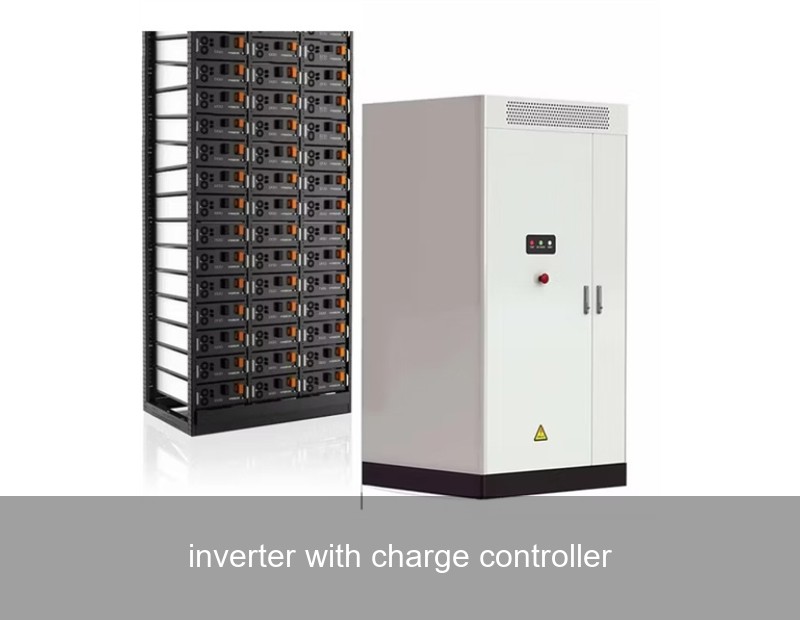
If you're exploring solar power or battery backup for your home or business, you've likely encountered a tangle of technical terms. Among them, two components stand out as critical: the inverter and the charge controller. Traditionally separate devices, their integration into a single unit—an inverter with charge controller—is revolutionizing how we manage renewable energy. This isn't just a space-saving trick; it's the key to unlocking simpler, smarter, and more efficient power independence. For over 18 years, Highjoule has been at the forefront of this integration, designing advanced energy storage systems that seamlessly blend these functions to deliver reliable power for homes and businesses across the globe.
Table of Contents
- The Phenomenon: From Cluttered Sheds to Integrated Brains
- The Data: Why Integration Wins on Every Metric
- A Real-World Case Study: The German Bakery's Rise to Energy Resilience
- Highjoule's Insight: Beyond Hardware to Intelligent Energy Orchestration
- Key Features to Look for in a Modern Inverter-Charge Controller
- Future Trends: Where is Integrated Energy Management Heading?
The Phenomenon: From Cluttered Sheds to Integrated Brains
Picture a solar installation from a decade ago. You'd likely see an array of separate boxes: one to convert solar DC to household AC (the inverter), another to safely regulate battery charging (the charge controller), and often additional components for monitoring and grid management. This setup worked, but it came with complexities—more wiring points of failure, communication hiccups between devices, and a larger physical footprint.
Today, the trend is decisively toward integration. An inverter with charge controller combines these core functions into a single, sophisticated unit. Think of it as the central nervous system of your energy setup. It doesn't just perform tasks; it makes intelligent decisions. Should solar power charge the batteries or power the house directly? When should the battery discharge to avoid peak grid tariffs? The integrated system calculates and executes the optimal choice in milliseconds.

Image Source: Unsplash - Representative image of a modern power conversion unit
The Data: Why Integration Wins on Every Metric
The benefits of moving to an integrated inverter with charge controller aren't just theoretical; they are quantifiable. Let's break down the advantages:
| Metric | Traditional Separate Components | Integrated Inverter with Charge Controller |
|---|---|---|
| System Efficiency | ~92-94% (due to separate conversion losses) | ~96-98% (optimized single-platform conversion) |
| Installation Time & Cost | Higher (more wiring, configuration, commissioning) | Up to 30% lower (plug-and-play design, fewer connections) |
| Physical Footprint | Larger (multiple enclosures) | Can be 40-50% smaller |
| Reliability | More potential failure points | Fewer components, unified diagnostics |
| Advanced Management | Limited, often requires extra hardware | Native: peak shaving, time-of-use optimization, grid services |
According to a 2023 NREL report on PV system costs, balance-of-system (BOS) costs, which include hardware like inverters and labor, are a prime target for savings. Integrated power conversion systems are highlighted as a key innovation driving down these BOS costs while improving performance.
A Real-World Case Study: The German Bakery's Rise to Energy Resilience
Let's make this concrete. Consider "Brotzeit," a mid-sized artisanal bakery in Bavaria, Germany. Their challenge was twofold: skyrocketing electricity prices and the critical need for an uninterrupted power supply for their refrigeration and proofing systems. A power outage would mean massive product loss.
Their solution was a Highjoule H-Ion 12kW Hybrid System, a prime example of a high-performance inverter with charge controller at its core. The system integrated their existing rooftop solar with a new 25kWh lithium-ion battery bank.
- The Data & Results:
- Self-Consumption Boost: Increased on-site solar usage from 35% to over 85%.
- Peak Load Shaving: The system's intelligent logic automatically powers the ovens during morning peak using stored energy, reducing demand charges from the grid.
- Financial Impact: Achieved a 60% reduction in monthly energy bills, with an estimated ROI of under 5 years.
- Resilience: The bakery can now operate fully off-grid for over 8 hours, ensuring business continuity.
"The Highjoule system isn't just a battery; it's the intelligent manager of our entire energy flow," said the bakery's owner. "The fact that the inverter, charger, and brain are all one unit made it reliable and simple for us to understand via the app."
Highjoule's Insight: Beyond Hardware to Intelligent Energy Orchestration
At Highjoule, we view the inverter with charge controller not as a mere component, but as the platform for energy intelligence. Our H-Series Hybrid Systems are built on this principle. They combine industry-leading dual MPPT solar charging, high-efficiency multi-mode inversion, and sophisticated battery management (compatible with LiFePO4 and other chemistries) in one rugged enclosure.
But the true magic is in the software. Our EnergyOS platform turns the integrated hardware into an autonomous energy manager. It can:
- Forecast solar production and load consumption using local weather data.
- Automatically schedule battery cycles to maximize savings based on dynamic utility rates (critical in markets like California or Germany).
- Provide seamless backup power during outages, switching to off-grid mode in less than 20 milliseconds—faster than a light bulb flickers.

Image Source: Unsplash - Representative image of an energy monitoring app
This level of integration is what sets modern systems apart. It transforms a collection of parts into a true distributed energy resource (DER) that can benefit both the owner and the wider grid.
Key Features to Look for in a Modern Inverter-Charge Controller
When evaluating an integrated system, whether for residential or commercial use, focus on these capabilities:
1. True Hybrid Multimode Operation
Can it simultaneously charge from solar/grid, power loads, and feed surplus to the grid? The best units, like Highjoule's, handle all these flows concurrently and efficiently.
2. Scalability and Battery Agnostic Design
Your energy needs will grow. Ensure the system allows for easy expansion of battery capacity and is compatible with multiple, future-proof battery technologies.
3. Grid Services Readiness (VPP Compatibility)
In many regions, you can earn revenue by allowing your system to support the grid. Look for features like frequency response and the ability to connect to Virtual Power Plants (VPPs).
4. Robust Monitoring and Connectivity
A user-friendly app with detailed analytics is non-negotiable. It should provide real-time data and allow for custom control strategies.
Future Trends: Where is Integrated Energy Management Heading?
The evolution of the inverter with charge controller is far from over. We are moving towards even tighter integration, where the system will natively manage not just electricity, but also electric vehicle (EV) charging, heat pumps, and smart home devices. The next generation will act as a true home energy hub, automatically shifting flexible loads to coincide with solar production or low grid prices.
Furthermore, with the rise of grid-scale storage demands, the same integrated intelligence principles are being scaled for commercial and industrial applications. Highjoule's C&I solutions already provide this, enabling factories and farms to become pillars of local grid stability.

Image Source: Unsplash - Representative image of a commercial solar and storage system
So, as you contemplate your journey toward energy independence, ask yourself this: Is your goal merely to install solar panels and a battery, or is it to deploy an intelligent, adaptive, and future-ready energy ecosystem that actively works to optimize your comfort, costs, and carbon footprint?
 Inquiry
 Online Chat