


Unlocking Energy Independence: The Power of an Inverter with Solar Charger
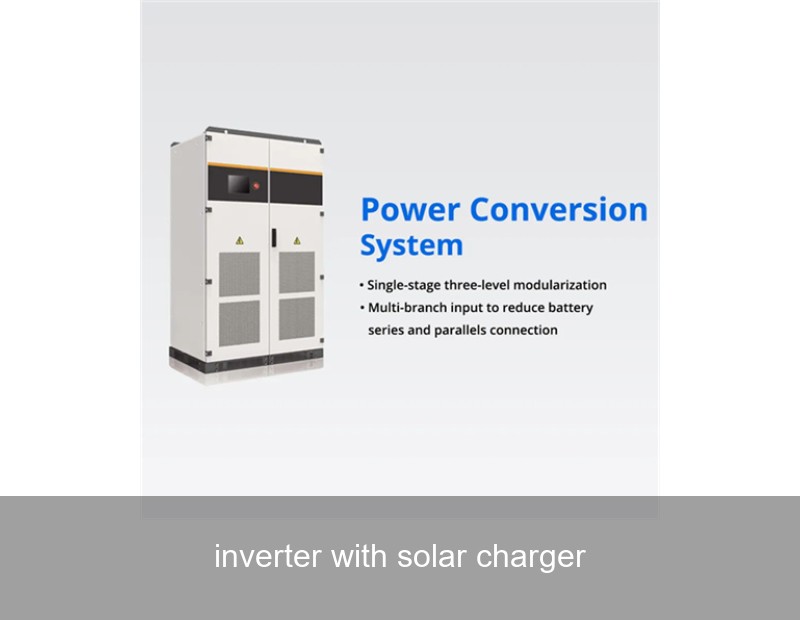
Imagine a single device that not only powers your home or business but also intelligently captures free energy from the sun, stores it for a rainy day, and manages it all seamlessly. This isn't futuristic tech—it's the reality of today's integrated inverter with solar charger. For homeowners and businesses across Europe and the US, this technology is the beating heart of a modern energy system, turning solar panels and batteries into a resilient, cost-saving power station. As energy prices fluctuate and grid reliability becomes a concern, understanding this key component is your first step toward true energy autonomy. Companies like Highjoule, a global leader in advanced energy storage since 2005, are at the forefront, designing these intelligent systems for commercial, industrial, residential, and microgrid applications.
Table of Contents
- What is an Inverter with Solar Charger?
- The Problem: Why Your Current Solar Setup Might Be Incomplete
- How an All-in-One Solution Works: The Technical Logic
- Real-World Impact: A Case Study from Bavaria
- Choosing the Right System: Key Features for Your Needs
- Highjoule's Integrated Approach to Smarter Energy
- The Future of Home and Business Energy
What Exactly is an Inverter with Solar Charger?
Let's break it down simply. A traditional solar inverter has one job: convert the direct current (DC) electricity from your solar panels into alternating current (AC) that your home appliances can use. A solar charge controller has a different job: it regulates the voltage and current from the solar panels to safely charge a battery bank. An inverter with solar charger—often called a hybrid or multi-mode inverter—combines these two critical functions, and often a battery inverter, into a single, compact unit.
Think of it as the command center of your personal energy ecosystem. It doesn't just convert power; it makes intelligent decisions in real-time: Should solar power go directly to running the fridge? Should excess energy charge the batteries for use tonight? Or should it be fed back to the grid? This integrated intelligence is what sets modern systems apart.

Image Source: Unsplash (Representative image of energy system components)
The Problem: Why Your Current Solar Setup Might Be Incomplete
Many early solar adopters face a common frustration: their system produces abundant power at noon, but they're still drawing expensive electricity from the grid in the evening. This is the "duck curve" phenomenon well-known to grid operators in California and Germany. Your panels might be working, but without storage and sophisticated management, a significant portion of solar's potential is wasted.
- Phenomenon: Solar overproduction during peak sun, grid dependency at night.
- Data: According to the U.S. Department of Energy, effective storage is key to achieving high levels of solar penetration on the grid. For the individual, this means without storage, self-consumption of solar power typically maxes out at 30-50%.
- Insight: A standalone solar inverter is a one-tool solution for a complex job. To maximize your investment, you need integration.
How an All-in-One Solution Works: The Technical Logic
The logic follows a clear, efficient hierarchy managed by the integrated inverter's software. Here’s the typical decision flow:
- Priority 1: Power Active Loads. Solar energy is first used to power your home or business in real-time.
- Priority 2: Charge the Battery. Any excess solar energy is directed to charge your connected battery storage system.
- Priority 3: Export to Grid. If the batteries are full and loads are met, surplus energy can be sold back to the grid (where feed-in tariffs apply).
- Priority 4: Draw from Battery. When solar production drops (e.g., at night), the system seamlessly switches to drawing power from the batteries.
- Priority 5: Grid as Backup. Only when the batteries are depleted does the system draw minimal power from the grid.
This logic ladder ensures every watt of solar energy you produce is used in the most economical way possible. Highjoule's systems, like the Highjoule HPS Series, take this further with AI-driven energy forecasting, which learns your consumption patterns and weather forecasts to optimize this cycle even more precisely.
Real-World Impact: A Case Study from Bavaria
Let's move from theory to tangible results. Consider a medium-sized dairy farm in Bavaria, Germany. Facing high operational costs and a commitment to sustainability, the farm installed a 50 kWp solar array in 2020 with a standard inverter. While it reduced grid imports, the farm's heavy energy use for cooling in the evening kept bills high.
In 2023, they retrofitted their system with a Highjoule HCS-30 hybrid inverter with solar charger and a 40 kWh lithium-ion battery pack.
| Metric | Before Retrofit (2022) | After Retrofit (2024) | Change |
|---|---|---|---|
| Grid Energy Self-Consumption | 41% | 92% | +51% |
| Monthly Energy Bill | €2,800 (avg.) | €450 (avg.) | ~84% reduction |
| Backup Power During Grid Outage | None | Critical operations for 18+ hours | Full resilience added |
The integrated system allowed the farm to run its cooling systems overnight on stored solar, turning a daytime-only resource into a 24/7 asset. The payback period for the added storage and hybrid inverter is projected to be under 6 years, thanks in part to Germany's high grid electricity prices and intelligent energy management.
Choosing the Right System: Key Features for Your Needs
Not all integrated solutions are equal. When evaluating an inverter with solar charger, consider these critical features:
- Scalability: Can you easily add more batteries or solar panels later?
- Grid Services & Compliance: Does it comply with local grid codes (like VDE-AR-N 4105 in Germany or UL 1741 SA in the US)? Can it participate in virtual power plants?
- Efficiency: Look for peak efficiency ratings above 97%. Every percentage point matters in harvested solar.
- Software & Monitoring: A user-friendly app that provides real-time data and control is non-negotiable for modern users.
- Warranty and Support: This is a long-term investment. A 10+ year warranty and strong technical support are essential.
Highjoule's Integrated Approach to Smarter Energy
At Highjoule, we don't just sell components; we provide intelligent, efficient, and sustainable power solutions. Our expertise, honed since 2005, is in designing systems where the inverter with solar charger is the core intelligence. For residential customers, our HHS Home Hub Series offers a sleek, quiet unit with integrated energy management that learns and adapts. For commercial and industrial clients, our modular HPS PowerStack Series allows for scalable power and storage, ensuring business continuity and significant cost savings.
Our systems are designed for the specific demands and regulations of both the European and North American markets. They are built to not only maximize self-consumption but also to provide grid-supportive functions, a feature increasingly valued by utilities and rewarded by new energy policies, as noted by research from the National Renewable Energy Laboratory (NREL).

Image Source: Unsplash (Representative image of a modern home solar and storage system)
The Future of Home and Business Energy
The trajectory is clear: energy systems are moving from passive, single-directional flows to active, intelligent networks. The integrated inverter with solar charger is the hardware embodiment of this shift. It enables participation in demand-response programs, creates the foundation for energy communities, and turns every building into a potential node of grid stability.
As electric vehicle adoption soars, the next logical step is integrating EV charging into this ecosystem. Could your home's energy brain be scheduling your car to charge from your excess solar production, or even using your EV's battery to power your home during a peak rate period? With the right platform, this is already possible.
Is your current energy system simply generating power, or is it intelligently managing your energy independence, resilience, and costs? What would a 90% reduction in your grid dependency mean for your home's security or your business's bottom line?
 Inquiry
 Online Chat