


Inverter Without Battery: Unlocking Solar Power's Potential for Your Home or Business
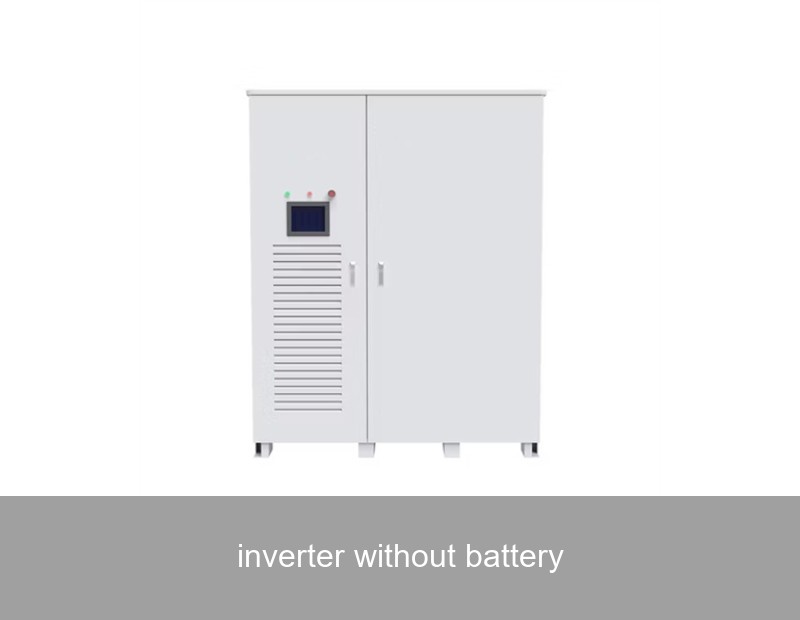
You've made a smart decision to invest in solar panels. Those sleek modules on your roof are capturing the sun's abundant energy. But have you ever wondered how that raw DC power becomes the clean AC electricity that powers your appliances? The answer lies in a critical device: the solar inverter. And while "solar-plus-storage" gets a lot of headlines, a high-quality inverter without battery remains the essential, and often most cost-effective, heart of a vast majority of solar installations. Let's explore why this technology is far from obsolete and how it continues to empower energy independence across Europe and the US.
Table of Contents
What is a Grid-Tied Inverter Without a Battery?
In its simplest form, a grid-tied inverter (or grid-interactive inverter) is the brain and converter of your solar array. Its primary job is to convert the direct current (DC) electricity generated by your solar panels into the alternating current (AC) electricity used by your home and the wider grid. Unlike hybrid inverters, a pure inverter without battery storage is designed to operate in tandem with the utility grid. It synchronizes perfectly with the grid's frequency and voltage, allowing you to use solar power in real-time and feed any excess generation back to the utility, often through net metering programs.

Image Source: Unsplash - A modern grid-tied inverter is a compact powerhouse.
How Does a Battery-Less Solar Inverter Work? The Daily Cycle
Let's walk through a typical sunny day. Your solar panels wake up with the sun, producing DC power. This power travels to your inverter without battery, which performs a sophisticated conversion to clean AC power. This AC power is then sent directly to your home's main electrical panel.
- Instant Consumption: Your currently running appliances (refrigerator, computer, etc.) draw this solar power first.
- Excess Export: If your panels produce more than you're using, the inverter seamlessly pushes the surplus onto the local utility grid. Your electricity meter spins backward (in many regions), earning you credits.
- Grid Supplementation: At night or on cloudy days when solar production is low, your home automatically draws power from the grid, as usual. The inverter remains idle or in a low-power monitoring state.
This elegant dance happens continuously, managed by the inverter's advanced software, ensuring stability and safety. A critical safety feature of all certified grid-tied inverters is "anti-islanding." This means if the grid goes down for maintenance or an outage, the inverter must shut off automatically. This protects utility workers repairing the lines. This is the key operational difference from a system with battery backup.
The Data: Efficiency and Cost-Effectiveness
The economics are compelling. According to the National Renewable Energy Laboratory (NREL), the installed cost per watt for residential solar has dropped significantly over the past decade, driven partly by efficient, affordable inverters. A high-efficiency inverter without battery can achieve peak conversion efficiencies of 98-99%, meaning almost all the solar power harvested is made usable. When you compare the upfront cost of a solar-only system to one with integrated storage, the difference is substantial, often shortening the payback period by years.
Key Benefits of Choosing a Standalone Solar Inverter
Why do millions of homeowners and businesses start with a battery-less system?
- Lower Initial Investment: The most apparent advantage. You avoid the significant cost of batteries and often a more complex inverter, making solar adoption accessible. Maximized Financial Return: In areas with strong net metering policies, exporting excess power can offset your nighttime grid consumption entirely, leading to the fastest return on investment. Simpler System, Higher Reliability: Fewer components mean fewer potential points of failure. Modern string and microinverters are known for their long, reliable service lives. Future-Ready Design: Many of today's advanced grid-tied inverters from leading providers are "storage-ready." This means you can easily add a compatible battery system later when technology improves and prices fall further.
| Feature | Grid-Tied Inverter (No Battery) | Hybrid Inverter (With Battery) |
|---|---|---|
| Upfront System Cost | Lower | Significantly Higher |
| Power During Grid Outage | No | Yes |
| Complexity & Installation | Simpler | More Complex |
| Optimal For | Maximizing bill savings, areas with reliable grid | Backup power, maximizing self-consumption |
Real-World Impact: A Case Study from Bavaria
The theory is solid, but how does it play out on the ground? Consider a medium-sized dairy farm in Bavaria, Germany. The farm owner installed a 45 kWp rooftop solar system using a high-efficiency inverter without battery in early 2022. The primary goals were to offset the substantial energy costs of cooling tanks and automated milking systems.
The Data-Driven Outcome: Monitoring data from the first full year of operation showed the system generated approximately 48,000 kWh of electricity. The farm's real-time self-consumption was around 60%, using solar power directly during the day for its operations. The remaining 40% (19,200 kWh) was exported to the grid under Germany's Renewable Energy Act (EEG) feed-in tariff. The combined savings on their electricity bill plus the feed-in revenue resulted in a projected payback period of just under 7 years. For this business, the economic case for adding batteries wasn't viable, as grid outages are rare and the financial return was maximized with the simpler system.

Image Source: Unsplash - Commercial solar installations often prioritize large-scale generation with grid-tied inverters.
Highjoule's Intelligent Inverter Solutions: Built for Performance and Insight
At Highjoule, with nearly two decades of experience since 2005, we understand that the inverter is the command center of your solar investment. Our range of grid-tied and storage-ready inverters is engineered for maximum efficiency, durability, and smart management.
Our Helios Series String Inverters are a perfect example of modern inverter without battery technology. Designed for residential and commercial applications, they feature:
- Peak efficiencies exceeding 98.5%, ensuring you get every possible kilowatt-hour from your panels.
- Advanced monitoring via the Highjoule Energy Portal, giving you real-time and historical insights into your system's performance, energy production, and household consumption patterns.
- Robust design with industry-leading warranties, built to withstand diverse climatic conditions across Europe and North America.
- Future-ready architecture that allows for seamless integration with Highjoule's QuantumStack battery systems when you decide to add storage, protecting your initial investment.
For us, an inverter is not just a converter; it's the gateway to intelligent energy management. Our systems provide the data you need to understand your energy habits, making you an active participant in the energy transition.
Making the Right Choice: Is a Solar Inverter Without Battery Right for You?
So, how do you decide? Ask yourself these key questions:
- What is my primary goal? If it's to reduce electricity bills and you have a reliable grid with net metering, a grid-tied system is likely ideal.
- How frequent and long-lasting are power outages in my area? If they are rare, the value of backup power may not justify the battery cost.
- What is my budget? Starting with a high-quality, storage-ready inverter from a provider like Highjoule allows you to capture savings immediately and add batteries as a financially logical upgrade later.
The landscape of energy is shifting. With the rise of smart grids and time-of-use rates in places like California and parts of the EU, the value proposition is evolving. However, the foundational technology—the efficient, intelligent inverter without battery—will continue to be the workhorse that makes solar energy practical and profitable for most people.

Image Source: Unsplash - Smart monitoring turns data into actionable insights for energy management.
Ready to explore how a Highjoule solar inverter system can optimize your energy independence and start saving on your bills? What's the first question about your home's energy use you'd like our technology to help you answer?
 Inquiry
 Online Chat