


Your Ultimate Guide to Choosing a Reliable IP55 Outdoor Supplier for Energy Storage
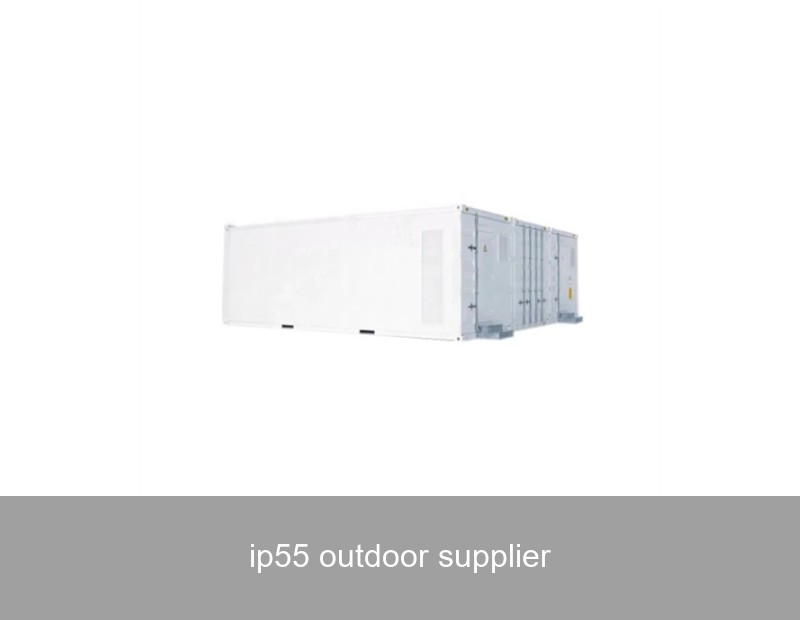
If you're looking to install an outdoor battery energy storage system (BESS), you've likely come across the term "IP55." It's more than just a technical spec on a datasheet; it's the fundamental promise that your significant investment can withstand the elements. Whether you're in rainy Seattle, snowy Oslo, or under the scorching Arizona sun, the enclosure's protection level is non-negotiable. But finding a trustworthy IP55 outdoor supplier involves digging deeper than the rating itself. This guide will walk you through why IP55 matters, what to look for in a supplier, and how to ensure your outdoor storage solution is built for longevity, safety, and performance.
Table of Contents
- What Does IP55 Actually Mean for Outdoor Storage?
- Beyond the Rating: Critical Factors Your IP55 Outdoor Supplier Must Address
- Case Study: A German Logistics Center's Resilience Upgrade
- The Highjoule Approach: Engineered for Real-World Outdoor Demands
- Your Supplier Selection Checklist
- Future-Proofing Your Investment
What Does IP55 Actually Mean for Outdoor Storage?
Let's break down the "Ingress Protection" (IP) code. The first digit, '5', indicates protection against solid objects like dust. It's not totally dust-tight (that's a '6'), but it prevents sufficient ingress that could interfere with safe operation. The second digit, '5', is the crucial one for outdoor use. It means the enclosure can withstand water jets from a nozzle (6.3mm) from any direction without harmful effects.
In practical terms, an IP55-rated BESS is designed for outdoor installation without needing a dedicated shelter. It can handle wind-driven rain, snow, and hose-down conditions. However—and this is a big however—IP55 is a standardized test. It doesn't automatically account for long-term UV exposure, extreme thermal cycling, corrosive coastal air, or mechanical impact. This is where the expertise of your chosen IP55 outdoor supplier becomes paramount. They must engineer products that not only pass the test but thrive in continuous environmental stress.

Image: A typical outdoor energy storage installation. The IP rating is the first line of defense against weather. Credit: Unsplash.
Beyond the Rating: Critical Factors Your IP55 Outdoor Supplier Must Address
Choosing a supplier based solely on an IP55 badge is a common pitfall. Here’s what truly differentiates a component supplier from a solutions partner:
- Thermal Management Mastery: The outdoor environment creates a brutal thermal challenge. A premium supplier integrates an intelligent thermal management system that maintains optimal cell temperature in both -20°C winters and 40°C heatwaves, ensuring cycle life and safety.
- Material Science & Corrosion Resistance: The enclosure should use marine-grade aluminum or pre-galvanized steel with powder coating. For coastal areas, specific anti-corrosion treatments are essential. UV-resistant materials prevent casing degradation and color fading.
- System-Level Safety & Compliance: The enclosure is just the shell. Inside, battery management (BMS), power conversion, and system controls must be designed for outdoor reliability. Look for certifications like UL 9540 (USA) or IEC 62619 (EU) for the entire system, not just components.
- Smart Grid Integration: Can the system communicate seamlessly with solar inverters, grid signals, and building management systems? An advanced IP55 outdoor supplier provides the hardware and the software intelligence for demand response, peak shaving, and backup power.
Case Study: A German Logistics Center's Resilience Upgrade
Let's look at a real-world application. A major logistics hub near Hamburg, Germany, faced two challenges: high peak demand charges and an unreliable grid connection affecting its cold storage facilities. They needed a solution that could operate reliably in the North Sea's wet, temperate climate.
They partnered with Highjoule to deploy a 500 kWh / 750 kWh containerized BESS with a true IP55-rated outdoor design. The system featured:
| Challenge | Highjoule Solution | Outcome (Data after 12 months) |
|---|---|---|
| Weather Resistance | IP55 enclosure with C5-M anti-corrosion treatment for salty, humid air. | Zero weather-related faults despite 1,200mm annual rainfall. |
| Thermal Stability | Liquid-cooled thermal system with seasonal adaptive control. | Cell temperature maintained within ±3°C of optimum year-round. |
| Financial ROI | Automated peak shaving and frequency regulation participation. | Reduced peak demand charges by 28%, generating €65,000 in annual savings. |
| Grid Resilience | Seamless transition to backup power in <2 seconds during grid outages. | Prevented spoilage of cold storage goods valued at €200,000+. |
This case illustrates that the value of a superior IP55 outdoor supplier is measured in operational reliability and tangible financial returns. You can read more about grid-service requirements for BESS in the EU from the European Commission's electricity market design factsheet.
The Highjoule Approach: Engineered for Real-World Outdoor Demands
At Highjoule, with nearly two decades of experience since 2005, we view IP55 as a baseline. Our outdoor storage solutions, like the HiveEdge Commercial Series, are built from the ground up for uncompromising outdoor performance.
Our philosophy is "Protection by Design." This means:
- Multi-Layer Environmental Sealing: Beyond the enclosure, we protect critical connections and vents with redundant seals.
- Proactive Climate Control: Our hybrid cooling system actively manages internal humidity to prevent condensation—a silent killer of electronics often overlooked in basic IP55 designs.
- Global Compliance Built-In: Our systems are pre-certified to the highest regional standards (UL, IEC, UN38.3), accelerating permitting and installation for our partners worldwide.
- Full-Service Partnership: We don't just supply hardware. We provide site assessment, system design, grid integration support, and remote performance monitoring through our Highjoule Nexus platform, ensuring your outdoor asset delivers for its entire lifespan.

Image: Proper design allows for safe maintenance access, a key supplier consideration. Credit: Unsplash.
Your Supplier Selection Checklist
When evaluating an IP55 outdoor supplier, use this list in your RFPs and discussions:
- ✅ Can they provide third-party certification reports for the IP55 testing of the complete system unit?
- ✅ What is the warranty on the enclosure and paint finish against corrosion and UV damage?
- ✅ How does the thermal management system handle both extreme heat and extreme cold?
- ✅ Can they share anonymized performance data from similar climatic installations?
- ✅ Do they offer monitoring and O&M services to ensure long-term health?
- ✅ Are their safety certifications (like UL 9540) applicable to the outdoor configuration you are buying?
For a deeper understanding of battery safety standards, the U.S. Department of Energy's energy storage roadmap provides valuable context.
Future-Proofing Your Investment
The energy landscape is shifting rapidly. A quality outdoor BESS today should be a platform for tomorrow's opportunities. Can the system's software be updated to participate in new grid service markets? Is the design modular to allow for cost-effective capacity expansion in the future? A forward-thinking IP55 outdoor supplier like Highjoule designs with this flexibility in mind, ensuring your asset remains a revenue or savings generator for 15+ years.
As you consider partners, ask yourself: Are they simply selling me a protected box of batteries, or are they providing a resilient, intelligent, and adaptable energy asset? The difference defines the true value of your investment.
What specific environmental challenge—be it desert heat, tropical humidity, or industrial pollution—is your top concern for an outdoor storage installation in your region?
 Inquiry
 Online Chat