


Island Protection Energy Storage Cabinet: Your Key to Uninterrupted Power
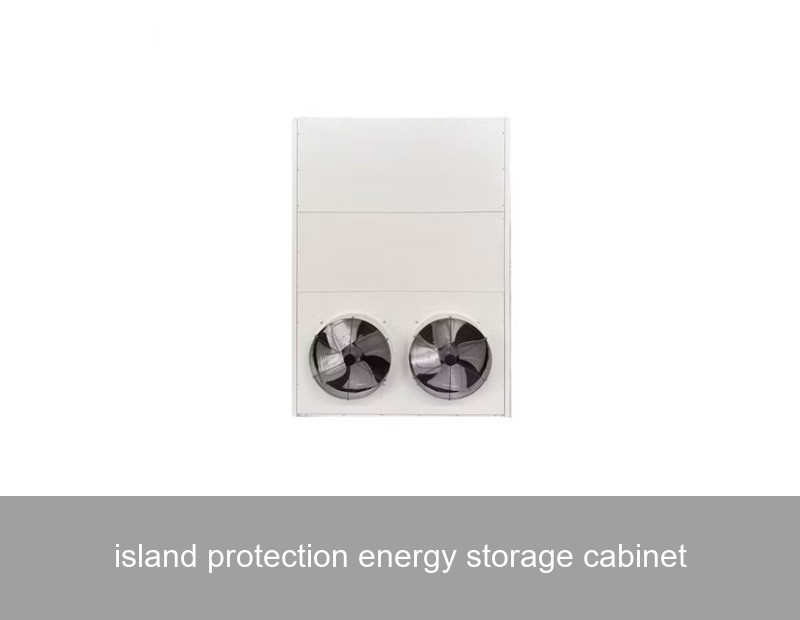
Imagine this: a fierce storm knocks out the main power line to your remote community, factory, or critical facility. The grid goes dark. But your lights stay on, your operations continue, and your essential services remain powered. This isn't magic; it's the result of a sophisticated island protection energy storage cabinet. For communities and businesses in geographically isolated areas or those seeking ultimate energy independence, this technology is a game-changer. It's the core component that allows a local energy system to disconnect from the main grid and form a stable, self-sustaining "island" of power. In this article, we'll explore how these intelligent systems work, why they're essential, and how companies like Highjoule are pioneering solutions that keep the lights on when the grid can't.
What is Island Protection in Energy Storage?
In the world of power systems, "islanding" refers to a condition where a portion of the grid continues to operate independently after being disconnected from the main utility network. Island protection is the intelligent control scheme that manages this process safely and seamlessly. An island protection energy storage cabinet is the physical and digital brain behind this operation. It houses the battery bank, power conversion system (PCS), battery management system (BMS), and the critical protection relays and controllers. When a fault, outage, or scheduled disconnection occurs, this cabinet detects the anomaly, isolates the local microgrid from the main grid in milliseconds, and stabilizes the local frequency and voltage using the stored energy. This ensures a smooth transition to backup power without damaging connected equipment or endangering utility workers.

Image: A modern energy storage system cabinet, similar to those used in island protection schemes. Source: Unsplash
The Grid Challenge: Why Islands Need Protection
The need for island protection is driven by some hard realities. According to the U.S. Energy Information Administration (EIA), the average U.S. electricity customer experienced just over seven hours of power interruptions in 2021, with major events like storms being a primary cause. For remote islands, industrial parks, data centers, and hospitals, these interruptions are more than an inconvenience—they are costly and potentially dangerous.
- Phenomenon: Increasing grid instability due to aging infrastructure and extreme weather events.
- Data: A study by the European Commission highlights that grid modernization is a top priority, with investments aimed at improving resilience and integrating renewables, which can inherently create fluctuations.
- Insight: Relying solely on diesel generators is no longer a sustainable or cost-effective answer. They are noisy, polluting, and require constant fuel supply, which is a logistical nightmare for true islands. The modern solution integrates solar or wind with an island protection energy storage cabinet to create a cleaner, smarter, and more reliable buffer.
The Energy Storage Cabinet: The Heart of the System
Think of the energy storage cabinet as the command center for your energy independence. It's far more than just a box for batteries. Its key functions include:
| Component | Function | Benefit for Island Protection |
|---|---|---|
| Battery Bank (Li-ion, LFP) | Stores electrical energy from the grid or renewables. | Provides the instant energy reservoir to power the island upon grid loss. |
| Power Conversion System (PCS) | Converts DC battery power to AC for loads and vice-versa. | Maintains perfect voltage and frequency stability within the island, crucial for sensitive equipment. |
| Battery Management System (BMS) | Monitors cell health, temperature, and state of charge. | Ensures safety, longevity, and optimal performance of the core energy asset. |
| Protection & Control Unit | Continuously monitors grid parameters and issues trip commands. | Executes the seamless islanding transition and re-synchronization when grid returns. |
The Highjoule Solution: Engineered for Resilience
At Highjoule, with nearly two decades of experience since 2005, we understand that reliability is non-negotiable. Our H-IOS (Intelligent Islanding Operation System) series of energy storage cabinets are specifically designed for mission-critical island protection applications. What sets our solution apart is the deep integration of hardware and software. Our cabinets feature industry-leading Lithium Iron Phosphate (LFP) battery chemistry for superior safety and cycle life, coupled with our proprietary GridSync™ controller. This controller doesn't just react to outages; it proactively manages energy flow, allowing for planned islanding for maintenance or peak shaving, and offers black-start capability—meaning it can reboot the local grid from a complete blackout. Whether for a remote commercial facility in Scandinavia seeking to pair with wind power or a California-based microgrid wanting to ensure fire-season resilience, Highjoule's systems are built to provide peace of mind.
Case Study: Powering Resilience in the Azores
Let's look at a real-world application. The Azores archipelago in the Atlantic faces challenges with fuel import dependency and grid vulnerability to weather. A project on one of the smaller islands integrated a 1.2 MWh Highjoule H-IOS cabinet with an existing 800 kW solar PV farm.
- Situation: The local grid was prone to outages, disrupting the island's primary fish processing plant.
- Solution: A Highjoule island protection system was installed. During normal operation, it stores excess solar energy and provides grid services. When the main inter-island connection fails, the system islandes the processing plant and critical community loads within 50 milliseconds.
- Data & Results: In the first 18 months, the system successfully islanded 7 times, preventing an estimated €450,000 in spoiled inventory and production downtime. Furthermore, by optimizing solar self-consumption, the facility reduced its diesel generator runtime by over 70%, cutting fuel costs and carbon emissions significantly. This aligns with global trends documented by sources like the International Renewable Energy Agency (IRENA) on islands transitioning to renewables-plus-storage.

Image: Renewable energy projects on islands are ideal candidates for island protection storage. Source: Unsplash
Key Features of a Modern Island Protection Energy Storage Cabinet
When evaluating a system, here’s what to look for, features that Highjoule embeds into every H-IOS cabinet:
- UL 9540 / IEC 62933 Certification: Non-negotiable safety standards for grid-interactive systems.
- Millisecond-Level Transition: Seamless transfer to island mode that is undetectable to sensitive loads.
- Scalable & Modular Design: Start with what you need and add cabinets as your energy independence goals grow.
- Advanced Thermal Management: Ensures optimal battery performance and lifespan in diverse climates, from Mediterranean heat to Nordic cold.
- Remote Monitoring & Diagnostics (Highjoule PowerView™): Full visibility into system health and performance from anywhere, enabling predictive maintenance.
The Future Outlook for Islanded Communities
The technology behind the island protection energy storage cabinet is rapidly evolving. We're moving towards systems that don't just provide backup but actively optimize energy economics through software—participating in virtual power plants (VPPs) when grid-connected and providing unwavering autonomy when needed. The convergence of AI-driven energy forecasting and ultra-fast grid-forming inverters is creating microgrids that are more resilient than the traditional grid itself.
So, as you consider the energy future of your remote facility, community, or critical operation, ask yourself this: Is your current backup plan a relic of the past, or is it an intelligent, sustainable system ready to form a resilient island of power at a moment's notice? What would uninterrupted power mean for your operations, your community's safety, and your environmental goals?
 Inquiry
 Online Chat