


Lead Acid Battery Container Solutions: A Modern Take on a Proven Technology
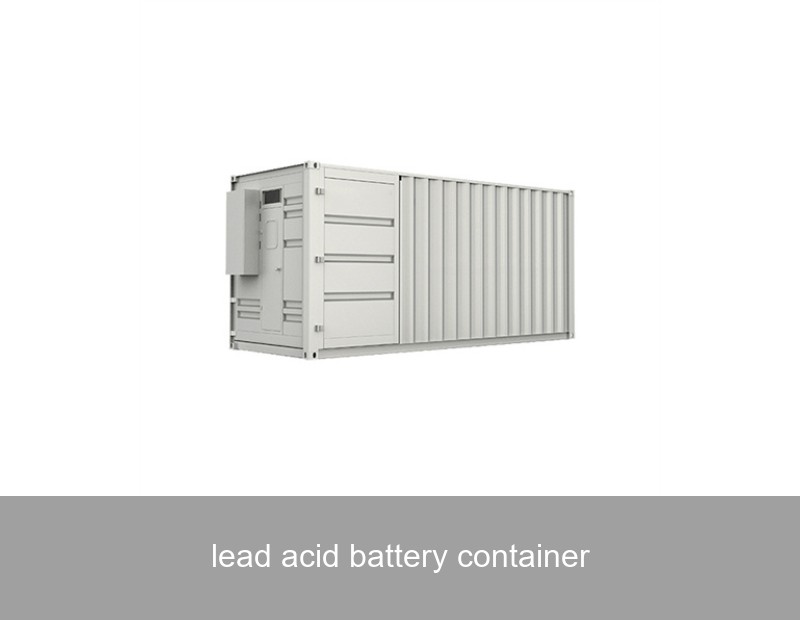
When you think about energy storage, your mind might jump to the latest lithium-ion innovations. But in the background, a workhorse technology has been powering our world for over a century: the lead acid battery. Today, its application is evolving, particularly in large-scale and demanding environments. This brings us to a critical component often overlooked—the lead acid battery container. Far more than just a box, a modern container system is the key to unlocking safety, longevity, and efficiency for industrial and commercial energy storage. Let's explore why this mature technology, when housed intelligently, remains a compelling choice for specific applications across Europe and the US.
Table of Contents
The Modern Challenge: Scaling Up a Classic
The phenomenon is clear: industries and utilities need massive, reliable, and cost-effective energy storage. While lead acid batteries are known for their reliability and lower upfront cost, deploying them at megawatt-hour (MWh) scale presents unique hurdles. Imagine hundreds, even thousands, of individual cells. They generate heat during operation, release hydrogen gas during charging, and are susceptible to performance degradation if temperature fluctuates wildly. Stacking them in a simple shed is a recipe for reduced lifespan, safety risks, and maintenance nightmares.
Here's where the data is telling. According to the U.S. Department of Energy's Sandia National Laboratories, proper thermal management can extend the cycle life of a lead acid battery bank by up to 30%. Furthermore, the National Fire Protection Association (NFPA) has specific codes (like NFPA 855) governing the installation of stationary battery energy storage systems, mandating ventilation, spacing, and fire suppression—requirements that are nearly impossible to meet cost-effectively without a purpose-built enclosure.

Image: A traditional lead acid battery bank installation, highlighting the space and infrastructure challenges. Source: Unsplash (Representative Image)
Beyond the Box: What a Modern Container Really Provides
So, what transforms a simple container into a high-performance lead acid battery container system? It's an integrated ecosystem engineered for performance and safety.
- Climate Control & Thermal Management: Active HVAC systems maintain an optimal temperature range (typically 20-25°C), ensuring consistent performance and preventing capacity loss due to heat or cold.
- Advanced Ventilation & Gas Management: Hydrogen gas, a byproduct of charging, is safely extracted and diluted to safe levels through forced-air ventilation systems, preventing explosive atmospheres.
- Integrated Fire Suppression: Early detection smoke and heat sensors are linked to fire suppression systems specifically designed for electrical fires, often using clean agents that won't damage the batteries.
- Structural Integrity & Safety: The container itself is built to withstand environmental stresses and includes spill containment for electrolyte, secure access controls, and robust racking systems.
- Monitoring & Control Hub: This is the brain. A Battery Management System (BMS) and environmental sensors provide real-time data on voltage, temperature, state of charge, and health, often accessible remotely.
A Real-World Case: Port of Rotterdam's Backup Power
Let's look at a concrete example from Europe. A major terminal operator at the Port of Rotterdam needed a failsafe backup power system for its critical cargo handling cranes and gate operations. A power outage would mean millions in lost revenue and logistical chaos. Their requirements? Ultra-high reliability, the ability to handle short, high-power bursts, and a solution that could be deployed quickly without constructing a new building.
The chosen solution was a containerized lead acid battery system. Here's why it worked:
| Parameter | Specification | Outcome |
|---|---|---|
| System Capacity | 2 MWh, 1.5 MW peak power | Sufficient to support critical loads for over 90 minutes. |
| Deployment Time | 8 weeks from order to commissioning | Significantly faster than a built-in solution. |
| Key Feature | Redundant HVAC & Forced Air Ventilation | Maintained optimal temperature and safety in the maritime environment. |
| Total Cost of Ownership (5-year analysis) | 25% lower than a comparable lithium-ion system for this duty cycle. | Met budget constraints while exceeding reliability targets. |
This case, documented in part by the Port of Rotterdam Authority, highlights the niche where advanced lead acid battery containers excel: high-power, shorter-duration backup where upfront cost, proven safety, and rapid deployment are paramount.
The Highjoule Approach: Intelligent Containerization
At Highjoule, with nearly two decades of experience since 2005, we understand that the container is the foundation of system performance. Our PowerVault LC Series for lead acid applications is engineered with the insights gained from thousands of deployments worldwide.
We don't just house batteries; we create a conditioned environment for them to thrive. Our containers feature a modular, N+1 redundant climate control system, meaning if one unit fails, another takes over seamlessly—a critical feature for 24/7 industrial operations. Our proprietary monitoring platform, Highjoule Horizon, goes beyond basic BMS, providing predictive analytics on battery health and scheduling maintenance alerts before issues arise, maximizing your investment.
Image: A modern energy storage container, similar to Highjoule's solutions, showcasing a clean, integrated design. Source: Unsplash (Representative Image)
Whether for a microgrid in California requiring seamless transition during public safety power shutoffs, or a German manufacturing plant looking to shave peak demand charges with a reliable storage buffer, Highjoule's engineered solutions bridge the gap between the inherent virtues of lead acid chemistry and the rigorous demands of modern energy applications.
The Future Outlook for Containerized Solutions
The conversation around energy storage is often dominated by energy density and cycle life. However, for many commercial and industrial (C&I) players, the calculus involves reliability, total cost of ownership, and risk mitigation. The advanced lead acid battery container addresses these concerns head-on, making a time-tested technology viable for the future's grid challenges.
With increasing focus on circular economy, the >99% recyclability rate of lead acid batteries, as noted by organizations like the Battery Council International, adds a significant sustainability credential. When paired with a smart container that extends its usable life, the environmental and economic proposition becomes even stronger.
Is your operation relying on backup power or demand charge management where extreme long-duration storage isn't the primary goal? Have you evaluated the total lifecycle cost and safety infrastructure needed for your energy storage project? Perhaps the optimal solution involves a technology you already know, housed in a system that brings it firmly into the 21st century.
 Inquiry
 Online Chat