


How to Choose Your Future Lead Energy Supplier in a Decarbonizing World
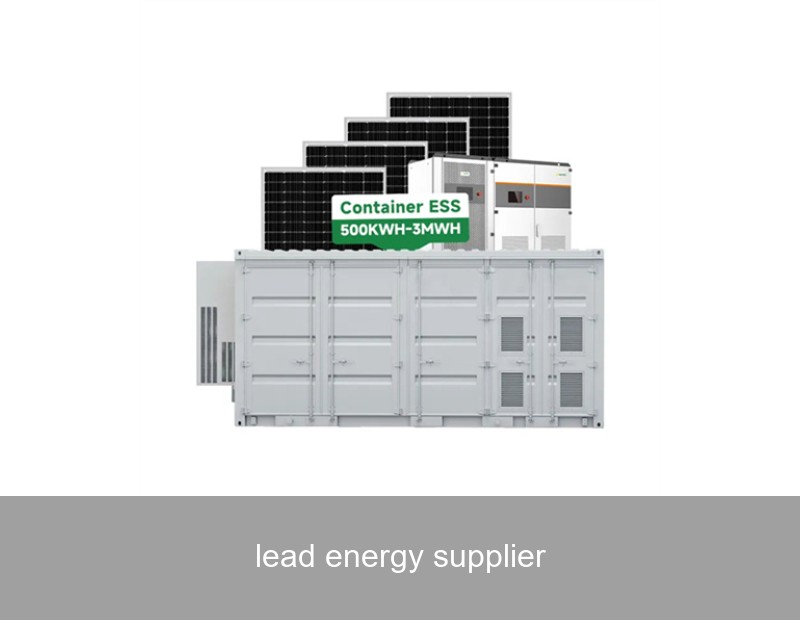
For decades, choosing an energy supplier was a simple, one-dimensional decision based on price. Today, that landscape is undergoing a seismic shift. As businesses and communities across Europe and the U.S. commit to ambitious sustainability goals and seek resilience against volatile energy markets, the very definition of a lead energy supplier is being rewritten. It's no longer just about who provides the kilowatt-hours; it's about who provides intelligent, reliable, and clean power solutions. This article explores the evolving criteria for a modern energy partnership and how innovative storage technology is at the heart of this transformation.
Table of Contents
- The New Benchmark: What Makes a True Lead Energy Supplier Today?
- The Data Reality: Grid Instability and Rising Costs
- Case Study: Transforming a German Manufacturing Plant
- Why Battery Energy Storage Systems (BESS) Are the New Core Competency
- Highjoule's Role: Delivering Intelligent Storage for a Sustainable Grid
The New Benchmark: What Makes a True Lead Energy Supplier Today?
The traditional utility model is being challenged. A forward-thinking lead energy supplier now must excel in three key areas beyond simple commodity delivery:
- Reliability & Resilience: Providing uninterrupted power during grid outages, extreme weather events, or periods of congestion.
- Economic Optimization: Actively managing energy consumption and generation to reduce costs through arbitrage, demand charge management, and participation in grid services markets.
- Sustainability Integration: Seamlessly integrating on-site renewable generation (like solar PV) and ensuring clean energy is available when needed, not just when it's produced.
This trifecta is impossible to achieve with conventional infrastructure alone. The enabling technology that allows a supplier to meet these new demands is the advanced Battery Energy Storage System (BESS).
The Data Reality: Grid Instability and Rising Costs
Let's look at the driving forces. In the U.S., the Energy Information Administration (EIA) reports a steady increase in both the frequency and duration of power outages over the past five years, largely attributed to aging infrastructure and climate impacts. In Europe, the 2022 energy crisis highlighted a painful dependency and price volatility, with wholesale electricity prices in some markets soaring over 500% year-on-year.
Simultaneously, the influx of intermittent renewable energy—while crucial for decarbonization—presents a grid balancing challenge. There are times when solar production exceeds demand (causing potential curtailment) and times when it drops to zero (creating a supply gap). This phenomenon, often called the "duck curve," necessitates flexible, fast-responding resources to maintain grid stability.

Image: The 'Duck Curve' visualizes grid balancing challenges. Source: NREL
Case Study: Transforming a German Manufacturing Plant
Consider a real-world example from Bavaria, Germany. A mid-sized automotive parts manufacturer faced a dual challenge: skyrocketing Strompreis (electricity price) and a corporate mandate to achieve 80% renewable power for its operations by 2025. Their existing rooftop solar system covered only 30% of their daytime load, and nothing after sunset.
Their new energy partner, acting as a comprehensive lead energy supplier, proposed a solution centered on a 2 MWh / 1 MW battery storage system integrated with their existing solar. The results after one year of operation:
| Metric | Before BESS | After BESS Integration |
|---|---|---|
| Renewable Consumption | 30% | 78% |
| Peak Demand Charges | €42,000/month (avg.) | €16,000/month (avg.) |
| Grid Dependency During Peak | 100% | < 15% |
| Revenue from Grid Services | €0 | €28,000 (annual) |
The BESS stores excess solar generation from midday and discharges it during the evening production peak and high-price periods. It also provides frequency containment reserve (FCR) to the German grid, generating additional revenue. The supplier's role evolved from billing for consumption to actively managing an asset that cuts costs, boosts sustainability, and creates income.
Why Battery Energy Storage Systems (BESS) Are the New Core Competency
As the case shows, the BESS is the linchpin. But not all storage is created equal. The expertise of your lead energy supplier in specifying, integrating, and managing this technology is critical. Key considerations include:
- Technology Selection: Choosing between Lithium Iron Phosphate (LFP) for safety and longevity or other chemistries for specific power needs.
- System Intelligence: The software and controls that decide when to charge, discharge, or hold are what maximize ROI. This requires sophisticated algorithms and market awareness.
- Safety & Compliance: Adherence to strict local codes (like NFPA 855 in the U.S. or VDE-AR-E 2510-50 in Germany) for fire safety and grid interconnection is non-negotiable.
- Long-term Performance: Guarantees on battery degradation and system availability over a 10-15 year lifespan.
Highjoule's Role: Delivering Intelligent Storage for a Sustainable Grid
This is where Highjoule's mission aligns perfectly with the new paradigm. Since 2005, we have been at the forefront of advanced energy storage, providing the physical and digital backbone that allows progressive energy suppliers and large energy users to thrive.
Our product portfolio, like the Highjoule H-Series commercial & industrial BESS, is engineered for performance and safety. It features industry-leading LFP battery modules, a compact footprint, and our proprietary JouleMind AI energy management platform. JouleMind doesn't just operate the system; it continuously optimizes it for multiple value streams—from energy bill savings to participation in ancillary service markets like FCR or the UK's Dynamic Containment.

Image: Professional maintenance of a BESS unit. Source: Unsplash
For a lead energy supplier, partnering with Highjoule means they can offer a turnkey solution. We provide the technology, the integration expertise, and the ongoing performance monitoring, enabling them to build deeper, solution-based relationships with their customers. We empower them to transition from a commodity provider to a true partner in energy resilience and sustainability.
The Critical Question for Your Organization
As you evaluate your current and future energy partnerships, the defining question is no longer "What is your price per kWh?" The essential questions are: "How will you help me navigate the energy transition, ensure my operations are resilient, and unlock new economic value from my energy assets?" Does your current supplier have the technological capability and strategic vision to be that partner?
What is the single biggest energy challenge—cost, reliability, or carbon targets—keeping you and your leadership team awake at night?
 Inquiry
 Online Chat