


Your Search for a Reliable Li-ion 60Ah Supplier: A Guide to Smarter Energy Storage
If you're in the market for energy storage, whether for an electric vehicle, a commercial backup system, or a residential solar setup, you've likely encountered the term "60Ah." Searching for a Li-ion 60Ah supplier can feel overwhelming. You're not just buying a battery; you're investing in the heart of your power system. This search is a critical first step, but it often focuses solely on a single number—the amp-hour (Ah) rating. In reality, finding the right partner goes far beyond this specification. It's about sourcing a core component that balances energy density, longevity, safety, and integration into a larger, intelligent system. This article will guide you through what to look for in a true partner, blending essential technical knowledge with real-world application insights.
Beyond the "Ah": Key Metrics for a Reliable Li-ion 60Ah Supplier
The 60Ah rating tells you one thing: the cell's capacity, or how much charge it can hold. It's like the size of a fuel tank. But would you buy a car based only on tank size? Of course not. You'd consider the engine's efficiency, safety features, and brand reputation. The same applies here. When evaluating a Li-ion 60Ah supplier, you must dig deeper into the cell's construction and performance data.
- Cell Chemistry (Cathode Type): This is the most critical differentiator. Is it Lithium Iron Phosphate (LFP or LiFePO4) or a Nickel-based chemistry like NMC? LFP cells, which Highjoule preferentially utilizes in many systems, offer superior cycle life (often 6,000+ cycles) and inherent safety due to their thermal stability. NMC may offer higher energy density but often at the cost of longevity and thermal tolerance.
- Cycle Life and Warranty: A cycle is one full discharge and recharge. A quality cell from a reputable supplier should be rated for thousands of cycles with minimal capacity degradation. Ask for the cycle life data at a specific Depth of Discharge (DoD), like 80% or 90%. The supplier's warranty terms directly reflect their confidence in this data.
- Energy Density (Wh/kg): This measures how much energy is stored per unit of weight. Higher density means a more compact and lighter battery pack for the same 60Ah capacity, crucial for mobility applications and space-constrained installations.
- Continuous Discharge Rate (C-rate): This indicates how quickly the cell can safely deliver its stored energy. A 60Ah cell with a 1C rate can continuously provide 60 Amps. For applications requiring high bursts of power (like heavy machinery or grid support), you need a cell with a higher C-rate capability.
| Metric | Lithium Iron Phosphate (LFP) | Nickel Manganese Cobalt (NMC) | Why It Matters |
|---|---|---|---|
| Typical Cycle Life (to 80% capacity) | 6,000+ cycles | 3,000 - 4,000 cycles | Total cost of ownership; system longevity |
| Thermal & Safety Profile | Excellent; more stable | Good; requires robust BMS | Risk mitigation, insurance costs, peace of mind |
| Energy Density | Moderate (~120-160 Wh/kg) | High (~180-250 Wh/kg) | System size and weight constraints |
| Optimal Climate | Wide temperature performance | Performance can degrade in extreme heat | Suitability for varied geographical installations |
The Supplier Landscape: From Cell Vendor to System Partner
The market has different tiers of suppliers. At one end, you have pure cell manufacturers. At the other, you have full-system providers like Highjoule. Your choice depends on your project's complexity and your internal capabilities.
- Tier 1 Cell Manufacturers: These are large-scale producers of the raw Li-ion cells. They provide the fundamental building blocks but require you to handle module design, Battery Management System (BMS) integration, thermal management, and system-level engineering. Partnering directly with them is viable only for very large OEMs with extensive R&D departments.
- Module & Pack Integrators: These companies purchase cells from manufacturers and assemble them into modules or packs, often adding a basic BMS. This reduces engineering overhead but still leaves you with the task of integrating the pack into a functional, grid-connected or vehicle-mounted system.
- Full-System Solution Providers (The Highjoule Model): This is where the value shifts from component supply to performance guarantee. A company like Highjoule acts as your de facto Li-ion 60Ah supplier, but we deliver so much more. We select and quality-test cells (often LFP for their durability), engineer them into proprietary modules with advanced, self-learning BMS, and encase them in scalable, plug-and-play cabinets. We provide the power conversion systems (PCS), energy management software, and full system integration. You get a guaranteed performance outcome—reliable backup power, peak shaving, or renewable energy time-shift—not just a box of batteries.
Case Study: Powering a German Logistics Hub with 60Ah Technology
Let's look at a real-world application in our core European market. A major logistics company operating a 100,000 sq. ft. distribution center in Lower Saxony, Germany, faced two challenges: soaring demand charges from the grid and a corporate mandate to reduce carbon footprint.
The Phenomenon: Their energy bill showed severe "peak demand" spikes, primarily from simultaneous operation of HVAC, high-bay lighting, and electric forklift charging stations.
The Data & Solution: An energy audit revealed a potential for 28% reduction in peak demand. Highjoule designed and installed a 500 kWh / 750 kVA containerized battery energy storage system (BESS). The system's core utilized high-quality, long-cycle life 60Ah LFP cells, chosen for their safety and durability in a high-cycling application. These cells were configured into Highjoule's proprietary IntelliStack battery modules.
The Outcome: The Highjoule system, managed by our GridSync energy management platform, performs automated peak shaving. It discharges strategically during the facility's short periods of highest power draw. Within the first year of operation:
- Demand Charges Reduced: By 26%, exceeding the initial projection.
- Energy Arbitrage: The system charges from the grid during low-tariff night hours and supplements power during high-tariff daytime, yielding additional savings.
- Reliability: Provides seamless backup power for critical servers during grid sags, preventing data loss.
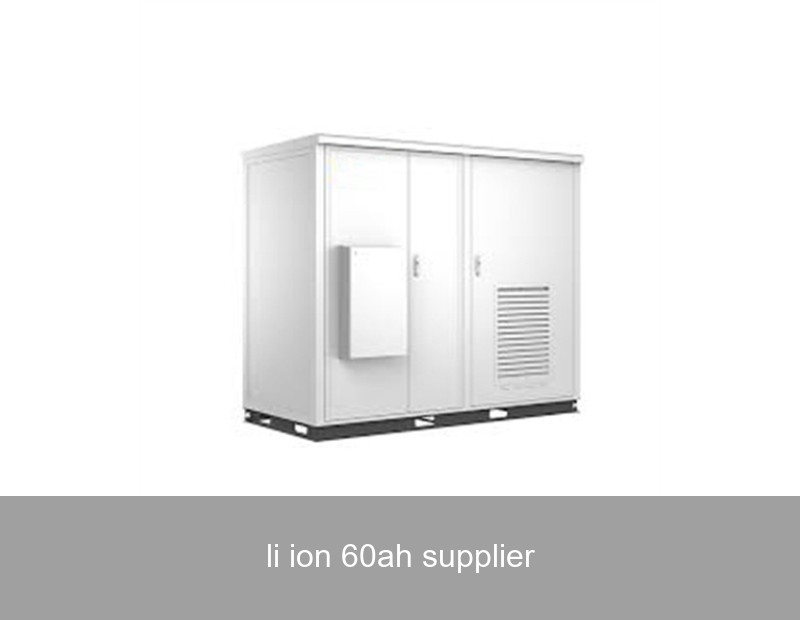
 Image: A containerized BESS unit, similar to those deployed for commercial and industrial applications. (Photo by Zbynek Burival on Unsplash)
This case underscores that the success wasn't due to sourcing a generic 60Ah cell, but in deploying those cells within a smart, application-optimized system from a single accountable partner.
The Highjoule Approach: From Trusted Cells to Intelligent Systems
At Highjoule, our journey begins with rigorous cell selection. We partner with leading Tier 1 manufacturers to source premium 60Ah-grade LFP and NMC cells, subjecting them to stringent validation tests. But our core expertise lies in what we build around them.
Our IntelliStack battery modules are more than just cell holders. They feature a multi-layer BMS that monitors voltage, temperature, and current at the cell, module, and rack level. This data feeds into our cloud-based GridSync EMS, which turns raw storage into an intelligent grid asset. For residential customers, our HomePower series offers the same philosophy in a compact format, seamlessly integrating with solar inverters to maximize self-consumption.
When you engage with Highjoule as your Li-ion 60Ah supplier, you're not just getting a commodity. You're gaining a partner that ensures safety through layered protection protocols, maximizes return on investment through smart software, and guarantees performance through holistic system design and long-term warranties. We move the conversation from "cost per amp-hour" to "value per kilowatt-hour cycled over the system's lifetime."
Future Trends: The Evolution of the 60Ah Cell and Beyond
The technology is not static. Cell energy density is gradually improving, meaning future 60Ah cells will be smaller and lighter. We are also seeing advancements in solid-state battery technology, which promises even greater safety and energy density, though these are still on the horizon for mass-market storage. More immediately, the industry is focusing on cell-to-pack (CTP) designs, which Highjoule is actively innovating in. By integrating cells directly into the pack structure, we reduce weight, increase volume efficiency, and improve thermal management—further enhancing the performance of every 60Ah cell in our systems.
As you finalize your selection for a Li-ion 60Ah supplier, ask yourself this: Is your project's success defined by the arrival of a pallet of battery cells, or by the decade-plus of reliable, intelligent, and cost-saving energy storage that follows? What specific energy challenge—be it demand charges, renewable intermittency, or backup power anxiety—are you truly aiming to solve?
 Inquiry
 Online Chat