


The Power Behind the Plug: Unlocking the Potential of the Li-Ion Rechargeable Battery
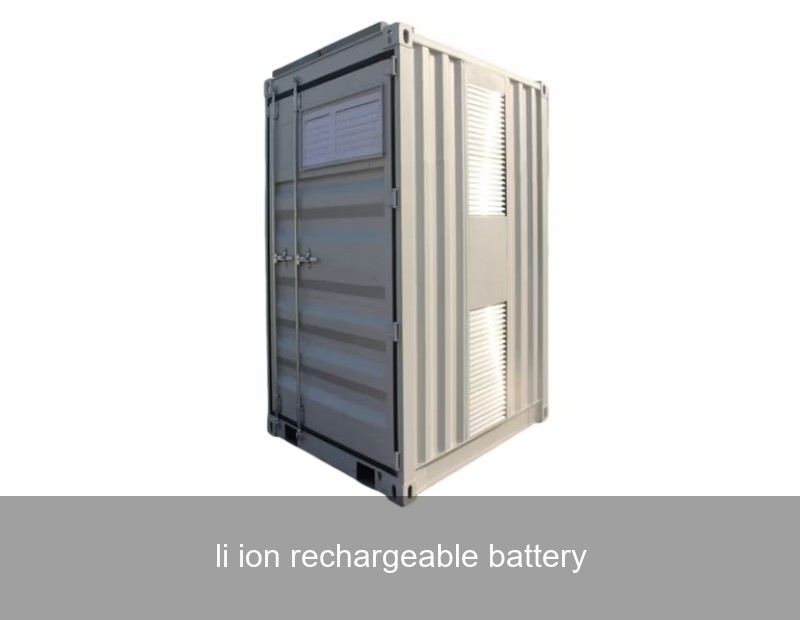
You interact with one every single day. It's in your phone, your laptop, maybe your car, and increasingly, it’s quietly humming in the basement or on the side of a factory, powering our modern world. The li ion rechargeable battery has evolved from a consumer electronics marvel to the cornerstone of a sustainable energy future. But what exactly transforms this technology from simply storing energy for a gadget to becoming the critical backbone for businesses, homes, and entire grids? The answer lies not just in the chemistry, but in how it's engineered, integrated, and managed at scale.
More Than Just Phones: The Unsung Hero of the Energy Transition
The phenomenon is clear: our energy landscape is shifting. We're adding variable renewable sources like solar and wind at an unprecedented rate. In the U.S., renewables are set to contribute 24% of electricity generation in 2024, while the European Union saw wind and solar overtake gas for the first time in 2022. This is fantastic news, but it introduces a challenge: the sun doesn't always shine, and the wind doesn't always blow. This intermittency creates a pressing need for reliable energy storage—a buffer to balance supply and demand.
This is where the advanced li ion rechargeable battery system shines. It's no longer just a cell; it's a sophisticated ecosystem. Think of it this way: a single battery cell is like a lone musician. Powerful, but limited. A full Battery Energy Storage System (BESS) is a symphony orchestra, with a conductor (the energy management system), string sections (battery modules), and percussion (power conversion systems), all working in perfect harmony to deliver stable, usable power. The data underscores this shift: global deployments of grid-scale battery storage are projected to multiply exponentially, with the U.S. and Europe leading the charge in capacity additions.

Image Source: Unsplash - Representative image of a grid-scale battery storage installation.
From Chemistry to Complete Solution: The Highjoule Approach
At Highjoule, we've been engineering this "symphony" since 2005. We understand that a commercial-grade li ion rechargeable battery solution is defined by more than just cell chemistry. It's about system-level intelligence, safety, and longevity. Our HPS Series for commercial and industrial applications is built on this principle. It integrates high-density, long-cycle life Li-ion battery modules with our proprietary JouleMind™ AI platform. This system doesn't just store energy; it learns your facility's load patterns, weather forecasts, and utility rate schedules to autonomously optimize when to store energy, when to use it, and when to potentially sell it back to the grid—maximizing your financial return and energy independence.
A German Case Study: Powering Business Continuity with Li-Ion
Let's move from theory to a tangible example. Consider a mid-sized automotive parts manufacturer in Bavaria, Germany. Their pain points were twofold: exposure to volatile European energy prices and the critical need for uninterrupted power to prevent costly production line halts. A power dip of even a few seconds could mean scrapping an entire batch of precision components.
They partnered with Highjoule to implement a 500 kWh / 750 kVA containerized HPS Series battery storage system, coupled with their existing rooftop solar PV. The system was configured for two primary functions: peak shaving and backup power.
| Metric | Before Highjoule System | After Highjoule System (First 12 Months) |
|---|---|---|
| Peak Demand Charges | €48,000 annually | Reduced by ~68% |
| Grid Energy Consumption | 100% from grid during operation | ~40% covered by solar+storage |
| Critical Load Backup | Diesel genset (slow response, high emissions) | Seamless <2ms transition for key lines |
| CO2e Footprint | Baseline | Reduced by an estimated 85 tonnes |
The data speaks volumes. The li ion rechargeable battery system provided a rapid, clean, and financially astute solution. The JouleMind™ platform automatically dispatches stored energy during the utility's expensive peak periods (often late afternoons), dramatically cutting demand charges. Furthermore, during two brief grid outages in the winter, the system provided seamless backup power, keeping critical manufacturing lines running without a flicker, something a traditional generator simply cannot do as quickly or quietly. This case exemplifies the dual role of modern storage: a strategic financial asset and a reliability essential.
Choosing the Right System: What to Look For in a Commercial Li-Ion Battery
Not all li ion rechargeable battery systems are created equal. For a business or community considering this investment, here are the critical pillars to evaluate:
- Safety by Design: Look for systems with cell-to-pack safety architectures, advanced thermal management (liquid cooling is often superior for large systems), and certifications like UL 9540 and IEC 62619. Highjoule systems feature multi-layer protection, from cell-level fuses to gas and fire suppression, all monitored 24/7.
- Depth of Discharge & Cycle Life: This defines the battery's "work ethic." A quality system will offer a high usable depth of discharge (e.g., 90%+) and a long cycle life (e.g., 6,000+ cycles to 80% capacity retention), ensuring a strong return on investment over 10-15 years.
- Grid Services & Software Intelligence: Can the system provide more than just on-site services? The most advanced systems, like those with JouleMind™, can be configured for frequency regulation or virtual power plant (VPP) participation, creating additional revenue streams.
- Scalability and Service: Your needs will evolve. A modular design allows you to start with what you need and expand cost-effectively. Coupled with a robust global service and warranty package, this protects your long-term investment.
The Future is Modular and Intelligent
The trajectory for li ion rechargeable battery technology points towards even greater integration and intelligence. We're moving beyond single-application systems to adaptive, multi-function energy assets. Highjoule's vision for residential and community microgrids, like our Home+ and MicroGrid Max solutions, embodies this. These systems allow homeowners not just to back up their homes, but to collectively form resilient community networks that can operate independently from the grid during extended outages, a feature gaining immense value in markets prone to extreme weather, as seen in parts of the U.S.

Image Source: Unsplash - Modern home with solar panels, symbolizing integrated residential energy systems.
The battery itself is becoming a smarter component within a broader Internet of Energy (IoE). Research into solid-state and other next-gen chemistries, like that tracked by institutions such as the National Renewable Energy Laboratory (NREL), promises even higher densities and safety. However, the immediate future is about maximizing the potential of today's proven Li-ion technology through superior system design and digital intelligence.
Highjoule: Your Partner in Energy Resilience
For nearly two decades, Highjoule has been at the forefront of this evolution. We don't just supply batteries; we deliver comprehensive, intelligent storage solutions tailored for C&I, residential, and microgrid applications. From initial feasibility analysis and financial modeling to system design, installation, and lifelong performance monitoring via our cloud platform, we partner with you to turn the powerful potential of the li ion rechargeable battery into tangible economic and operational resilience.
So, as you look at your rising energy bills, sustainability goals, or concerns about power reliability, ask yourself this: Is your organization simply consuming energy, or is it ready to actively manage and optimize it with an intelligent partner?
 Inquiry
 Online Chat