


Unlocking Long-Duration Energy Storage: The Power of the 500Ah Lithium-Ion Battery
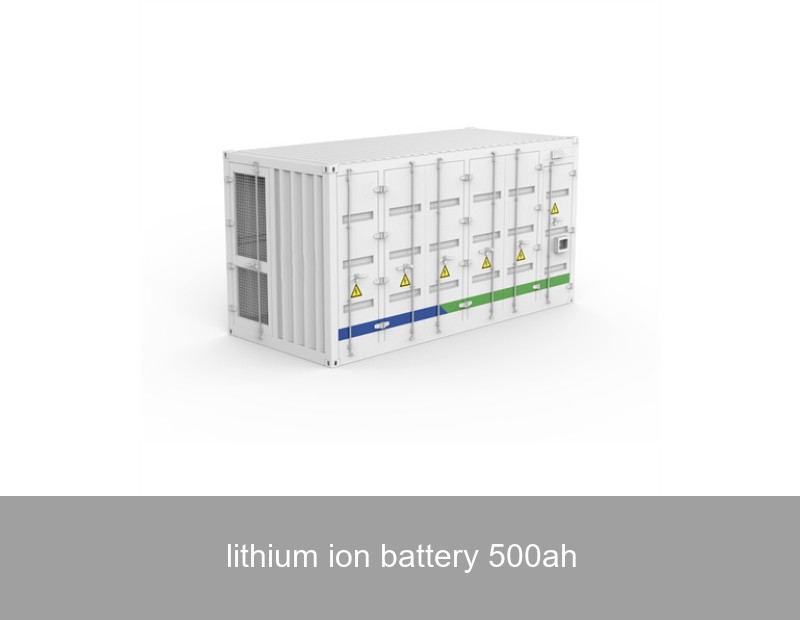
In the quest for a resilient, renewable-powered grid, the conversation is shifting from simply generating clean energy to storing it intelligently. We're moving beyond peak shaving and into the realm of long-duration energy storage (LDES). At the heart of this evolution is a specific, powerful component: the lithium ion battery 500ah. This isn't just an incremental upgrade; it represents a fundamental shift in capacity and capability for both large-scale and demanding commercial applications. Let's explore why this specific energy storage unit is becoming a cornerstone for sustainable power solutions.
The Phenomenon: The Need for More Than Just a Few Hours
a manufacturing plant in Germany or a data center in Texas. They've installed solar panels, reducing their grid dependence during sunny afternoons. But what happens when a cloudy spell lasts for days, or when overnight energy needs are high? Standard battery systems, often in the 100-200Ah range per cell, might cover a few hours of backup. However, for true energy arbitrage—storing cheap renewable energy for use during extended high-price periods—or for weathering prolonged grid instability, you need deeper storage. This is the gap that high-capacity cells like the 500Ah lithium-ion battery are designed to fill. They allow for fewer cells in parallel to achieve the same total energy (kWh), simplifying system design, improving reliability, and enabling longer discharge durations.
The Data: Why 500Ah is a Game-Changer for Capacity
Let's break down the numbers. Ampere-hours (Ah) measure the battery's charge capacity. A single 500Ah lithium iron phosphate (LFP) cell at a nominal 3.2V holds 1.6 kWh of energy (500Ah * 3.2V = 1600Wh). Now, compare this to a more common 100Ah LFP cell, which holds 0.32 kWh. To build a 100 kWh battery pack:
- Using 100Ah cells: You'd need approximately 312 cells (in series/parallel configuration).
- Using 500Ah cells: You'd need only about 63 cells.
This 80% reduction in cell count translates directly to:
| Factor | Benefit with 500Ah Cells |
|---|---|
| System Complexity | Drastically reduced wiring, connections, and battery management system (BMS) channels. |
| Footprint & Weight | More energy-dense design, saving valuable space in commercial and industrial settings. |
| System Reliability | Fewer potential points of failure, leading to higher overall system uptime. |
| Long-Term Cost | Lower installation and maintenance costs over the system's 10-15 year lifespan. |
The trend towards larger form-factor cells is backed by industry analysis. Research institutions like the U.S. Department of Energy highlight cell-to-pack integration as a key pathway to lowering Levelized Cost of Storage (LCOS).

Credit: ThisisEngineering Raeng / Unsplash. Modern high-capacity battery systems require robust engineering and integration.
The Case Study: A European Industrial Park's Journey to Energy Independence
Let's look at a real-world application. A mid-sized industrial park in Northern Italy, housing several food processing facilities, faced two major challenges: volatile energy prices and a commitment to reduce its carbon footprint. Their existing 200 kWh lead-acid battery system was insufficient, requiring frequent replacement and struggling to handle more than two hours of critical load.
In 2023, they deployed a new 1 MWh containerized energy storage system (ESS) built around high-capacity lithium ion battery 500ah LFP cells. The system, integrated with their expanded 800 kWp solar carport, was designed for two primary functions: time-shifting solar generation for nighttime operations and providing up to 8 hours of backup power for critical cold storage units.
The results after one year were compelling:
- Energy Cost Reduction: By storing excess midday solar and discharging during evening peak rates, they achieved a 68% reduction in grid energy costs during summer months.
- ROI Timeline: Projected payback period shortened from 7 to 4.5 years due to higher cycle life and efficiency of the LFP chemistry.
- Reliability: The system successfully maintained critical loads during two planned grid outages, each lasting over 5 hours.
- Space Efficiency: The new ESS provided 5x the energy capacity in the same physical footprint as the old lead-acid system.
This case underscores that the value of a 500Ah-based system isn't just in the specification sheet; it's in the tangible operational and financial resilience it delivers.
The Insight: Beyond the Cell - System Intelligence is Key
Here's a crucial insight that we at Highjoule have learned over nearly two decades: a high-capacity cell alone does not make a great energy storage system. It's the ecosystem around it. Think of the 500Ah cell as a powerful athlete. Without a top-tier coach (the Battery Management System - BMS), a tailored training plan (the thermal management system), and a supportive team (robust power conversion and system integration), that athlete cannot perform reliably for over a decade.
The BMS for a 500Ah system must perform precise state-of-charge (SOC) and state-of-health (SOH) monitoring across fewer but larger cells. Thermal management becomes even more critical, as the heat generation within a large-format cell must be evenly dissipated to prevent degradation. This is where advanced, liquid-cooled cabinet designs shine. Furthermore, system-level software that can intelligently dispatch stored energy based on weather forecasts, tariff schedules, and load patterns is what transforms a simple battery bank into a true smart asset.
Highjoule's Role: Engineering Trusted 500Ah+ Solutions
Since 2005, Highjoule has been at the forefront of integrating advanced battery chemistry into reliable, user-centric systems. Our approach to high-capacity storage like the lithium ion battery 500ah paradigm is holistic:
- Highjoule Hive Commercial ESS: Our flagship containerized and cabinet solutions are now designed around next-generation LFP cells, including 500Ah and larger variants. The Hive platform features integrated liquid cooling, a proprietary adaptive BMS that extends cycle life, and AI-driven energy management software that optimizes for cost and carbon savings.
- Focus on Safety & Longevity: We subject our systems to rigorous testing beyond certification standards, focusing on thermal runaway propagation prevention and long-term degradation modeling. Our partnerships with leading cell manufacturers ensure we source top-tier, traceable cells.
- Full-Service Integration: For our commercial and industrial clients, we don't just deliver hardware. We provide feasibility studies, custom engineering for grid interconnection, and ongoing performance monitoring—a single point of responsibility for your energy resilience.
Our systems are operational from California to Bavaria, proving that robust, high-capacity storage is not a future concept, but a present-day solution.

Credit: American Public Power Association / Unsplash. Solar-plus-storage projects are increasingly reliant on high-capacity battery technology.
Looking Forward: What Does Your Energy Resilience Blueprint Look Like?
The transition to high-capacity cells like the 500Ah lithium-ion battery is more than a technical specification change; it's an enabler of a new energy strategy. It allows businesses to think bigger about their energy independence, to plan for multi-hour or even multi-day resilience, and to truly capitalize on their renewable investments. As grid dynamics continue to evolve and the International Energy Agency (IEA) continues to underscore the critical role of storage, the question isn't just about capacity, but about intelligent application.
Is your current energy storage strategy designed for the challenges and opportunities of the next decade, or is it merely addressing the needs of yesterday? What would achieving 8 or 12 hours of clean, reliable backup power mean for your operational continuity and bottom line?
 Inquiry
 Online Chat