


Understanding the Lithium Ion Battery Cell: The Heart of Modern Energy Storage
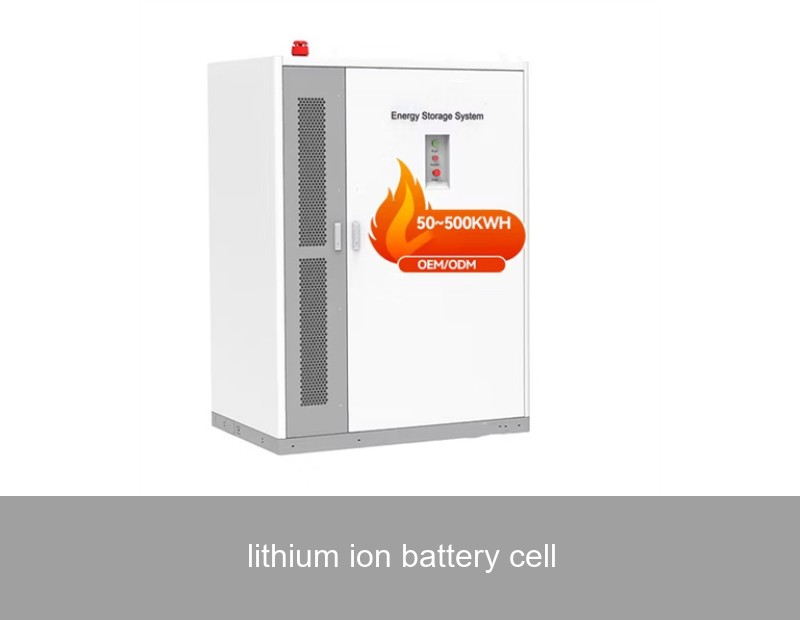
If you've used a smartphone, driven an electric vehicle, or wondered how renewable energy is stored, you've interacted with the marvel of the lithium ion battery cell. This single, often cylindrical or pouch-shaped unit is the fundamental building block powering our shift towards a more electrified and sustainable world. But what exactly happens inside that cell? And how does this technology translate from powering your laptop to stabilizing entire power grids? As a global leader in advanced energy storage systems, Highjoule has been harnessing the potential of these cells since 2005 to create intelligent, safe, and efficient solutions for businesses, industries, and communities. Let's delve into the science, the impact, and the future shaped by this pivotal technology.
Table of Contents
The Core Phenomenon: More Than Just Power
At its simplest, a lithium ion battery cell works on the principle of lithium ions shuttling between two electrodes: a cathode (typically a lithium metal oxide) and an anode (commonly graphite). During discharge, ions flow from the anode to the cathode, releasing energy to power your device. During charging, an external power source pushes the ions back to the anode, ready for the next cycle. This "rocking chair" mechanism is elegantly efficient.
But here's the critical insight we at Highjoule focus on: a high-quality cell is just the beginning. The true challenge—and opportunity—lies in what we call "cell-to-system" engineering. How do you assemble thousands of these individual cells into a pack that is safe, long-lasting, and intelligently managed? How do you ensure one underperforming cell doesn't compromise an entire system? This is where our expertise transforms basic chemistry into reliable energy solutions.

Individual lithium ion battery cells are the building blocks of large-scale energy storage. (Image source: Unsplash, free to use)
By the Numbers: The Data Driving Adoption
The global pivot to renewables and electrification is underpinned by staggering data. According to the International Energy Agency (IEA), global battery demand surged by over 65% in 2022, primarily driven by the transportation and power sectors. For the energy sector specifically, the economics are becoming irresistible:
- Cost Plunge: The price of lithium-ion battery packs has fallen nearly 90% since 2010, making large-scale storage a commercially viable reality.
- Efficiency Leader: Modern lithium-ion systems offer round-trip efficiency of 90-95%, meaning very little energy is lost during charge/discharge cycles compared to other storage forms.
- Scalability: From a 5 kWh residential unit to a 100+ MWh grid-scale installation, the modular nature of the technology allows for seamless scaling.
This data isn't just abstract; it's what allows a company like Highjoule to design systems with clear ROI for our clients. Whether it's a factory aiming to cut peak demand charges or a town integrating more wind power, the numbers now add up.
From Cell to System: The Highjoule Engineering Edge
So, how do we at Highjoule bridge the gap between a commodity cell and a premium, application-specific storage solution? It's a multi-layered approach we've refined over nearly two decades.
First, we start with rigorous cell selection and grading. Not all lithium ion battery cells are created equal. We partner with top-tier manufacturers and subject cells to extensive testing for capacity, internal resistance, and thermal behavior. This ensures consistency and longevity from the very foundation.
Next comes our proprietary Battery Management System (BMS). Think of this as the "brain" of the storage system. Our BMS doesn't just monitor overall voltage; it oversees each individual cell or module, balancing them in real-time, preventing overcharge or deep discharge, and managing thermal conditions with precision. This is the key to safety and maximizing cycle life.
Finally, we integrate this into our complete product lines: the Highjoule H-Series for Commercial & Industrial applications, designed for peak shaving and backup power, and the Highjoule EverHome for Residential users, enabling energy independence alongside solar panels. For microgrids and utility-scale projects, our custom-engineered solutions provide grid services like frequency regulation and renewable firming.
| Core Component | Highjoule's Approach | End-User Benefit |
|---|---|---|
| Lithium Ion Cell | Top-tier procurement & performance grading | High energy density, safety, and 10+ year design life |
| Battery Management (BMS) | Proprietary, cell-level active monitoring & balancing | Optimized performance, enhanced safety, extended warranty |
| System Integration | Modular, scalable design with smart grid connectivity | Seamless integration with solar, generators, and the grid |
| Application Intelligence | AI-driven software for energy arbitrage & optimization | Maximized financial returns and energy resilience |
Case Study: Grid Stability in Bavaria
Let's make this concrete with a real-world example from our European operations. A regional grid operator in Bavaria, Germany, faced a dual challenge: integrating a growing amount of intermittent solar and wind power from local producers, while maintaining grid frequency stability—a non-negotiable requirement for preventing blackouts.
The Solution: Highjoule deployed a 12 MWh containerized battery storage system, comprised of over 100,000 individual lithium ion battery cells, strategically located at a key grid substation. Our system's advanced inverters and control software allow it to respond to grid frequency deviations in milliseconds.
The Data & Outcome: Since commissioning, the system has been providing automatic Frequency Containment Reserve (aFRR) services. In its first 18 months of operation:
- It achieved a 99.8% availability rate for grid service calls.
- It helped integrate an additional 50 MW of renewable capacity into the local grid.
- It provided over 2,000 full-cycle equivalents without notable degradation, validating our cell longevity and system management approach.
This project, highlighted in a industry report, demonstrates how the humble battery cell, when expertly aggregated and managed, becomes a critical tool for grid decarbonization.

Containerized battery storage systems, like those deployed by Highjoule, provide grid-scale stability and renewable integration. (Image source: Unsplash, free to use)
Future-Proofing with Advanced Cell Technology
The evolution of the lithium ion battery cell is far from over. Chemistries like Lithium Iron Phosphate (LFP) are gaining prominence for their superior safety and cycle life, a chemistry we actively incorporate in our EverHome and select C&I products. Looking ahead, solid-state and silicon-anode technologies promise even greater energy density.
At Highjoule, our system architecture is designed to be chemistry-agnostic where possible. This means our core intelligence—the BMS and energy management software—can adapt to leverage the benefits of new cell technologies as they become commercially viable. Our goal is to ensure that an investment in a Highjoule system today is an investment in a platform that can evolve, protecting your assets for the long term.
Your Energy Ecosystem
Whether you're a homeowner with solar panels, a factory manager looking at your energy bill, or a municipal planner envisioning a resilient community, the story starts with understanding the core technology. The lithium ion battery cell is the seed, but the harvest—reliable, clean, and cost-effective power—depends on the ecosystem built around it.
What specific energy challenge—be it unpredictability, cost, or resilience—is your business or community looking to solve with the power of advanced energy storage?
 Inquiry
 Online Chat