


Unlocking Energy Freedom: Your Guide to a Truly Effective Low Budget Solar Battery
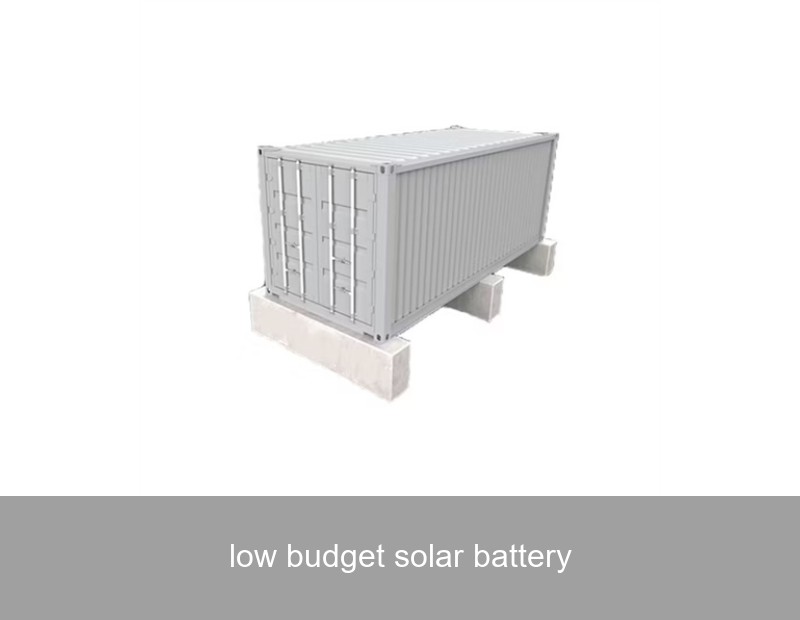
Let's be honest. When you hear "home battery storage," you might picture sleek, futuristic gadgets installed in luxury eco-homes. The prevailing myth is that solar batteries are a premium upgrade, reserved for those with deep pockets. But what if I told you that the landscape of energy storage has dramatically shifted? The quest for a reliable low budget solar battery is no longer a fantasy—it's a realistic strategy for thousands of homeowners across Europe and the US seeking control over rising energy costs. This guide cuts through the noise to show you how smart choices, not just big spending, can unlock true energy resilience.
The Myth: Solar Batteries Are Only for the Wealthy
For years, the high upfront cost of lithium-ion technology placed battery storage firmly in the "nice-to-have" category. The phenomenon was clear: only early adopters with significant capital could invest. However, this perception is now outdated. Driven by mass production, technological innovation, and supportive policies like the U.S. Investment Tax Credit (ITC), the market has evolved. Today, we're seeing a surge in solutions designed for value-conscious consumers. The goal isn't just the cheapest battery, but the most cost-effective system—one that maximizes your solar investment and delivers a tangible return.
The Real Economics of a Low Budget Solar Battery
Thinking about budget storage requires a shift from "price tag" to "value equation." A true low-budget solution isn't about cutting corners; it's about strategic optimization. Let's break down the core economics:
- Reduced Peak Demand Charges: For many businesses and homes on time-of-use rates, a battery can store cheap solar power from the afternoon to use during expensive evening peaks, slashing utility bills.
- Enhanced Self-Consumption: Without a battery, excess solar energy often gets sold back to the grid at a low rate. A battery lets you use more of what you produce, increasing your solar system's value from ~30% to over 70% self-sufficiency.
- Backup Power Value: While whole-home backup can be costly, strategically backing up essential circuits (like refrigeration, lighting, and internet) is a budget-friendly way to gain crucial resilience during outages.
The financial logic is compelling. By focusing on these key value streams, you can identify a system size and capability that fits your budget while making a meaningful dent in your energy expenses.
Understanding System Sizing and Cost
| System Focus | Typical Battery Size | Primary Goal | Budget Consideration |
|---|---|---|---|
| Essential Load Backup + Bill Management | 5 - 10 kWh | Power critical circuits, shift peak usage | Most accessible entry point, fastest ROI for many |
| High Self-Consumption | 10 - 15 kWh | Maximize use of solar, reduce grid dependence | Mid-range, balances cost with significant daily savings |
| Full Energy Independence | 15+ kWh | Disconnect from the grid (off-grid or near-off-grid) | Higher investment, long-term value play |
Key Factors for an Affordable & Effective System
Choosing the right low budget solar battery involves more than just kWh rating. Here are the critical aspects to scrutinize:
- Chemistry & Longevity: Lithium Iron Phosphate (LFP) batteries have become the standard for budget-conscious quality. They are safer, have longer lifespans (often 6000+ cycles), and perform better in varied temperatures than older lithium-ion types.
- Scalability: Can you start small and add more capacity later? A modular design is a huge budget advantage, allowing you to invest now and expand as finances allow.
- Integrated Intelligence: The brain of the system matters. Smart energy management software can optimize every kilowatt-hour, deciding when to charge, discharge, or hold based on weather forecasts and your usage patterns. This software is what turns cheap storage into smart, money-saving storage.

A compact, modular battery system like Highjoule's H-ESS Core Series allows for scalable, budget-friendly installation.
Case Study: A Family's Journey to Energy Independence
Let's look at real data from a project in Hamburg, Germany. The Müller family lived in a typical single-family home with a 8 kWp solar array. They produced plenty of energy during the day but bought expensive power at night. Their goal was simple: increase self-consumption without a massive loan.
- Challenge: High grid reliance after sunset, concern over rising energy tariffs.
- Solution: A phased approach. They installed a 9.6 kWh modular LFP battery system (Highjoule H-ESS Core 10) focused on time-of-use shifting and backing up essential home office circuits.
- Data & Results (First Year):
- Self-consumption rate increased from 35% to 78%.
- Annual electricity bill reduced by €1,150.
- The system provided backup during two short grid outages, keeping home office and refrigeration running seamlessly.
- Based on Fraunhofer ISE data for German solar yields, their projected payback period is under 8 years, well within the battery's 10+ year warranty.
"We started with what we could afford," Mr. Müller noted. "The system's design means we can simply add another module in two years if we want. It wasn't an all-or-nothing decision."
The Highjoule Approach: Smart Power, Not Just Cheap Storage
At Highjoule, we believe a low budget solar battery should not force you to compromise on intelligence or reliability. Founded in 2005, we've dedicated ourselves to engineering storage solutions that deliver premium performance at accessible price points. Our philosophy is built on three pillars:
- Modular by Design: Our H-ESS Core Series for residential use lets you start with a single 4.8 kWh module. You can build your capacity over time, matching investment to your budget. This eliminates the need for a large, intimidating upfront cost.
- LFP Technology as Standard: We use Lithium Iron Phosphate chemistry across our product lines. This gives our customers inherent safety, a long cycle life, and stable performance—the foundation of a good return on investment.
- Highjoule Neuron™ AI Platform: This is where value is maximized. Our integrated energy management system learns your household's patterns and syncs with local weather data. It automatically optimizes charging and discharging to capitalize on solar production and avoid peak tariffs, ensuring every euro or dollar of your system works as hard as possible.
For commercial and industrial clients, our C&I solutions apply the same principles of scalable, intelligent storage to manage demand charges and provide operational resilience, a critical consideration as noted by the International Energy Agency in their reports on grid stability.

Intelligent energy management software is key to maximizing savings from any battery system.
Beyond the Battery: Highjoule's Integrated Services
We support your journey beyond hardware. Our services include remote system monitoring, performance analytics, and firmware updates that continuously improve your system's efficiency. This ongoing support ensures your low budget solar battery investment remains optimized and future-proof for years to come.
Your First Step Towards a Smarter Energy Bill
The path to a smarter, more resilient home energy system begins with a clear assessment. You don't need to have all the answers upfront. Start by asking yourself: What are my essential loads during a power outage? What does my utility bill look like, and how much am I spending on peak-rate electricity? Could my existing solar panels be working harder for me?
With the right strategy and a partner focused on value engineering, a low budget solar battery is a powerful tool not just for saving money, but for taking a tangible step towards personal energy security. What's the one essential circuit in your home that, if backed up, would give you and your family the greatest peace of mind?
 Inquiry
 Online Chat