


Unlocking Grid Resilience: The Power of a Modular Battery Management System
Imagine your energy storage system as a symphony orchestra. Each battery cell is a talented musician. Without a conductor, the result is chaos—some cells overwork and degrade quickly, while others underperform. This is the challenge modern energy storage faces, and the modular battery management system has emerged as the master conductor. For businesses, communities, and homeowners navigating the energy transition, this technology isn't just an upgrade; it's the key to safety, longevity, and maximizing the return on every kilowatt-hour stored. Let's explore how this modular approach is redefining energy resilience across Europe and the US.
Table of Contents
- What is a Modular Battery Management System?
- The Phenomenon: The Scalability Challenge in Energy Storage
- The Data: Why Modularity Translates to Performance & Profit
- The Case Study: A European Microgrid's Journey to Resilience
- The Insight: Future-Proofing Your Energy Assets
- The Highjoule Approach: Intelligent Modular Solutions
What is a Modular Battery Management System?
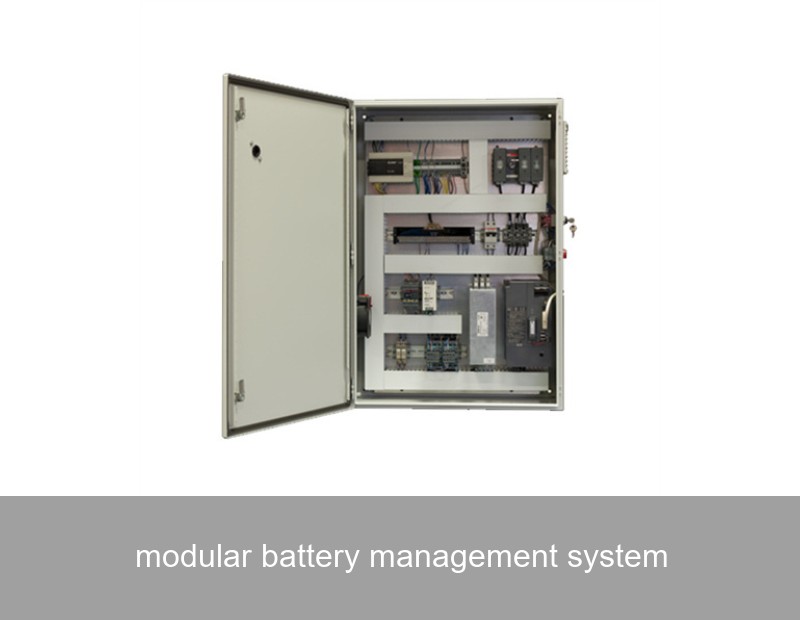
At its core, a Battery Management System (BMS) is the brain of any energy storage unit, monitoring voltage, temperature, and state of charge. A modular battery management system takes this a revolutionary step further. Instead of a single, centralized "brain," it employs a distributed architecture. Each battery module or pack has its own intelligent BMS subunit. These subunits communicate seamlessly with a master controller, creating a flexible, scalable, and incredibly robust network.
Think of it like building with LEGO® bricks. You can start with a small set (a residential storage unit) and effortlessly add more bricks (additional battery modules) to create a larger, more powerful structure (a commercial or grid-scale system). The modular BMS automatically recognizes and integrates each new component, optimizing the entire assembly's performance. This architecture stands in stark contrast to traditional, monolithic BMS designs, which are fixed in capacity and often require costly, complex replacements to scale.
The Phenomenon: The Scalability Challenge in Energy Storage
The global push for renewables has a not-so-secret dependency: storage. Solar panels don't produce at night, and wind turbines are intermittent. Battery storage is the obvious solution, but a one-size-fits-all approach fails in the real world. A factory's energy needs grow. A community microgrid expands. A homeowner adds an electric vehicle. Traditional storage systems struggle with this evolution, often becoming obsolete or requiring expensive, disruptive overhauls.
This is the scalability challenge. It's not just about physical space for more batteries; it's about the intelligence to manage them as a unified, efficient system. The modular battery management system directly addresses this by design. Its plug-and-play philosophy means capacity upgrades are simplified, maintenance is targeted (you can isolate and service a single module without shutting down the entire system), and system reliability soars through redundancy.
The Data: Why Modularity Translates to Performance & Profit
The advantages of a modular BMS aren't just theoretical; they are quantifiable. Let's break down the impact:
| Aspect | Traditional BMS | Modular BMS | Impact |
|---|---|---|---|
| System Uptime | Single point of failure can take entire system offline. | Redundant design; faulty module can be isolated. | Can increase availability by >15%. |
| Total Cost of Ownership (TCO) | High cost for capacity expansion; often requires full system change. | Lower expansion costs; pay-as-you-grow model. | Can reduce expansion costs by up to 30%. |
| Battery Lifespan | Balancing across many cells can be less precise. | Granular monitoring and balancing at module level. | Can extend useful battery life by 20% or more. |
These figures are supported by industry research. A study by the National Renewable Energy Laboratory (NREL) emphasizes that system architecture, including modularity, is a critical factor in reducing lifecycle costs for lithium-ion battery storage. Furthermore, the granular data from a modular BMS enables advanced diagnostics and predictive maintenance, preventing small issues from becoming catastrophic failures.

Image: A modular battery system allows for safer and simpler maintenance. Credit: Unsplash.
The Case Study: A European Microgrid's Journey to Resilience
Let's make this concrete with a real-world example from Southern Europe. A coastal municipality, reliant on summer tourism, aimed to power its critical infrastructure (water desalination, emergency services, port) with a solar-plus-storage microgrid. They started with a 500 kWh battery system in 2020.
By 2023, due to successful pilot results and increased demand, the council voted to double the storage capacity to 1 MWh. The initial system utilized a modular battery management system from Highjoule. The expansion was remarkably straightforward:
- No Software Overhaul: The existing master controller recognized the new battery modules seamlessly.
- Minimal Downtime: The original system remained operational during the installation of the new modules. Integration and commissioning were completed in 3 days, versus a projected 2+ weeks for a system overhaul.
- Performance Data: Post-expansion, the microgrid achieved 99.8% availability during peak tourist season. The granular BMS data identified and balanced slight performance variances between the older and newer modules, ensuring the entire 1 MWh asset performed as one cohesive unit.
This case underscores the core value proposition: a modular BMS doesn't just store energy; it protects and future-proofs a community's strategic energy investment.
The Insight: Future-Proofing Your Energy Assets
The deeper insight here is about asset management and risk mitigation. An energy storage system is a significant capital expenditure. A modular battery management system transforms this asset from a static piece of hardware into a dynamic, adaptable component of your energy infrastructure.
For a commercial building owner, this means the ability to scale storage in line with electric vehicle fleet adoption. For a utility, it means deploying storage at substations in phases, aligned with regulatory changes and renewable penetration. The modular BMS provides the operational flexibility to adapt to market signals, policy shifts, and technological advancements—like integrating a new, higher-density battery chemistry in the future without replacing the entire BMS infrastructure.
As noted by the International Energy Agency (IEA), flexibility is the cornerstone of modern, clean energy systems. The modular BMS is the hardware and software embodiment of that principle for storage.
The Highjoule Approach: Intelligent Modular Solutions
At Highjoule, we've built this philosophy into our core technology. Since 2005, our mission has been to provide intelligent, efficient, and sustainable power solutions. Our Highjoule H-Series commercial and industrial battery storage systems are engineered around a proprietary, advanced modular battery management system.
What does this mean for our clients?
- Architected for Growth: Start with what you need today and add capacity incrementally with minimal disruption and cost.
- Unmatched Diagnostics: Our platform provides cell-level insights, enabling predictive maintenance and maximizing system health.
- Grid-Smart Intelligence: Beyond basic management, our systems integrate with grid services, allowing businesses in the US and Europe to participate in demand response programs, generating additional revenue streams.
We don't just sell batteries; we deliver long-term energy resilience partnerships. Our systems are designed to evolve with your needs, ensuring your investment continues to deliver value for decades.

Image: Solar farms paired with scalable storage are the future. Credit: Unsplash.
Is Your Energy Storage Strategy Flexible Enough for Tomorrow's Challenges?
The energy landscape is shifting faster than ever. Regulatory frameworks like the EU's Green Deal and investment from the US Inflation Reduction Act are accelerating deployment. In this context, locking yourself into a rigid storage system could be a costly mistake. The question isn't just about how much energy you need to store today, but how you will manage and scale that capacity over the next 10-15 years.
How will your organization ensure its energy infrastructure is an adaptable asset, not a future liability? The first step is to understand how a modular battery management system can be the foundation of that strategy.
 Inquiry
 Online Chat