


Net Meter Grid Connect Solar Systems: Your Bridge to Energy Independence
Imagine your solar panels producing more clean energy than your home or business can use at that moment. Where does that excess power go, and how do you benefit from it? This is where net meter grid connect solar systems come into play, acting as a sophisticated two-way conversation between your property and the utility grid. For homeowners and businesses across Europe and the U.S., understanding this technology is key to maximizing solar investment and contributing to a more resilient energy network. Let's demystify how these systems work and explore how pairing them with intelligent storage is reshaping our energy future.
Table of Contents
- How Net Metering Works: A Simple Give-and-Take
- Beyond the Basics: The Grid's New Challenges
- A Real-World Case: The California Duck Curve
- The Intelligent Solution: Adding Smart Storage
- Highjoule's Role: Enhancing Your Net-Metered System
- The Future Outlook for Solar Owners
How Net Metering Works: A Simple Give-and-Take
At its core, a grid-connected solar system with net metering includes your solar panels, an inverter, your main electrical panel, a bi-directional utility meter, and the grid itself. During sunny afternoons, your system often generates a surplus. This excess electricity flows back to the grid, spinning your utility meter backwards. At night or on cloudy days, you draw power from the grid, spinning the meter forward. At the end of the billing cycle, you are billed only for the "net" energy used.
- The Credit System: You typically receive a kilowatt-hour (kWh) credit for the surplus energy you export, which offsets the cost of energy you later import.
- Policy Landscape: Net metering policies vary significantly by state and country. In many U.S. states and European nations, it's a well-established incentive, though some regions are transitioning to alternative compensation models.
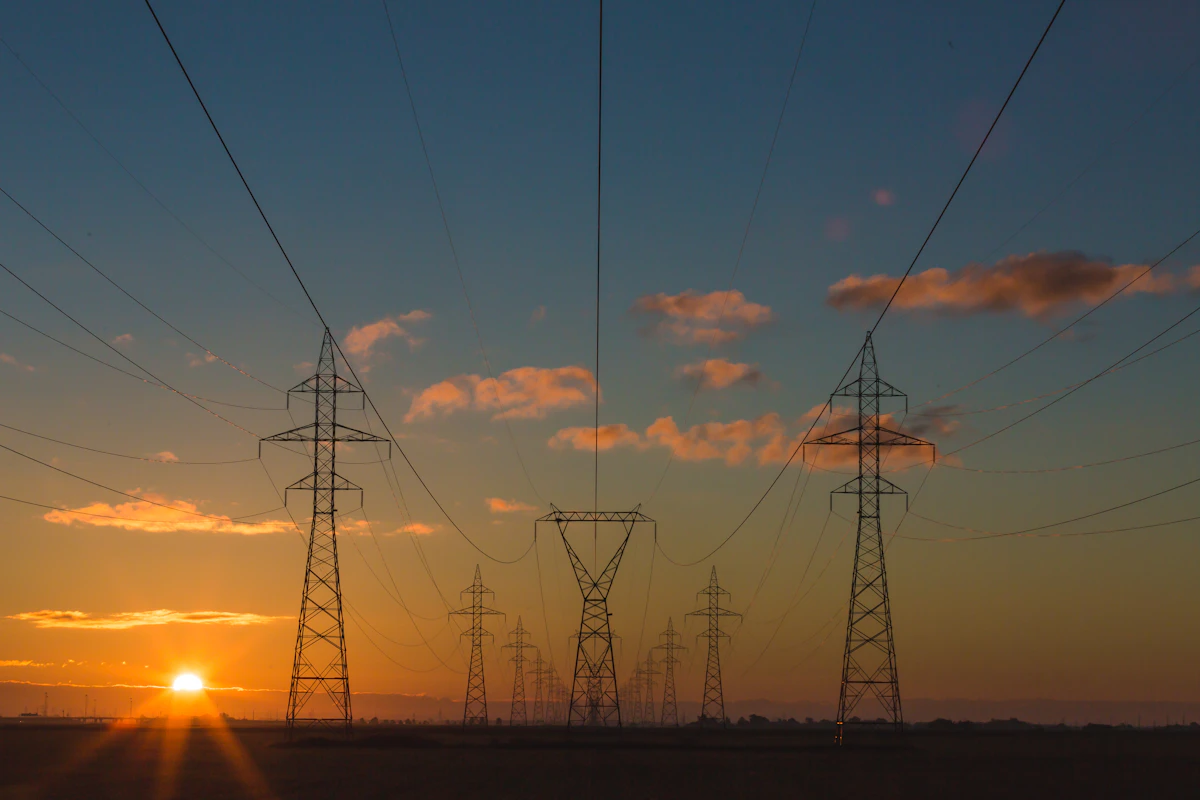
Image Source: Unsplash - A bi-directional meter is the heart of net metering.
Beyond the Basics: The Grid's New Challenges
While net metering is a fantastic policy for early solar adopters, its widespread success is creating a new phenomenon. As the National Renewable Energy Laboratory (NREL) notes, high concentrations of solar can lead to technical challenges for grid operators. The issue? Solar production peaks midday, but electricity demand often peaks in the early evening when the sun is setting. This creates a sharp ramp-up demand for traditional power plants, a problem visualized in the now-famous "Duck Curve."
| Time of Day | Solar Production | Grid Demand | Challenge |
|---|---|---|---|
| Midday | Very High | Moderate | Potential for grid overload, low-value energy exports |
| Early Evening | Low/None | Very High (Peak) | Rapid need for fossil-fuel generation, straining the grid |
A Real-World Case: The California Duck Curve
Let's look at a concrete example. California, a global leader in solar adoption, provides a clear case study. The California Independent System Operator (CAISO) first identified the "Duck Curve" in 2013. The deepening "belly" of the duck represents the times when solar power meets a large portion of demand, requiring other sources to ramp down. The steep "neck" is the evening ramp-up.
The Data: In 2022, CAISO reported that during certain spring days, oversupply of solar led to curtailment—essentially, turning off renewable generation—exceeding 600,000 MWh for the year. That's enough clean energy to power nearly 90,000 homes for a year, wasted. This highlights a critical limitation of net metering alone: it doesn't inherently encourage using solar energy when the grid needs it most.
The Intelligent Solution: Adding Smart Storage
This is where the conversation evolves from simple net metering to intelligent energy management. By integrating a battery energy storage system (BESS) with your grid-connected solar, you transform your setup. Instead of sending all excess energy to the grid immediately, you store it in your battery. Then, you can use that stored energy during the expensive peak evening hours, reducing your draw from the grid. This is often called "peak shaving" or "load shifting."
- For You: Greater self-consumption, reduced reliance on the grid, backup power during outages, and potentially better financial returns under evolving utility rates.
- For the Grid: Your system helps flatten the duck curve, providing stability and deferring costly grid infrastructure upgrades.
Highjoule's Role: Enhancing Your Net-Metered System
At Highjoule, we see the future of energy not just in generation, but in intelligent storage and control. Our products are designed to seamlessly integrate with your existing or new net meter grid connect solar systems, unlocking their full potential and future-proofing your investment.
Highjoule's Horizon Series for Residential & Commercial Use
Our Horizon series of modular lithium-ion battery systems is engineered for versatility and longevity. For a homeowner with net metering, the Horizon system, managed by our AI-driven Helios Energy Management System (EMS), can be programmed to:
- Automatically store solar excess instead of exporting it, especially if export rates are low.
- Discharge during peak rate periods, slashing your electricity bill.
- Provide seamless backup power the moment the grid fails, a feature pure net-metered systems cannot offer.
Highjoule's GridSync Solutions for Utilities & Microgrids
On a larger scale, our GridSync solutions help stabilize the grid itself. We work with developers and utilities to deploy large-scale storage that can absorb excess solar during the day and release it during the evening peak, directly addressing the "duck curve" challenge. Our systems provide grid services like frequency regulation, helping to integrate more renewables reliably, as discussed in reports by the International Energy Agency (IEA).

Image Source: Unsplash - Large-scale battery storage systems, like Highjoule's GridSync, support grid stability.
The Future Outlook for Solar Owners
The regulatory landscape for net metering is in flux. Many regions, like some U.S. states, are moving to "net billing" or other structures with lower compensation for exported power. The Solar Energy Industries Association (SEIA) actively tracks these policies. This shift makes energy storage even more valuable, as it allows you to capture the full value of your self-generated solar power on-site.
The most resilient and economical approach is no longer just solar + net metering. It's solar + smart storage + intelligent energy management. This combination gives you control, protects you from policy changes, and actively supports the clean energy transition.
Ready to Elevate Your Solar Investment?
If you're planning a new solar installation or already have a net-metered system, ask yourself: Is my system prepared for the future of electricity rates and grid needs? How much could I save by storing my solar energy instead of selling it at a low rate? Contact Highjoule's energy consultants today for a free, personalized analysis of how our intelligent storage solutions can optimize your energy independence and ROI.
 Inquiry
 Online Chat