


How Much Do Solar Panels Cost? A Real-World Guide to PV Investment in 2024
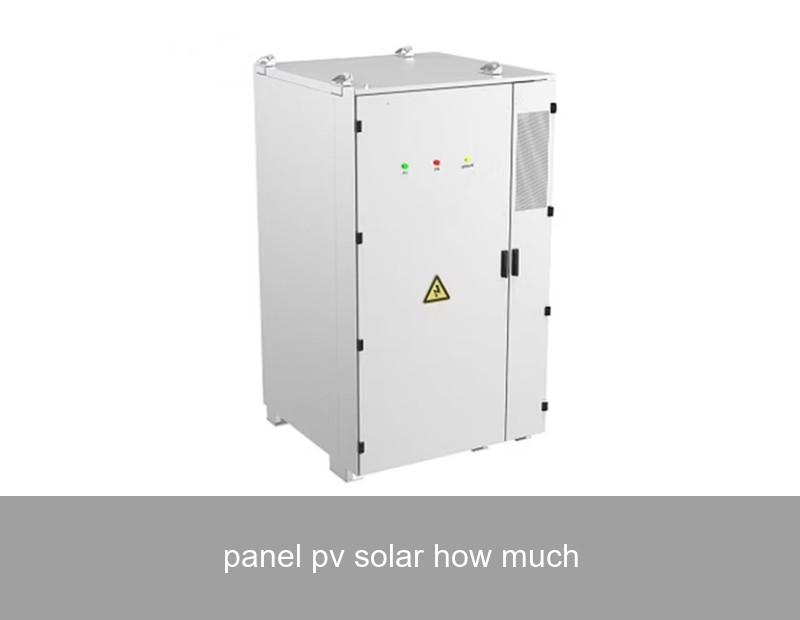
So, you're thinking about going solar. It's a smart move, but the first question that pops up is almost always: "How much do solar panels cost?" The answer isn't a single number. It's a journey from the initial sticker price to the long-term value on your roof. As a global leader in smart energy storage since 2005, Highjoule has seen the solar landscape evolve. We know that understanding the true cost involves looking beyond just the panels and considering the entire energy ecosystem—including the crucial role of storage for maximizing your return.
Table of Contents
- Breaking Down the Cost: More Than Just Panels
- Real Numbers: The Price Range in the US and Europe
- A Case Study: The German Bakery's Solar Success Story
- The Hidden Key to Value: Why Storage Changes the Math
- The Highjoule Solution: Intelligent Energy Management
- Making Your Decision: Key Factors to Consider
Breaking Down the Cost: More Than Just Panels
When we talk about solar panel system cost, we're really talking about a complete photovoltaic (PV) installation. The panels themselves are a major component, but they're part of a larger system. Let's break it down:
- Solar Panels (Modules): The most visible part. Prices vary by type (monocrystalline, polycrystalline) and efficiency rating.
- Inverters: The brain of the operation, converting DC solar power to AC for your home. Options include string inverters, microinverters, and hybrid inverters for storage-ready systems.
- Mounting & Racking: The hardware that securely attaches your panels to the roof or ground.
- Balance of System (BOS): Wiring, conduits, switches, and electrical safety components.
- Permits & Installation Labor: Professional design, engineering, permitting fees, and the cost of skilled installation.
- Optional - Battery Storage: This is where the modern energy revolution is heading. Adding a battery, like Highjoule's H-Series residential storage system, allows you to store excess solar energy for use at night or during outages, dramatically increasing your energy independence.

Image Source: Unsplash (Professional solar installation)
Real Numbers: The Price Range in the US and Europe
Let's get to some figures. Costs are typically measured in cost per watt ($/W) or as a total system price. According to data from the National Renewable Energy Laboratory (NREL), the average cost for residential solar PV systems in the U.S. has dropped significantly over the past decade.
| Market | Average System Size | Average Total Cost (Pre-Incentive) | Cost per Watt |
|---|---|---|---|
| United States | 7-10 kW | $20,000 - $30,000 | $2.80 - $3.50/W |
| Germany | 8-10 kW | €16,000 - €24,000 | €1.60 - €2.20/W |
| United Kingdom | 4-6 kW | £6,000 - £12,000 | £1.20 - £1.80/W |
Remember: These are averages. Your final price depends on your location, roof complexity, local labor rates, and the specific equipment chosen. The critical next step is to factor in available incentives, which can reduce net cost by 30% or more. In the US, the federal Investment Tax Credit (ITC) is a major driver. In Europe, countries offer various feed-in tariffs, tax deductions, or rebates.
A Case Study: The German Bakery's Solar Success Story
Let's look at a real example from our commercial portfolio in Bavaria, Germany. A family-owned bakery with high daytime energy consumption wanted to reduce its grid reliance and volatile energy bills. In 2022, they installed a 45 kW rooftop solar array.
- Initial PV System Cost: €54,000 (before incentives).
- Challenge: They baked mostly in the early morning, before the sun was at full power, and exported a lot of surplus energy at midday for a low feed-in tariff.
- Highjoule Integration: Six months later, they added a Highjoule C-Series commercial battery storage system (50 kWh capacity). This allowed them to store their midday solar surplus and use it during their morning peak baking hours.
- Result: Their grid electricity purchases dropped by an additional 68% post-storage installation. The combined system is projected to pay for itself in under 8 years, thanks to optimized self-consumption. The bakery now enjoys predictable energy costs and operates as a resilient community hub during grid fluctuations.
The Hidden Key to Value: Why Storage Changes the Math
This case study highlights the pivotal shift in thinking about solar cost. The question is evolving from "panel pv solar how much?" to "how much value can my energy system deliver?" Without storage, a typical home may only use 30-50% of its solar generation directly, selling the rest back to the grid at a lower price. With storage, you can boost self-consumption to 70% or more, shielding yourself from rising electricity rates and power outages.
Think of it this way: solar panels are your energy generators. A battery like Highjoule's H-Series is your energy bank account. It lets you save your solar "earnings" for a rainy day (or a dark night). This transforms your system from a cost center into a true, resilient asset.

Image Source: Unsplash (Home with solar and battery storage)
The Highjoule Solution: Intelligent Energy Management
At Highjoule, we provide more than just hardware. We deliver integrated energy solutions. Our H-Series for homes and C-Series for businesses are built with long-life, safe lithium iron phosphate (LiFePO4) chemistry and come integrated with our proprietary energy management system (EMS). This smart software doesn't just store energy; it learns your consumption patterns, considers weather forecasts, and can even respond to utility price signals (where available) to dispatch your stored energy at the most financially optimal times.
For larger-scale applications like microgrids or industrial sites, our M-Series containerized solutions offer utility-scale storage in a modular, plug-and-play format. Whether for a single home or a community project, Highjoule's technology ensures every kilowatt-hour from your solar panels is used as effectively as possible, maximizing the return on your PV investment.
Making Your Decision: Key Factors to Consider
So, how do you move forward? Instead of fixating on the lowest upfront cost, consider these value-driven questions:
- Energy Independence: How important is resilience during power outages to you?
- Electricity Rates: Are rates in your area high and/or volatile? Storage locks in your solar rate.
- Future-Proofing: Are you planning to buy an electric vehicle? A system designed with storage in mind can easily expand to meet new loads.
- System Longevity: Does the quoted system use high-quality, warrantied components? Highjoule systems, for example, come with a robust 10-year warranty, ensuring performance for years to come.
We always recommend getting multiple quotes from certified installers. Ask them to model scenarios with and without battery storage over a 15-20 year period. The long-term savings and security with storage are often the most compelling part of the story.
Ready to Calculate Your Personal Solar & Storage Equation?
The journey to understanding the true cost and value of solar starts with your own energy data. What does your last year of electricity bills say about your consumption patterns, and how could a smart, Highjoule-powered system reshape your energy future?
 Inquiry
 Online Chat