


The Rise of 700W Solar Panels: What It Means for Your Energy Future
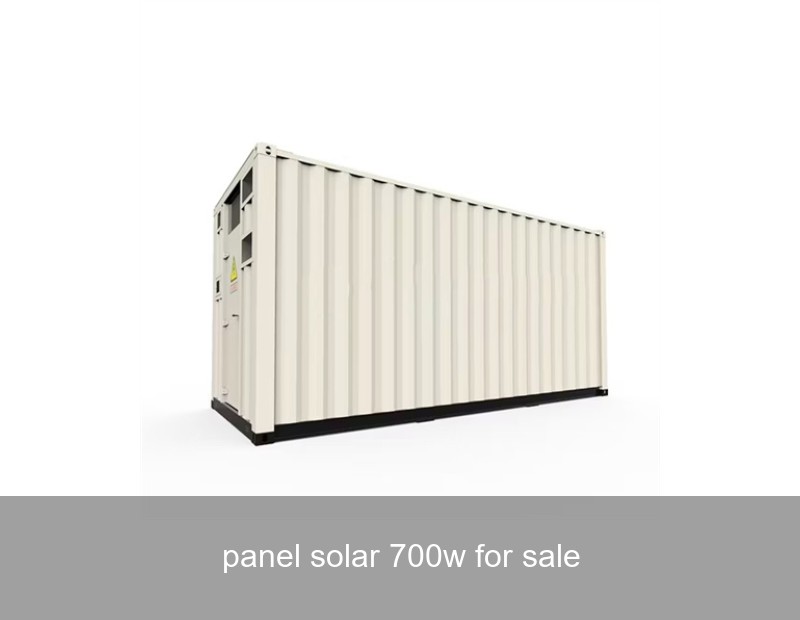
If you've been exploring solar energy recently, you've likely encountered a new class of high-performance hardware: the panel solar 700w for sale. These aren't your average rooftop modules. They represent a significant leap in photovoltaic technology, promising to deliver more power in less space. But what's driving this shift, and is a 700W panel the right choice for your home or business? As a senior technical expert at Highjoule, a global leader in advanced energy storage since 2005, I see this as a pivotal moment. It's not just about a bigger panel; it's about rethinking entire energy systems for greater efficiency and resilience.
Table of Contents
The Power Leap: From Standard to Super-Sized Panels
Just a few years ago, a 400W residential panel was considered high-end. Today, the market is rapidly moving towards 600W, 700W, and even beyond. This isn't just incremental growth; it's a paradigm shift enabled by several key innovations. The primary driver is the need for higher energy density. For commercial and industrial projects with vast, flat rooftops or ground-mounted arrays, fewer high-wattage panels mean lower installation costs (fewer racking components, less labor) and simplified system design. For residential users with limited roof space, it means maximizing every square foot to achieve energy independence.
Consider this data point: A standard residential solar system might use 20 x 400W panels to create an 8kW system. With 700W panels, you'd need only about 12 panels to achieve a similar output. That's a 40% reduction in the number of panels, mounting points, and individual electrical connections. This efficiency translates directly into potential savings and a cleaner, less cluttered installation.
The Technology Behind the 700W Solar Panel
So, how do manufacturers achieve this impressive power rating? It's a combination of advanced cell technology and innovative panel design. Most panel solar 700w for sale utilize one or more of the following:
- Half-Cut and Shingled Cells: By dividing standard cells in half or overlapping them (shingling), electrical resistance is reduced, and the panel is more resistant to shading. This allows more cells to be packed into the same area, operating more efficiently.
- N-Type TOPCon or HJT Cells: These next-generation silicon cells have a higher efficiency ceiling and lower degradation rates than traditional P-type PERC cells. They perform better in high temperatures and low-light conditions, ensuring more stable output over the panel's 25+ year lifespan.
- Increased Panel Size (M10/G12 Wafers): To reach 700W, most panels physically larger, using larger silicon wafers. This is a key consideration for installation, as they may require specialized handling and a robust structural assessment of your roof.

Image Source: Unsplash - Professional installation is crucial for large-format panels.
It's crucial to understand that these high-power panels operate at a higher voltage and current. This is where system design becomes critical. Pairing a 700W panel with a mismatched inverter or an undersized storage system is like putting a Formula 1 engine in a car with bicycle brakes. The performance gains will be lost, and you could even create safety risks.
System Synergy is Key
This is precisely where Highjoule's expertise becomes invaluable. We don't just see a panel; we see a critical component of an integrated energy ecosystem. Our IntelliBESS commercial and industrial battery storage systems and HomePower residential solutions are engineered with this technological evolution in mind. They are designed to handle the higher input from advanced solar arrays, intelligently manage the fluctuating DC power, and store excess energy with maximum round-trip efficiency. The true value of a 700W panel is only unlocked when it's part of a harmonious system where generation, storage, and smart management work in concert.
Real-World Impact: A Case Study from California
Let's move from theory to practice. A compelling example comes from a medium-sized winery in Napa Valley, California. Facing rising energy costs and a desire to operate sustainably, they aimed to cover their significant refrigeration and processing loads with solar.
- Challenge: Limited usable land for a ground-mount system due to vineyard space. Solution: A 250kW array using high-efficiency 700W-class panels, paired with a 500kWh Highjoule IntelliBESS containerized storage system.
- Outcome: The high power density of the panels allowed them to meet their generation target on a constrained plot of land. The integrated Highjoule BESS stores midday surplus to power evening operations and critical refrigeration overnight, effectively creating a 24/7 microgrid. The system now provides over 90% of the facility's annual electricity, with a projected payback period of under 6 years thanks to California's high utility rates and intelligent energy arbitrage.
This case highlights that the decision for a panel solar 700w for sale is often driven by spatial and economic constraints, not just the pursuit of the highest wattage. The winery's success hinged on the seamless integration of generation and storage, a core principle of Highjoule's design philosophy.
Making the Choice: Is a 700W Panel Right for You?
How do you navigate this decision? Ask yourself and your installer these key questions:
| Consideration | For 700W+ Panels | For Standard Panels (400-550W) |
|---|---|---|
| Available Space | Ideal for limited roof or ground space where maximizing kW per sq. ft. is critical. | Sufficient for standard residential roofs or larger areas where space is not a primary constraint. |
| System Scale | Best suited for larger commercial, industrial, or utility-scale projects. | The standard for most residential and many small commercial installations. |
| Structural & Logistical | Requires professional structural assessment. May need specialized labor and equipment for handling. | Easier to handle and install with common practices and equipment. |
| Balance of System | Demands compatible high-voltage string inverters or optimizers and appropriately sized storage. | Wider compatibility with a broad range of inverters and storage solutions. |
For most homeowners, a roof covered with standard high-efficiency 400-500W panels paired with a robust storage system like the Highjoule HomePower may be more optimal and cost-effective. The goal is a balanced, reliable system, not just a headline wattage figure. Always consult with a certified installer who can model the specific yield and financials for your property using tools like NREL's PVWatts Calculator.
The Future Horizon
The trend toward higher-power panels is clear, with research already pushing the boundaries of perovskite and tandem cell technologies. However, the most sustainable energy future isn't built on panels alone. It's built on intelligent systems that generate, store, and dispatch power precisely when and where it's needed. At Highjoule, we view the panel solar 700w for sale as a powerful engine, but the vehicle is our integrated storage and energy management platform. This holistic approach ensures that your investment is not only powerful on day one but also adaptable and resilient for decades to come.

Image Source: Unsplash - A modern home with integrated solar and storage.
As you consider your next step toward energy independence, what role do you envision for storage in maximizing the return from these next-generation solar panels?
 Inquiry
 Online Chat