


The 750-Watt Solar Panel: Is It the Right Choice for Your Energy Independence?
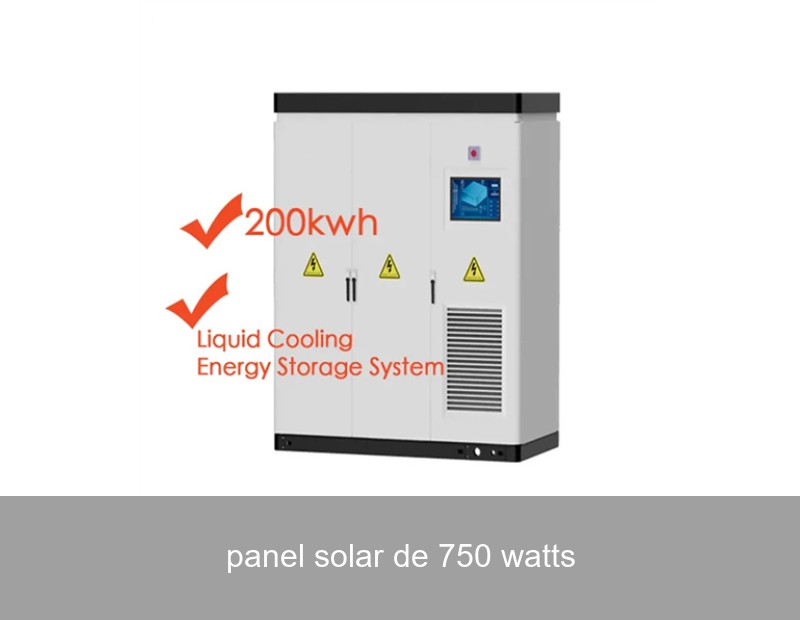
Table of Contents
- What Exactly is a 750-Watt Solar Panel?
- The Power Phenomenon: Why Are Solar Panels Getting Bigger?
- The Real-World Math: Output, Savings, and Payback
- Case Study: A Bavarian Dairy Farm's Success Story
- Beyond the Panel: The Critical Role of System Synergy
- The Highjoule Solution: Intelligent Energy Storage for Maximum ROI
- Making the Decision: Is a 750-Watt Solar Panel for You?
If you're researching solar power, you've likely seen the term "750-watt solar panel" popping up more frequently. It represents the cutting edge of photovoltaic (PV) technology, promising more power from a single module. But what does this mean for your home or business? Is it just a bigger panel, or a genuine leap towards true energy independence? Let's demystify the panel solar de 750 watts and explore how it fits into a modern, resilient energy system.
What Exactly is a 750-Watt Solar Panel?
Unlike the standard 400W residential panels, a 750-watt solar panel is a high-power, typically commercial or utility-scale module. It's physically larger—often using half-cut N-type TOPCon or HJT cells—which increases its efficiency and power density. In simple terms, it captures more sunlight and converts more of it into electricity per square meter. This is a boon for projects where roof or ground space is at a premium, allowing for a higher total system capacity with fewer panels, which can reduce installation time and balance-of-system costs.

Image source: Unsplash - High-efficiency solar cells enable greater power output per panel.
The Power Phenomenon: Why Are Solar Panels Getting Bigger?
The trend towards higher-wattage panels is driven by a clear economic and technological imperative. According to the National Renewable Energy Laboratory (NREL), the average module efficiency has climbed steadily, with the best commercial panels now exceeding 23%. This push for efficiency, combined with advanced manufacturing, allows for the creation of these "super panels." The phenomenon is clear: to lower the levelized cost of energy (LCOE), the industry is building panels that generate more kilowatt-hours over their lifetime for a lower cost per watt.
The Real-World Math: Output, Savings, and Payback
Let's talk numbers. A single 750-watt solar panel can produce roughly 2.7-3.3 kWh of energy per day in sunny regions of Southern Europe or the American Southwest, assuming 4-5 peak sun hours. For a commercial array of 50 such panels, that's a 37.5 kW system generating up to 165 kWh daily. This output can significantly offset high energy demand during peak pricing hours. However, here's the critical insight: this massive generation potential is only as valuable as your ability to use it or store it. Without a strategy for surplus power, you're exporting it to the grid at low rates, missing out on the full financial benefit.
Case Study: A Bavarian Dairy Farm's Success Story
Consider a real-world application at a dairy farm in Bavaria, Germany. The farm faced high and volatile energy costs for cooling, milking, and processing. Their goal was energy self-sufficiency.
- System Installed: 42 x 750W bifacial solar panels (31.5 kW total) on a south-facing barn roof.
- Key Challenge: Energy production peaked midday, but high consumption occurred in the early morning and evening.
- The Solution: Pairing the array with a robust battery storage system was non-negotiable.
The farm chose a Highjoule H-Joule 30 Commercial Energy Storage System. This 30 kW / 60 kWh battery bank stores the midday solar surplus. The result? The farm now uses over 85% of its solar generation on-site, reducing grid dependence from 90% to under 25%. Their calculated payback period dropped from an estimated 9 years (with solar only) to just under 6 years with the integrated solar-plus-storage solution. This case highlights that the value of a high-power panel is unlocked by intelligent storage.
Beyond the Panel: The Critical Role of System Synergy
A panel solar de 750 watts demands compatible components. It requires a suitably rated inverter and, crucially, a sophisticated energy management system (EMS). This is where many system integrators fall short. The EMS is the brain that decides when to charge batteries, power loads, or export to the grid based on real-time consumption and tariff structures. Without it, you have a powerful generator but not an intelligent power plant.

Image source: Unsplash - A complete system includes generation, storage, and intelligent control.
The Highjoule Solution: Intelligent Energy Storage for Maximum ROI
At Highjoule, we view the high-power solar panel not as a standalone product, but as the ideal generator for our advanced storage ecosystems. Since 2005, we've specialized in making solar energy reliable and economically optimal.
Our product suite is designed to complement high-output arrays like a 750W panel system:
- H-Joule Residential Series: Scalable lithium iron phosphate (LiFePO4) battery systems (5-30 kWh) with integrated hybrid inverters. Our AI-driven EMS learns your consumption patterns, automatically maximizing self-consumption of solar power and providing seamless backup during outages.
- H-Joule Commercial & Industrial (C&I) Series: Modular, containerized solutions from 100 kWh to multi-MWh scale. These systems feature advanced peak shaving and demand charge management, turning your solar investment into a direct tool for reducing the most expensive portions of your utility bill.
- Highjoule Microgrid Controller: For campuses or remote facilities, this platform can integrate multiple solar arrays (including those with diverse panel wattages), battery storage, and even backup generators into a single, resilient grid.
By integrating a Highjoule system, the raw power of your 750-watt panels is harnessed, stored, and dispatched with precision, ensuring you get the highest possible return on your renewable investment.
Making the Decision: Is a 750-Watt Solar Panel for You?
So, should you build your next project around a panel solar de 750 watts? Ask yourself these questions:
| Consideration | Good Candidate | Might Need a Different Approach |
|---|---|---|
| Roof/Ground Space | Limited space, need high total capacity. | Ample space; standard panels may be more cost-effective. |
| Structural Strength | Commercial metal roof or reinforced ground mount. | Residential roof with weight limitations. |
| Energy Profile | High daytime load or firm plan for large-scale storage. | Low daytime consumption with no storage plan. |
| Primary Goal | Maximizing kWh per installation hour, reducing BOS costs. | Simple payback on a tight initial budget. |
The future of energy is not just about generation; it's about intelligent control and resilience. As panel outputs continue to rise, the gap between simply having solar and owning a truly independent power asset will be defined by the storage and intelligence you pair with it.
What's the first step you'll take to ensure your high-power solar array doesn't leave potential savings and security on the table?
 Inquiry
 Online Chat