


Paneles Solares de Alta Potencia: Unlocking the True Potential of Your Solar Investment
Have you ever looked at your rooftop solar installation and wondered, "Is this all the power I can get?" For years, the solar industry focused on simply covering roofs with panels. But a quiet revolution is happening. The shift towards paneles solares de alta potencia (high-power solar panels) isn't just about a bigger number on a spec sheet; it's about generating more clean energy from the same, often limited, space. As a product technology expert at Highjoule, I see this evolution as the critical key to maximizing return on investment, whether for a family home in California or a manufacturing plant in Germany. It’s about working smarter, not just harder.
Table of Contents
The Space Challenge: More Power, Not More Panels
Let's talk about a common dilemma. A homeowner in Spain wants to offset their entire electricity bill, but their picturesque terracotta roof has limited usable area. A factory manager in Ohio needs to decarbonize operations, but the vast factory roof must also accommodate HVAC units and skylights. The traditional solution? Cram in as many standard panels as possible. The modern solution? Deploy fewer, but vastly more powerful, units. Paneles solares de alta potencia, often exceeding 400W to over 600W per panel, directly address this core constraint of space. The phenomenon is clear: energy density is the new battleground.
Consider this data: According to the National Renewable Energy Laboratory (NREL), the average efficiency of commercial solar modules has climbed from around 15% to over 22% in the last decade. This leap is largely driven by technologies like monocrystalline PERC, half-cut cells, and advanced bypass diodes that enable these high-power outputs. Simply put, today's premium panel can produce over 50% more energy in the same footprint as a panel from 2010.
The Technology Behind High-Power Solar Panels
So, how do these panels achieve such impressive numbers? It's a combination of precision engineering and clever design:
- Larger Wafer Sizes (M10, G12): The move from standard M2 wafers to larger formats means more active silicon surface area per panel to capture sunlight.
- Half-Cell and Shingled Cell Design: By cutting standard cells in half or overlapping them, electrical resistance is reduced, and shade tolerance is improved, leading to higher overall energy yield, especially in partially shaded conditions.
- Multi-Busbar (MBB) and Tiling Ribbon Technology: These innovations reduce gaps between cells (increasing density) and improve current collection, minimizing energy loss within the panel.

Image Source: Unsplash (Close-up of modern solar panel technology)
However, here's the crucial insight many overlook: These technological marvels create a new set of demands on the rest of your energy system. A high-power array can produce immense current and voltage, especially on a bright, cold day. This brings us to the most critical component for your investment's success.
Beyond the Panel: Why Your Storage System Matters More Than Ever
Think of your paneles solares de alta potencia as a powerful, high-flow water tap. If you connect it to a garden hose and a small bucket, you'll have a mess on your hands. You need a plumbing system robust enough to handle the flow and a large enough tank to store the water for when you need it. In the energy world, this "plumbing and tank" is your inverter and battery storage system.
This is where Highjoule's expertise becomes paramount. Our intelligent energy storage solutions are engineered specifically to harness the full potential of modern, high-output solar arrays. A standard, off-the-shelf inverter might clip the peak power your expensive panels produce, literally throwing away free energy. Highjoule's H-Series Hybrid Inverters feature high DC input voltages and current thresholds designed to pair seamlessly with high-power strings, ensuring every possible watt is converted.
More importantly, our Intelligent Battery Systems (IBS) are the essential "tank." What good is generating 50% more solar energy if you can't use it when the sun goes down? Our modular lithium iron phosphate (LiFePO4) batteries, known for safety and longevity, store that surplus high-power generation. Coupled with our AI-driven energy management software, the system intelligently decides when to store energy, power your home or business, or even sell back to the grid based on real-time tariffs and consumption patterns.
Case Study: A German Industrial Park's Journey to Energy Independence
Let's examine a real-world application. A medium-sized industrial park near Stuttgart, Germany, faced rising energy costs and stringent sustainability targets. Their roof space was ample but fragmented. They installed a 250 kW array using paneles solares de alta potencia (550W each), maximizing generation on the available space.
The initial challenge: Their production machinery often operated in the evening, missing the solar production window. A significant portion of their self-generated energy was being fed back to the grid at a low feed-in tariff, while they later bought power back at a much higher rate.
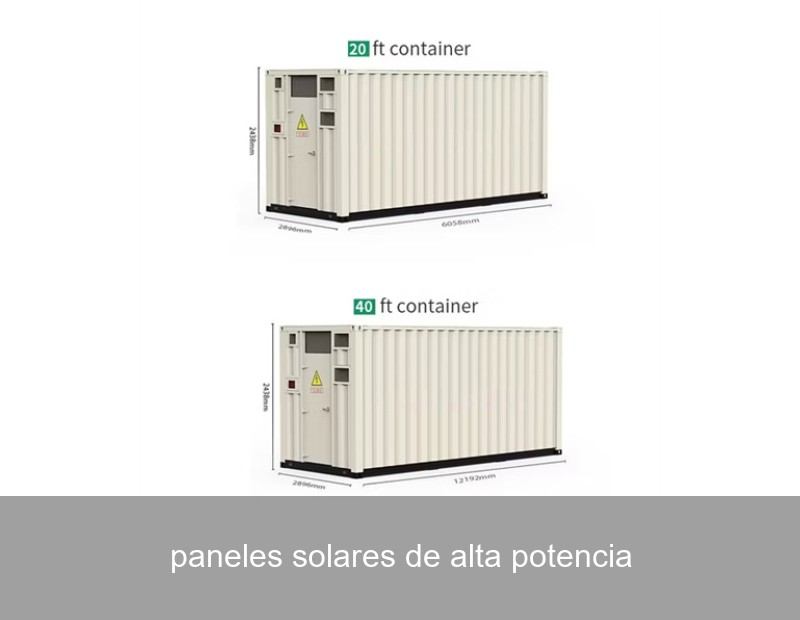
The Highjoule solution: We deployed a containerized Highjoule C&I Megapack, a 500 kWh battery storage system integrated with our platform's smart controls. The system was configured to:
- Store nearly 100% of the solar surplus generated during the day.
- Discharge during evening peak hours (6 PM - 10 PM) to power operations.
- Provide backup power for critical loads during grid outages.
The data-driven result: Within the first year, the park increased its on-site consumption of solar power from 35% to over 85%. Their annual electricity bill was reduced by approximately €68,000, and they achieved a Green Deal-aligned reduction of 142 tons of CO2. The project's payback period was significantly shortened thanks to the synergy between high-power generation and intelligent storage.

Image Source: Unsplash (Solar panels on an industrial building)
Choosing the Right System for Your High-Power Array
Selecting paneles solares de alta potencia is just the first step. To build a truly future-proof and efficient system, you must consider the entire ecosystem. Here’s a simplified framework:
| Component | Key Consideration with High-Power Panels | Highjoule's Integrated Approach |
|---|---|---|
| Inverter | High DC input voltage/current rating, multiple MPPT trackers for complex roofs. | H-Series Inverters with wide operating ranges and advanced MPPT algorithms. |
| Battery Storage | High cycle life, safe chemistry (LiFePO4), power rating sufficient to handle charge/discharge from large arrays. | Modular IBS with scalable capacity, built-in safety protocols, and high round-trip efficiency. |
| Energy Management | Intelligent software that optimizes for self-consumption, time-of-use savings, and grid services. | Highjoule Energy OS, a proprietary platform that learns and adapts to your usage patterns. |
| System Design & Service | Professional design ensuring compatibility and maximizing lifetime yield. | Global network of certified partners providing design, installation, and long-term monitoring support. |
The synergy between components is what delivers the promised value. A high-power panel paired with an undersized or "dumb" system is a missed opportunity. The true potential is unlocked when generation, storage, and intelligence work in concert.
As you contemplate upgrading to a high-power solar system, what is the primary constraint you're hoping to solve—is it limited roof space, a desire for greater energy independence, or the need to future-proof your investment against rising and volatile energy prices? The conversation starts with understanding your unique energy profile.
 Inquiry
 Online Chat