


How Leading Photovoltaic Cell Companies Are Powering a Smarter Energy Future
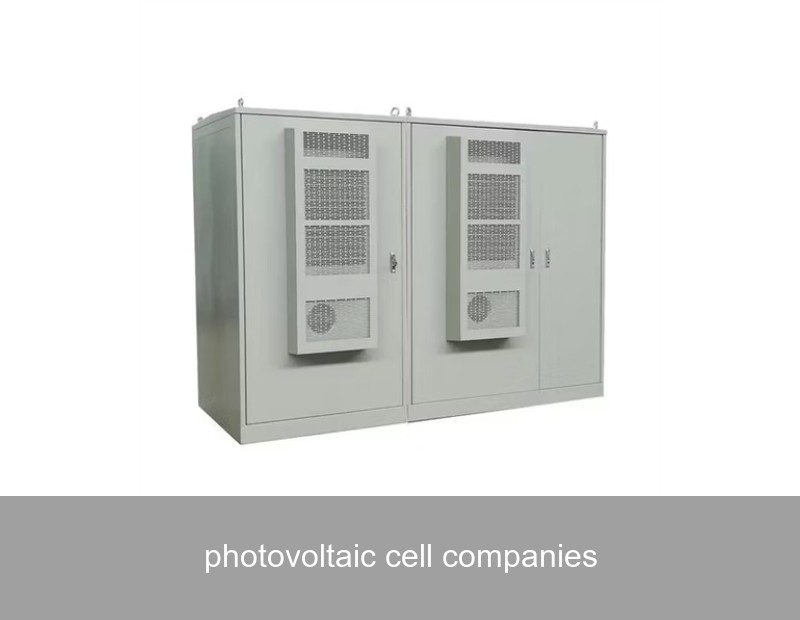
Have you ever wondered what happens to all that clean energy your solar panels produce when the sun isn't shining? This is the central challenge that forward-thinking photovoltaic cell companies are tackling head-on. While producing solar energy is one thing, managing it intelligently is another. The real game-changer in today's renewable energy landscape isn't just the panel on your roof; it's the sophisticated brain and battery that stores and dispatches that power exactly when and where you need it. This is where the evolution from simple generation to integrated, smart energy systems takes place, a domain where companies like Highjoule have been pioneering solutions since 2005.
Table of Contents
The PV Phenomenon and the Storage Gap
The global surge in solar adoption is undeniable. Photovoltaic cell companies have driven incredible efficiencies, making solar one of the most cost-effective energy sources in history. However, this success has unveiled a new challenge: solar generation is inherently intermittent. The grid, a meticulously balanced ecosystem, can become strained when vast amounts of solar power flood in during midday peaks, only to vanish by evening—a period known as the "duck curve." This mismatch between supply and demand can lead to wasted energy and grid instability.
This is precisely the gap that advanced energy storage systems (ESS) are designed to bridge. Think of it this way: the photovoltaic cell company provides the exceptional "engine" (solar panels), but without a "fuel tank" and a "smart navigation system" (the battery and energy management platform), you can't complete the journey to true energy independence. Storage is no longer an optional add-on; it's the critical component that unlocks the full value of solar investments.

Credit: Photo by American Public Power Association on Unsplash. Large-scale solar farms highlight generation, but the true challenge lies in integration and storage.
The Data Reality: Curtailment and Grid Stress
Let's look at the numbers. In California, a global solar leader, the California Independent System Operator (CAISO) reported that in 2022, over 2.4 million megawatt-hours of renewable energy were curtailed—essentially, wasted—because supply outstripped demand or grid capacity. That's enough clean electricity to power over 200,000 homes for a year. In Europe, grid operators face similar balancing acts, especially in nations like Germany and Spain with high solar penetration.
This data paints a clear picture: maximizing the return on solar assets requires a strategy for every kilowatt-hour produced. The most forward-looking photovoltaic cell companies understand this and are increasingly forming partnerships with specialized energy storage providers. The goal is to offer customers a seamless, holistic solution that doesn't just generate power, but also controls, stores, and optimizes it.
The Highjoule Integration Advantage
At Highjoule, our mission for nearly two decades has been to solve this exact problem. We don't manufacture photovoltaic cells, but we are the essential partner that makes their output more valuable, reliable, and grid-friendly. Our smart battery storage systems, like the Highjoule H-Series Commercial ESS, are designed for seamless integration with solar arrays from any major manufacturer. Our platform uses advanced AI-driven software to perform energy arbitrage—storing cheap, abundant solar power at noon and discharging it during expensive peak periods—delivering immediate cost savings and a faster payback on the entire solar+storage investment.
Case Study: A German Industrial Park's Solution
Consider the real-world example of a medium-sized industrial park in Bavaria, Germany. The park management, working with a local solar installer, had installed a 1.2 MW rooftop PV system across several buildings. While this reduced their daytime grid consumption, they faced two major issues:
- High Grid Fees at Peak Times: Evening operations still relied on expensive grid power.
- Limited Self-Consumption: Over 35% of their solar generation was being exported to the grid at low feed-in tariffs, especially on weekends when facility load was low.
They partnered with Highjoule to deploy a containerized Highjoule M-Grid solution—a 500 kWh / 750 kVA battery storage system integrated with their existing solar inverters. The results after the first year were compelling:
| Metric | Before Highjoule ESS | After Highjoule ESS |
|---|---|---|
| Solar Self-Consumption Rate | ~65% | Increased to 92% |
| Peak Grid Power Draw | 850 kW | Reduced to 350 kW |
| Annual Energy Cost Savings | Baseline | €68,000 |
| Grid Fee Savings (Capacity-based) | Baseline | €12,000 |
The system's intelligent controller automatically prioritizes self-consumption, manages peak shaving, and even participates in grid-balancing programs, creating an additional revenue stream. This case exemplifies how pairing solar with intelligent storage transforms a capital expense into a dynamic, profit-optimizing asset.
Beyond Storage: The Rise of Intelligent Energy Management
The next frontier isn't just about adding batteries; it's about creating a self-optimizing energy ecosystem. For commercial and industrial (C&I) entities and microgrids, this means moving from passive consumption to active participation in the energy market.
Highjoule's Energy Management Platform (EMP) serves as the central nervous system for this ecosystem. It doesn't just manage the battery; it orchestrates solar production, building load, storage cycles, and even electric vehicle charging stations. It can respond to real-time grid signals or price fluctuations, making autonomous decisions to maximize economic and operational efficiency. For photovoltaic cell companies and their clients, this level of intelligence is what differentiates a basic installation from a future-proof energy strategy.

Credit: Photo by Andreas Gücklhorn on Unsplash. Integrated solar and storage at an industrial site enable true energy control.
Choosing Your Energy Partner: More Than Just Panels
So, what should you look for when evaluating photovoltaic cell companies or system integrators for your project?
- Holistic System Design: Do they offer integrated storage and software solutions, or just panels and inverters?
- Technology Agnosticism: Can their storage solution work efficiently with PV equipment from various manufacturers? Highjoule's systems are designed for universal compatibility.
- Proven Software Intelligence: The hardware stores energy, but the software creates value. Demand a clear explanation of the control logic and optimization capabilities.
- Long-Term Support: Energy assets have a 20+ year lifespan. Ensure your provider, like Highjoule with its global service network, offers long-term performance monitoring, maintenance, and warranty support.
Leading photovoltaic cell companies are increasingly measured not just by the efficiency of their cells, but by the resilience and intelligence of the total energy solutions they enable. By partnering with a dedicated storage expert like Highjoule, they can deliver unparalleled value—turning a solar installation into a 24/7 clean power plant, a grid stabilizer, and a significant source of savings and revenue for their clients.
Ready to See the Full Picture?
We've discussed how intelligent storage is the missing link in the solar value chain. But what does the optimal system look like for your specific load profile, tariff structure, and sustainability goals? How much could your business or community save by not just generating, but truly mastering your solar energy?
 Inquiry
 Online Chat