


What a Leading Photovoltaic Energy Storage Cabinet Factory Delivers for Energy Independence
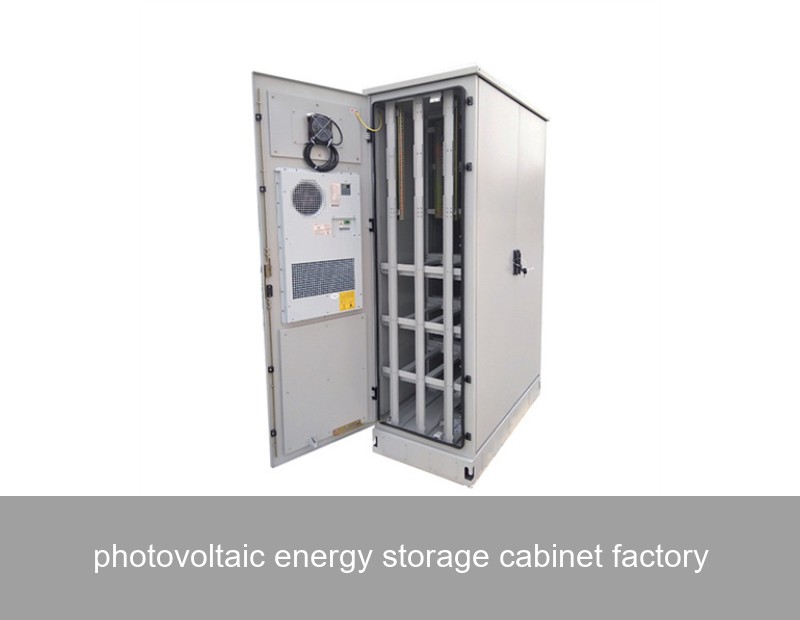
Imagine your solar panels working tirelessly all day, capturing the sun's abundant energy. Now, imagine that power not vanishing at sunset, but being readily available to light your home, run your factory, or stabilize your community's grid. This isn't future fantasy; it's today's reality, made possible by the sophisticated technology produced in a modern photovoltaic energy storage cabinet factory. For nearly two decades, Highjoule has stood at the forefront of this revolution, engineering the intelligent systems that transform intermittent sunlight into a dependable, 24/7 power source. This article pulls back the curtain on the precision, innovation, and expertise that goes into every storage cabinet, and how it empowers energy resilience across the globe.
The Phenomenon: Why Solar Alone Isn't Enough
We've all seen the graphs: solar generation forms a perfect bell curve, peaking at midday and dropping to zero at night. Meanwhile, our energy demand profile is a different beast entirely, with significant spikes in the morning and evening. This fundamental mismatch is the "duck curve" challenge that grid operators grapple with daily. Without a buffer, excess solar energy at noon is often curtailed (wasted), while we still rely on fossil-fuel peaker plants after dark. This is the core problem that energy storage solves. It's not just about having a battery; it's about integrating a sophisticated, software-driven system that manages energy flow with precision. The photovoltaic energy storage cabinet is the physical manifestation of this solution—a self-contained unit housing not just battery cells, but the brains and brawn to manage them safely and efficiently.

Image Source: Unsplash (Representative image of advanced manufacturing in energy storage)
The Data: Quantifying the Need for Storage
The numbers speak volumes. According to the U.S. Energy Information Administration (EIA), the U.S. utility-scale battery storage capacity is set to multiply significantly, a direct response to rising renewable penetration. In Europe, driven by ambitious REPowerEU plans, the energy storage market is projected to see exponential growth. This isn't just about capacity; it's about performance. A top-tier photovoltaic energy storage cabinet factory doesn't just produce containers. It delivers systems with critical metrics in mind:
- Round-Trip Efficiency (RTE): How much energy put in is usable? Highjoule systems consistently achieve over 95% RTE, minimizing losses.
- Cycle Life: A residential system may undergo one cycle per day, but a commercial one might see multiple. Our industrial-grade cabinets are engineered for tens of thousands of deep cycles.
- Scalability: From a modular 30kWh residential unit to a multi-megawatt-hour containerized solution, the architecture must allow for seamless expansion.
These figures aren't just specs on a sheet; they translate directly into levelized cost of storage (LCOS) and return on investment for our clients.
Inside a Photovoltaic Energy Storage Cabinet Factory: More Than Assembly
Walking through a Highjoule production facility reveals a process that blends rigorous engineering with advanced manufacturing. It starts long before the physical build, with digital twin simulations and thermal management modeling. The cabinet itself is a marvel of integrated systems:
| Core Component | Function | Highjoule's Approach |
|---|---|---|
| Battery Modules | Core energy storage (using Li-ion NMC or LFP chemistry) | Stringent cell grading and vendor qualification for longevity and safety. |
| Battery Management System (BMS) | Monitors voltage, temperature, and state of charge for each cell. | Proprietary, multi-layer BMS with active balancing and redundant safety cut-offs. |
| Power Conversion System (PCS) | Converts DC battery power to AC for the grid/building (and vice versa). | Bi-directional, high-efficiency inverters with advanced grid-support functions. |
| Thermal Management | Maintains optimal operating temperature for safety and performance. | Liquid cooling or forced-air systems with climate-specific designs for global deployment. |
| Energy Management System (EMS) | The "brain" that controls charging/discharging based on algorithms and user settings. | Highjoule's smart EMS enables peak shaving, self-consumption optimization, and grid services participation. |
This integrated design philosophy ensures that a Highjoule storage cabinet is not a collection of parts, but a unified, high-performance asset ready for decades of service.
Case Study: A German Industrial Park's Success Story
Let's make this concrete. A major automotive supplier in Bavaria, Germany, faced rising grid demand charges and wanted to maximize its 2.5 MW rooftop solar array. Their goal: reduce operational costs and increase on-site consumption of green power. Highjoule deployed a turnkey solution featuring four of our H-Cube 500 outdoor energy storage cabinets, forming a 2 MWh system integrated with their existing solar infrastructure.
The results, monitored over 18 months, were compelling:
- Peak Demand Reduction: The system's peak shaving algorithm cut grid demand spikes by 40%, dramatically reducing capacity charges.
- Self-Consumption Increase: On-site consumption of solar power rose from 35% to over 80%, insulating the facility from volatile market prices.
- ROI Timeline: Based on saved demand charges and arbitrage, the project is on track for a full return on investment in under 6 years.
"The Highjoule system acts as a silent, automated energy manager," noted the plant's facility director. "It's not just storage; it's an intelligent financial tool that gives us predictability."

Image Source: Unsplash (Representative image of solar plus storage integration)
The Highjoule Difference: Engineering for Reliability and Intelligence
What separates a commodity enclosure from a Highjoule energy storage cabinet? It's our depth of system-level expertise. Founded in 2005, we've navigated multiple technology cycles, learning that true durability comes from designing for real-world stresses. Our cabinets are built to UL 9540 and IEC 62619 standards, but we go beyond compliance. For instance, our fire suppression and gas venting systems are designed based on failure mode simulations, not just checklist engineering.
Furthermore, our Helios OS software platform turns a static asset into a dynamic grid participant. For our commercial and utility clients, this means the ability to seamlessly participate in frequency regulation markets or virtual power plants (VPPs), creating an additional revenue stream. This software-defined flexibility is a core value we engineer into every system from the ground up, whether it's for a residential customer seeking energy independence, an industrial plant managing costs, or a microgrid project requiring robust islanding capability.
Looking Ahead: The Evolving Grid and Your Role in It
The journey from a centralized, fossil-fuel-based grid to a decentralized, renewable-powered one is accelerating. The photovoltaic energy storage cabinet factory is no longer a niche supplier; it's a critical infrastructure provider for this new energy landscape. The next wave involves even smarter systems with AI-driven predictive analytics for asset management and deeper grid-forming capabilities that can "black start" a local network.
This leads us to a pivotal question: As energy consumers become prosumers, what role will your home, business, or community play in this flexible, resilient grid of the future? Is your current energy strategy ready to adapt and capitalize on these opportunities?
 Inquiry
 Online Chat