


Unlocking the Full Potential of Plantas de Energia Fotovoltaica: A Guide to Smart Solar Systems
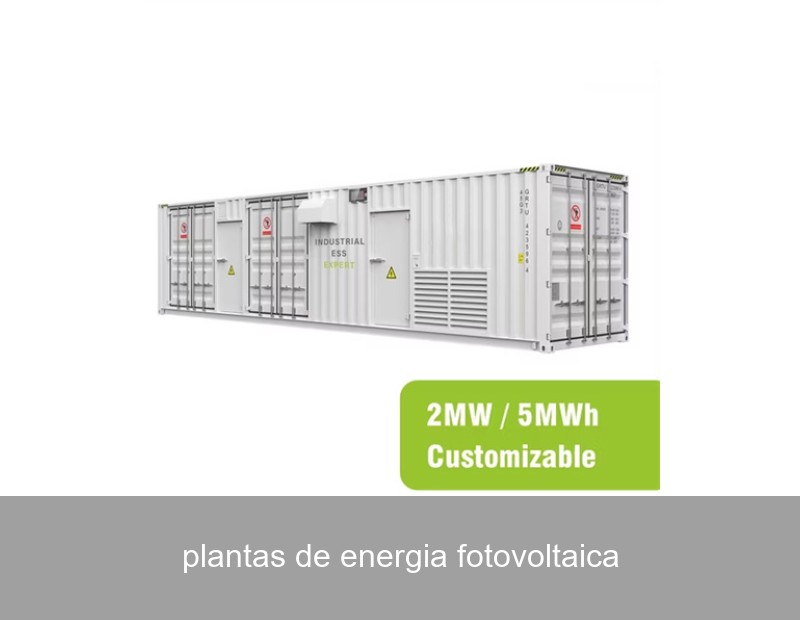
Imagine this: it's a brilliantly sunny afternoon. Your planta de energia fotovoltaica (photovoltaic power plant) is humming along, converting sunlight into a flood of clean electricity. But here's the catch – your facility's energy demand is lower at this moment. Where does all that valuable, self-generated power go? Traditionally, without a smart setup, excess energy would be fed back to the grid, often for minimal compensation, leaving you reliant on that same grid when the sun goes down. This mismatch between solar production and consumption patterns is the central puzzle modern solar projects must solve. Today, we're moving beyond simply installing panels. The true value lies in creating intelligent, resilient, and self-optimizing energy systems.
Beyond the Inverter: The Critical Role of Energy Storage
The operational reality of standalone plantas de energia fotovoltaica presents clear challenges. Generation is intermittent, peaking midday, while energy costs and demand often spike in the early morning and evening. This creates a financial and operational gap. According to the International Renewable Energy Agency (IRENA), the levelized cost of electricity from solar PV has fallen dramatically, yet maximizing its economic value requires aligning supply with demand profiles.
This is where advanced Battery Energy Storage Systems (BESS) become the game-changer. Think of storage not just as a battery, but as the brain and buffer of your solar plant. It enables:
- Energy Time-Shifting: Store excess solar energy produced at noon and dispatch it during peak tariff periods in the evening, dramatically reducing energy bills.
- Enhanced Grid Stability: Provide frequency regulation and smooth out the variable output of solar generation, making the entire grid more resilient.
- Backup Power: Ensure critical operations continue during grid outages, transforming your solar asset into a reliable power source 24/7.
At Highjoule, we've spent nearly two decades perfecting this integration. Our solutions go beyond simply connecting a battery. We provide intelligent, containerized BESS units specifically engineered for seamless coupling with commercial and industrial-scale plantas de energia fotovoltaica. Our systems feature advanced battery management software that continuously learns your consumption patterns, weather forecasts, and tariff structures to autonomously optimize charge and discharge cycles, ensuring you extract every possible kilowatt-hour of value from your solar investment.

Image: A modern solar farm integrated with battery storage. Source: Unsplash
The Highjoule Advantage: Integrated Intelligence
Our approach centers on the Highjoule Energy Operating System (EOS). This proprietary platform is the nerve center that unifies your solar generation, storage assets, and energy consumption. It doesn't just react; it predicts and prescribes. For instance, if the EOS anticipates a cloudy tomorrow, it might strategically conserve more battery capacity today. This level of predictive energy management is what sets apart a modern, high-performance planta de energia fotovoltaica from a simple array of panels.
Blueprint for Success: A Real-World Case Study from Spain
Let's ground this discussion in real data. Consider a recent deployment for a mid-sized food processing plant in Andalusia, Spain—a region with superb solar irradiance. The facility had an existing 500 kWp rooftop planta de energia fotovoltaica but was still facing high grid energy costs during its night shifts and early morning cooling cycles.
The Challenge: Maximize self-consumption of solar energy, reduce peak demand charges, and provide backup for refrigeration units.
The Highjoule Solution: A turnkey integration of a 250 kW / 550 kWh Highjoule FlexGrid containerized BESS, managed by our EOS platform.
| Metric | Before Highjoule BESS | After Highjoule BESS Integration | Improvement |
|---|---|---|---|
| Solar Self-Consumption Rate | 35% | 89% | +154% |
| Peak Demand from Grid | 180 kW | 95 kW | -47% |
| Annual Energy Cost Savings | Baseline | €68,000 | -- |
| Backup Power for Critical Loads | 0 hours | Up to 5 hours | Full coverage for shifts |
The results speak for themselves. By treating the solar array and the storage system as a single, optimized asset, the facility transformed its energy profile. The Highjoule EOS automatically targets the most expensive power periods for discharge, a strategy known as arbitrage. Furthermore, the system's ability to provide seamless backup power adds a layer of operational resilience that is priceless for industries with sensitive processes. This case exemplifies the modern standard for effective plantas de energia fotovoltaica.
Future Horizons: Smart Management and Microgrids
The evolution continues. The next frontier for large-scale solar is participation in virtual power plants (VPPs) and the creation of autonomous microgrids. A VPP aggregates the capacity of many distributed energy resources, like your solar-plus-storage system, to act as a single, tradable entity in energy markets. Imagine your planta de energia fotovoltaica earning additional revenue by providing grid services when it's most needed.
Highjoule's systems are built with this future in mind. Our technology is compatible with leading grid service aggregators, allowing our clients to unlock this revenue stream effortlessly. For campuses, industrial parks, or remote communities, our solutions can form the cornerstone of an independent microgrid—generating, storing, and managing power locally with minimal grid dependence. This is the ultimate expression of energy sovereignty and sustainability.

Image: Concept of a connected virtual power plant. Source: Unsplash
Choosing the Right Partner for Your Solar Journey
Deploying a future-proof planta de energia fotovoltaica is a significant undertaking. The key is to partner with a provider that offers holistic expertise—from solar PV and storage hardware to the intelligent software that binds them together. Highjoule's end-to-end service, from initial feasibility analysis and system design to commissioning and long-term performance monitoring, ensures your project delivers on its financial and environmental promises for decades. As noted by the National Renewable Energy Laboratory (NREL), system-level integration is critical for achieving the lowest cost of energy.
Your Energy Journey: Questions to Consider
The transition to intelligent solar energy is not a question of if, but how. As you contemplate enhancing or building a new planta de energia fotovoltaica, what is the one operational constraint—be it peak demand charges, nighttime energy needs, or resilience concerns—that keeps you reliant on the traditional grid, and how might an integrated storage solution redefine that relationship for your business or community?
 Inquiry
 Online Chat