


Polykristallijne Zonnepanelen: A Durable and Cost-Effective Choice for Your Solar Journey
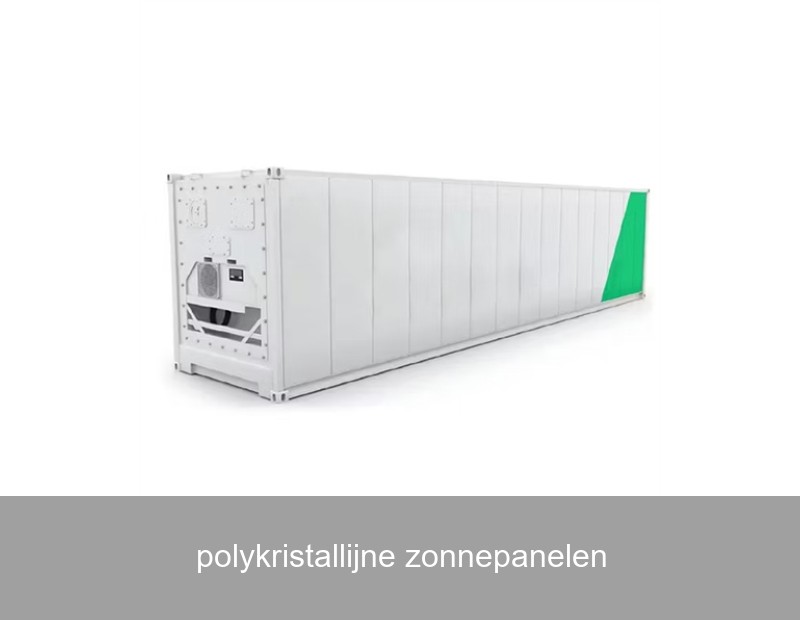
If you're exploring solar energy, you've likely encountered the term "polykristallijne zonnepanelen" or polycrystalline solar panels. Recognizable by their distinctive blue hue and speckled appearance, these panels have been a cornerstone of the solar revolution for years. But in a market now filled with options like sleek monocrystalline panels, are polycrystalline models still a smart choice? The answer, for many homeowners and businesses across Europe and the US, is a resounding yes. Their enduring value lies in a compelling balance of affordability, proven reliability, and robust performance. Let's delve into the world of polycrystalline technology and discover how it can be a powerful component in a modern, intelligent energy system, especially when paired with advanced storage solutions from leaders like Highjoule.
Table of Contents
- What Are Polycrystalline Solar Panels?
- The Advantages and Trade-offs of Polycrystalline Technology
- Efficiency in Context: Real-World Performance
- Case Study: Maximizing ROI for a Dutch Agricultural Cooperative
- The Future is Integrated: Pairing Poly Panels with Smart Storage
- Making the Right Choice for Your Energy Needs
What Are Polycrystalline Solar Panels?
Polycrystalline panels are made from silicon fragments that are melted together to form the panel's wafers. This manufacturing process is less wasteful than that for monocrystalline panels, where silicon is cut from a single crystal. Think of it like ice cubes versus a carved ice sculpture—the cubes (polycrystalline) are efficient to produce with less leftover material, while the sculpture (monocrystalline) requires more precise crafting. This fundamental difference in production is key to their cost advantage. The resulting panels have a blue, marbled look because the light reflects differently off the multiple silicon crystals within.
The Advantages and Trade-offs of Polycrystalline Technology
Choosing any technology involves weighing benefits against compromises. Here’s a clear breakdown for polycrystalline panels:
| Advantages | Considerations |
|---|---|
|
|
Efficiency in Context: Real-World Performance
The conversation about "lower efficiency" needs a crucial reality check. For a homeowner with a large, unshaded south-facing roof, the difference in annual energy production between a polycrystalline and a monocrystalline system might be minimal—and easily offset by the significant initial cost savings. The true measure isn't just lab efficiency; it's cost per kilowatt-hour generated over the system's lifetime. For many, polycrystalline panels offer an excellent ratio here.
Furthermore, panel efficiency is just one part of the energy equation. The real game-changer for any solar installation, regardless of panel type, is energy storage. Without a battery, excess solar energy produced at midday is exported to the grid, often at a low price, only for you to buy it back at a higher rate in the evening. This is where the synergy begins.
Case Study: Maximizing ROI for a Dutch Agricultural Cooperative
Consider the real-world example of a dairy farming cooperative in the Netherlands. Their goal was simple: reduce massive electricity costs from cooling systems and milking equipment. They had ample barn roof space but a strict budget.
- Solution: A 250 kW rooftop array using high-quality polykristallijne zonnepanelen was installed. The significant savings on panel costs allowed the co-op to invest in a robust Highjoule C&I Battery Energy Storage System (BESS) from day one.
- How it Works: The polycrystalline panels generate power during the day. The Highjoule BESS stores the surplus, rather than exporting it all. Then, during the evening peak when grid prices soar, the farm runs on stored solar energy. The system also provides voltage stabilization, crucial for sensitive farm equipment.
- Result: The cooperative achieved a 70% reduction in grid energy consumption and is on track for a return on investment in under 7 years. The combination(Source: IRENA - International Renewable Energy Agency)

Image: A farm utilizing rooftop solar panels. Source: Unsplash
The Future is Integrated: Pairing Poly Panels with Smart Storage
This is the core of modern energy wisdom: solar generation and storage are not separate products, but one integrated system. Highjoule's expertise lies in making this integration seamless and intelligent. Our storage systems, like the Highjoule HomePower for residential use or the scalable Industrial ESS for businesses, are designed to work with any solar array, maximizing the value of every kilowatt-hour produced, whether from polycrystalline or other panels.
Think of your polycrystalline array as a reliable, hard-working engine. A Highjoule battery is the smart gearbox and fuel tank that captures and deploys that power exactly when and where you need it. Our AI-driven energy management system constantly learns your consumption patterns and weather forecasts to optimize charging and discharging cycles, ensuring you get the most financial and practical benefit from your investment. (Source: U.S. Department of Energy)
How Highjoule Complements Your Solar Investment
- Maximizes Self-Consumption: Store your affordable solar energy for use at night, increasing independence from the grid.
- Provides Backup Power: Keep essential lights and appliances running during grid outages—a key concern in many regions.
- Enables Time-of-Use Arbitrage: Automatically buy and store grid electricity when it's cheap, use it when it's expensive.
- Future-Proofs Your Setup: Ready to integrate with emerging smart grid services and electric vehicle charging.
Making the Right Choice for Your Energy Needs
So, are polykristallijne zonnepanelen right for you? Ask yourself these questions:
- Is your primary goal to achieve the lowest upfront cost per watt of installed capacity?
- Do you have ample, unshaded roof or ground space for installation?
- Is your project budget-conscious but also focused on long-term resilience?
If you answered "yes," then a high-quality polycrystalline system, especially when designed as part of a package with a Highjoule storage solution, represents a remarkably sound and sustainable investment. The savings on the panels can be strategically re-invested into a larger battery capacity, creating a more balanced and powerful home or business energy ecosystem. (Source: Renewable and Sustainable Energy Reviews)

Image: A modern home energy setup with solar and storage. Source: Unsplash
Ultimately, the "best" panel isn't defined by a spec sheet alone, but by how well it fits your specific property, finances, and energy goals as part of a complete system. What energy challenge are you hoping to solve with solar—is it just lowering bills, or is it achieving true energy security for your home or business?
 Inquiry
 Online Chat