


Power Plant Energy Storage Cabinet: The Unsung Hero of Grid Modernization
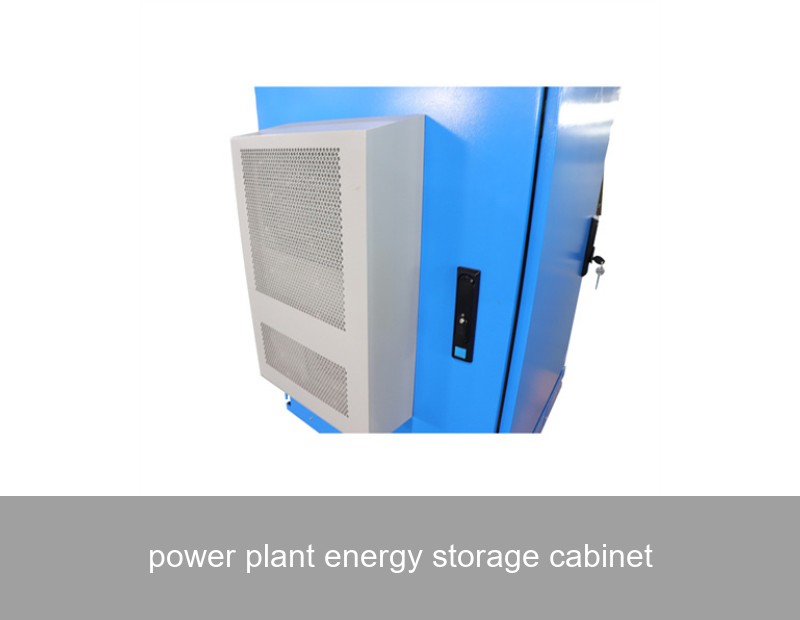
Imagine a power plant that can not only generate electricity but also remember it, store it, and release it with pinpoint precision exactly when needed. This isn't science fiction; it's the reality enabled by a critical piece of hardware: the power plant energy storage cabinet. For utilities and independent power producers, these sophisticated systems are transforming fossil-fuel and renewable plants alike into agile, reliable assets. This article delves into why these cabinets are becoming indispensable and how companies like Highjoule are engineering them for the future grid.
Table of Contents
- The Challenge: Power Plants in a Volatile Era
- What Exactly is a Power Plant Energy Storage Cabinet?
- Key Benefits: More Than Just Backup Power
- Real-World Impact: A Case Study from California
- The Highjoule Approach: Engineering for Plant-Level Demands
The Challenge: Power Plants in a Volatile Era
Traditional power plants, whether gas-fired or coal-based, were designed for a predictable world: steady baseload demand, controllable fuel supply, and straightforward economics. Today's grid landscape is radically different. The meteoric rise of variable renewables like solar and wind has introduced unprecedented fluctuations. One minute, the grid might be flooded with solar power; the next, a cloud cover could cause a sudden dip. This volatility forces conventional plants to "ramp" up and down frequently—a process that is inefficient, increases wear and tear, and raises emissions.
The data is telling. According to the International Energy Agency (IEA), the global capacity of grid-scale battery storage needs to expand 35-fold between 2022 and 2030 to meet climate targets. A significant portion of this will be deployed at or near power plants. The question for plant operators is no longer *if* to add storage, but *how* to integrate it seamlessly and robustly. That's where the specialized energy storage cabinet comes in.
What Exactly is a Power Plant Energy Storage Cabinet?
Think of it as the heart and brain of a power plant's storage system. It's not just a box of batteries. A power plant energy storage cabinet is a fully integrated, containerized unit that houses:
- Battery Modules: Typically lithium-ion (like LFP for safety and longevity) arranged in a secure, thermal-managed configuration.
- Power Conversion System (PCS): The bi-directional inverter that converts DC battery power to AC grid power and vice versa.
- Thermal Management System: A critical climate control system to keep batteries at optimal temperature, ensuring safety and performance in all weather.
- Energy Management System (EMS): The onboard intelligence that controls charging/discharging based on grid signals, market prices, or plant operational needs.
- Safety & Monitoring: Comprehensive suite including fire suppression, gas detection, and continuous performance diagnostics.

Image Source: Unsplash (Representative image of industrial electrical equipment)
These cabinets are often deployed in arrays, forming a multi-megawatt (MW) and megawatt-hour (MWh) storage system directly connected to the plant's switchyard or dedicated feeder.
Key Benefits: More Than Just Backup Power
The integration of storage cabinets unlocks transformative value for power plants:
| Application | How the Storage Cabinet Enables It | Direct Benefit to Plant |
|---|---|---|
| Frequency Regulation | Cabinet's EMS responds to grid frequency signals in milliseconds, injecting or absorbing power. | New, high-value revenue stream from grid operators; reduces mechanical stress on turbines. |
| Ramp Rate Control | Storage smoothes the plant's output curve, filling gaps during slow turbine ramp-up. | Allows plant to meet stringent grid interconnection requirements; improves efficiency. |
| Black Start Capability | Cabinets provide the initial "jolt" of power to restart plant systems after a total outage. | Enhances grid resilience; can be a contracted service for the transmission operator. |
| Energy Arbitrage | Store cheap power (e.g., at night) and discharge during expensive peak periods. | Increases overall profitability of the plant asset. |
Real-World Impact: A Case Study from California
Let's look at a real example. In 2022, a 62 MW gas-fired peaker plant in Southern California was facing economic pressure and regulatory challenges due to its carbon footprint and operational profile. Instead of retiring, the operator embarked on a hybridization project.
The solution involved installing a 20 MW / 80 MWh battery energy storage system (BESS) comprised of 40 Highjoule HES-500 power plant energy storage cabinets on-site. The results over the first year of operation were compelling:
- Ramp Rate Support: The plant's effective ramp rate improved by over 300%, allowing it to respond to CAISO (California Independent System Operator) signals almost instantaneously.
- Fuel & Emission Savings: By using the storage for frequency regulation instead of constantly adjusting the gas turbines, the plant reduced its fuel consumption by an estimated 15% for ancillary services, cutting CO2 emissions by thousands of tons.
- Revenue Diversification: Over 40% of the plant's annual revenue now comes from grid services provided by the battery cabinets, future-proofing the asset.
This case exemplifies the "lifespan extension" and "value-stacking" potential of integrating a dedicated energy storage cabinet system at a traditional power plant.
The Highjoule Approach: Engineering for Plant-Level Demands
At Highjoule, we understand that a power plant environment is the ultimate stress test for any equipment. Our HES Series Power Plant Energy Storage Cabinets are engineered from the ground up for this mission-critical duty. Since 2005, we've focused on making storage systems that are not just smart, but also rugged and relentlessly reliable.
What sets our cabinets apart for power plant applications?
- Plant-Tough Design: Our cabinets feature IP55 protection and corrosion-resistant materials to withstand harsh outdoor siting, dust, and wide temperature swings common near generation assets.
- Advanced Thermal Management: We use a liquid cooling system that is 40% more efficient than standard air cooling. This ensures consistent performance, extends battery life by up to 20%, and is significantly quieter—a key consideration for sites with noise restrictions.
- Grid-Forming Inverter Ready: The future grid needs inertia. Our cabinet's PCS can be configured with grid-forming controls, allowing the storage system to help stabilize the grid without relying on large spinning turbines—a revolutionary capability for renewable-heavy grids.
- Unified Plant Control Integration: Our EMS doesn't operate in a silo. It uses open protocols to seamlessly integrate with the plant's existing Distributed Control System (DCS), allowing operators to manage the hybrid plant from a single, familiar interface.

Image Source: Unsplash (Representative image of technician performing maintenance)
For a large utility in Germany, we deployed a 100 MW system using our cabinets specifically to provide primary frequency response (FCR) and to absorb excess wind power from a nearby region, demonstrating the dual role of grid service and congestion management.
Choosing the Right System for Your Plant
Selecting a power plant energy storage cabinet isn't an off-the-shelf purchase. It requires a deep analysis of your plant's specific needs. Here are the key questions to ask any provider:
- Depth of Discharge & Cycle Life: For daily arbitrage and ramping, you'll need a cabinet with a chemistry (like LFP) that can handle deep, daily cycles without significant degradation.
- Response Time & Accuracy: For frequency regulation, the PCS must respond in sub-second times. Demand to see performance data and certifications.
- Safety Certifications: Look for UL 9540A test reports for fire safety. The cabinet should be a self-contained safety unit.
- Service & Support: Does the provider offer 24/7 remote monitoring and have a spare parts network? Plant downtime is incredibly costly.
This is where Highjoule's consultative approach shines. We begin with a detailed feasibility study, modeling your plant's operations against local market data to size the system for optimal ROI. We then provide a full turnkey solution—from design and grid interconnection support to commissioning and long-term performance guarantees.
The Future is Hybrid
The line between generation and storage is blurring. The modern power plant is evolving into a hybrid energy center, and the energy storage cabinet is the key enabling technology. It's no longer just an add-on; it's a core component for competitiveness, reliability, and sustainability.
Is your power plant ready to explore how a tailored energy storage cabinet system can unlock new revenue, reduce operational stress, and extend the strategic value of your asset in the energy transition?
 Inquiry
 Online Chat