


Power Storage Battery for Home: Your Guide to Energy Independence and Savings
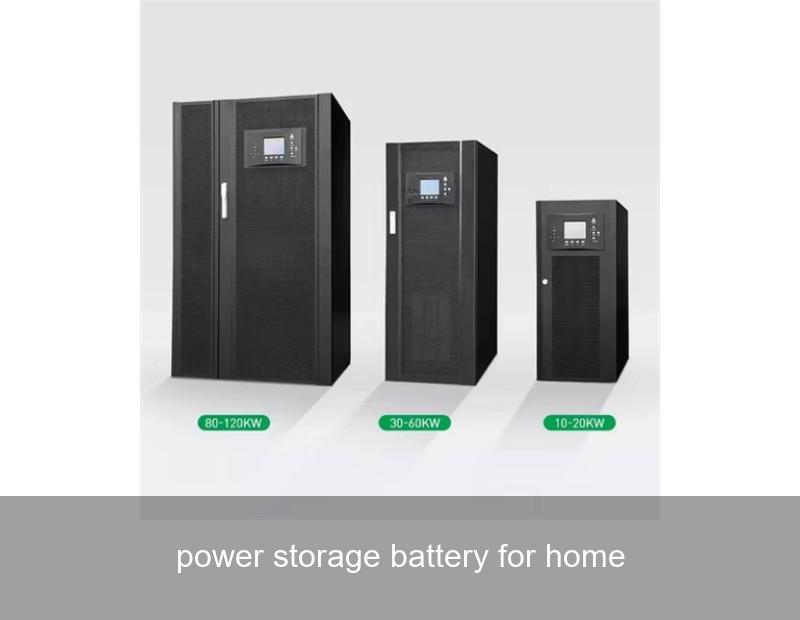
Have you ever watched your electricity meter spin after sunset, knowing your solar panels are resting, and wondered if there's a better way? You're not alone. Across homes in Europe and the US, a quiet revolution is underway, moving beyond just generating solar power to truly mastering it. The key? The modern power storage battery for home. This isn't just a backup gadget; it's the intelligent core of a self-sufficient home, turning sunlight into a 24/7 asset. Let's explore how this technology works, the real impact it can have, and how choosing the right partner makes all the difference.
Table of Contents
The Phenomenon: From Sun-Dependent to Sun-Powered
For years, home solar was a daytime affair. Excess energy was fed back to the grid, often for minimal compensation, while homeowners drew power at night from the utility at full price. This created a frustrating imbalance. The phenomenon is clear: without storage, a significant portion of the clean energy you produce goes to waste—from your perspective. Meanwhile, grid instability, rising tariffs, and a growing desire for resilience have shifted the conversation. The modern home energy storage battery solves this by acting as a personal energy reservoir, capturing every kilowatt-hour for when you actually need it.

Image: A modern home integrating solar and storage. Credit: Unsplash
The Data: Why Home Batteries Are No Longer a Niche
The numbers tell a compelling story. According to the International Energy Agency (IEA), global renewable capacity is set to grow by 2,400 GW between 2023-2028, with solar PV accounting for over half. But integration is key. In markets like Germany and California, "peak sun" hours often don't align with "peak demand" hours in the evening. This mismatch depresses the value of solar exports. A power storage battery for home directly addresses this:
- Self-Consumption Boost: Can increase the direct usage of your solar generation from 30-50% to 70-90% or more.
- Bill Savings: By avoiding drawing power during high-rate periods, homeowners can shield themselves from volatile time-of-use rates.
- Grid Support: In some regions, programs exist that reward homeowners for allowing utilities to use a small portion of their battery capacity to stabilize the local grid during demand spikes.
The U.S. Energy Information Administration notes that the average U.S. homeowner experiences over 5 hours of power interruptions annually. For those in areas prone to wildfires or severe storms, that number can be much higher, making resilience a primary data point in the decision.
A Real-World Case Study: The Schmidt Family in Bavaria
Let's make this tangible. The Schmidt family lives in a detached home in Bavaria, Germany. They installed a 10 kWp solar system in 2020. Despite good generation, they only used about 35% of their solar power directly. In early 2023, they decided to install a high-capacity home battery system.
| Metric | Before Battery (2022) | After Battery (2023-2024) | Change |
|---|---|---|---|
| Solar Self-Consumption | 35% | 85% | +50% |
| Grid Electricity Purchased | 3,200 kWh/year | 800 kWh/year | -75% |
| Annual Electricity Cost | €1,250 | €320 | €930 saved |
| Backup During Outages | 0 hours (full outage) | Essential loads for 24+ hours | Full resilience |
"The investment wasn't just about savings," says Mr. Schmidt. "The peace of mind during the last winter storms, when our neighborhood was dark but we had heat and light, was invaluable. The system pays for itself while making us independent." This case highlights the dual benefit: economic and emotional security.
Key Insights for Homeowners Considering a Battery
Based on thousands of installations, here are the critical factors to consider:
1. Capacity vs. Power: Know the Difference
Capacity (measured in kWh) is how much energy your battery can store—like the size of a fuel tank. Power (measured in kW) is how much energy it can deliver at once—like the engine's horsepower. You need enough power to start appliances (like heat pumps) and enough capacity to cover your desired backup duration.
2. The Chemistry Inside: Lithium Iron Phosphate (LFP) Leads
Not all batteries are created equal. While many early systems used NMC chemistry, the industry standard for safety and longevity in homes is now Lithium Iron Phosphate (LFP). LFP batteries are exceptionally stable, have a longer lifespan (often over 6,000 cycles), and are cobalt-free. When evaluating a power storage battery for home, LFP should be your baseline requirement.
3. Intelligence is Everything
A battery without smart software is like a computer without an operating system. The true value comes from an energy management system (EMS) that can:
- Predict solar production and consumption patterns.
- Automatically decide when to charge (from solar or the grid during cheap rates) and when to discharge.
- Integrate with future smart home devices and electric vehicle chargers.

Image: Smart energy management via a mobile app. Credit: Unsplash
The Highjoule Solution: Engineered for Peace of Mind
This is where Highjoule's nearly two decades of expertise come into focus. We don't just sell components; we design integrated home energy ecosystems. Our approach is built on three pillars:
Highjoule Hive: The Intelligent Home Battery System
Our flagship Hive series is the culmination of our experience. It's a modular, scalable power storage battery for home designed with the European and North American homeowner in mind.
- Uncompromising Safety: Built with UL-certified LFP cells in a rugged, thermally managed enclosure.
- Adaptive Scalability: Start with a base unit (e.g., 10 kWh) and seamlessly add modules as your needs grow—perhaps with an EV purchase. Highjoule Harmony OS: Our proprietary operating system is the brain. It uses machine learning to optimize your energy flow daily, connects to local grid signals for potential revenue, and provides a crystal-clear app interface. You're always in control.
Beyond the Box: Full-System Integration & Services
We understand that a battery is part of a larger system. Highjoule provides:
- Compatibility Assurance: Seamless integration with leading solar inverters and existing setups.
- Professional Installation Network: A certified network of installers across our key markets, ensuring your system is commissioned perfectly.
- Performance Monitoring & Support: Our team and platform proactively monitor system health, with over-the-air updates to keep your system at peak performance for decades.
Our systems are designed to not only maximize your ROI but to become the dependable, silent guardian of your home's comfort. As the U.S. Department of Energy emphasizes, proper sizing and integration are critical for success—principles that are foundational to our design philosophy.
What's Your Home's Energy Potential?
The journey to energy independence is personal. It starts with a simple question: What are your true priorities? Is it purely financial savings, achieving total resilience during outages, reducing your carbon footprint to its absolute minimum, or a combination of all three? Imagine a future where a storm-related blackout is merely an inconvenience, where your monthly utility bill becomes a small, predictable charge, and where you know the energy powering your family's life is clean and self-generated.
What single event or electricity bill made you first seriously consider taking control of your home's power?
 Inquiry
 Online Chat