


Powering Progress: How Prefabricated Houses in Ghana Are Redefined by Smart Energy Storage
Imagine a vibrant, rapidly developing community in Ghana. New, modern prefabricated houses are rising, offering a faster, more sustainable path to homeownership. But there's a silent challenge behind these sleek walls: ensuring a reliable and affordable power supply. For homeowners and developers of prefabricated houses in Ghana, integrating a robust energy solution from the very start isn't just an add-on—it's the cornerstone of modern, comfortable, and independent living. This is where the synergy between innovative construction and advanced energy storage creates a true revolution.
Table of Contents
- The Challenge: More Than Four Walls
- The Data: Why Grid-Reliance Alone Falls Short
- The Integrated Solution: Building Energy Resilience into the Blueprint
- Highjoule's Role: The Intelligent Energy Backbone
- Case Study: The Accra Gated Community Project
- The Future of Prefabricated Living
The Challenge: More Than Four Walls
Prefabricated houses in Ghana represent efficiency, cost-effectiveness, and modernity. However, their value is severely diminished if residents face daily power outages (locally known as "dumsor"), unpredictable electricity bills, or an inability to power essential appliances. The traditional approach—relying solely on the national grid and maybe a small generator—is costly, noisy, and polluting. It contradicts the very principles of modern, sustainable housing. The question for forward-thinking developers and homeowners is: how do we build a house that is truly self-sufficient in its energy needs?
The Data: Why Grid-Reliance Alone Falls Short
Let's look at the numbers. Ghana has made tremendous strides in grid access, yet reliability remains a concern. A 2023 report from the World Bank highlights that while access is high, service interruptions impact businesses and households. Furthermore, residential electricity tariffs have seen adjustments over the years, pushing consumers to seek stability. For a developer constructing 50 prefabricated houses, guaranteeing 24/7 power through diesel generators could mean astronomical fuel costs and a significant carbon footprint—a poor selling point for the eco-conscious modern buyer.
This is the perfect storm where solar energy shines. Ghana enjoys abundant sunlight, with solar irradiance levels averaging between 4 to 6 kWh/m²/day. A typical prefabricated house roof has more than enough space to capture this free energy. But here's the catch: solar panels generate power only during the day, while family energy use often peaks in the evenings. Without a way to store that daytime energy, you're still left in the dark.

Image: A modern prefabricated home ideal for solar integration. Source: Unsplash
The Integrated Solution: Building Energy Resilience into the Blueprint
The most progressive developers are now treating energy systems not as an afterthought, but as a core component of the house's design. Think of it as the "energy foundation." This involves:
- Design-Phase Integration: Planning for solar panel placement, conduit runs, and battery storage location during the architectural phase of the prefabricated modules.
- AC-Coupled vs. DC-Coupled Systems: For retrofits, AC-coupled systems offer flexibility. But for new builds, DC-coupled systems can be more efficient, as they are integrated directly into the house's electrical backbone from the start.
- Scalability: A system designed to grow with the family—starting with a base storage capacity that can be expanded later.
This approach transforms a prefabricated house in Ghana from a simple shelter into a resilient, energy-positive asset.
Highjoule's Role: The Intelligent Energy Backbone
This is where Highjoule, with nearly two decades of expertise in advanced energy storage, becomes an essential partner. For developers and homeowners of prefabricated houses in Ghana, we provide the intelligent layer that makes solar energy reliable and easy to manage.
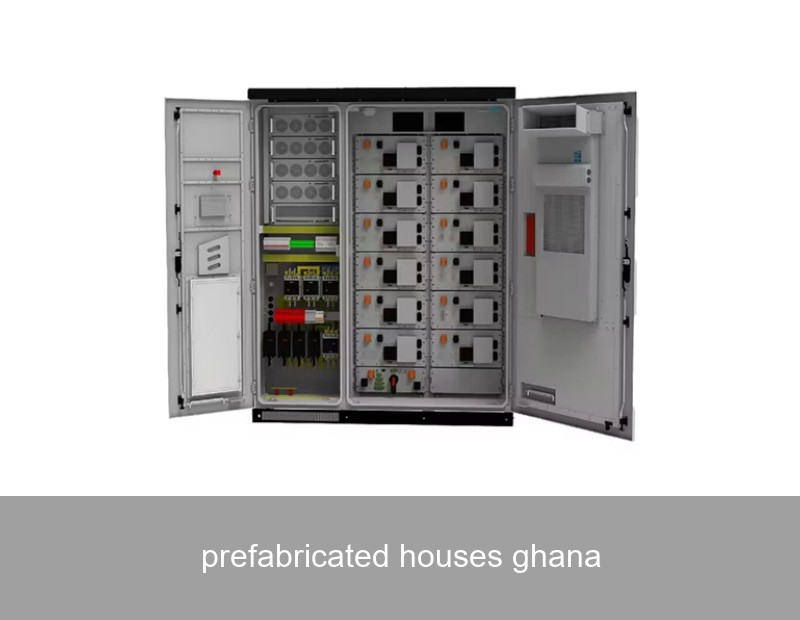
Our HES (Home Energy System) series is particularly well-suited for integration into new construction projects. These modular lithium iron phosphate (LiFePO4) battery systems are known for their safety, long lifespan (over 6000 cycles), and exceptional performance in warm climates. They can be neatly wall-mounted in a utility room or garage, complementing the modern design of a prefab home.
More than just hardware, Highjoule's Energy Management System (EMS) is the true brain. It intelligently decides when to store solar energy, when to power the home, and when to draw from the grid—all to maximize savings and comfort. Homeowners can monitor and control their energy flow via a simple smartphone app. For a developer, offering a Highjoule-equipped home means offering a turnkey solution: a beautiful, modern house that comes with its own intelligent, silent, and clean power plant.
| Feature | Traditional Home (Grid + Generator) | Prefab Home with Highjoule HES |
|---|---|---|
| Power Reliability | Unreliable during outages; generator startup delay | Seamless, instant backup during grid failures |
| Operating Cost | High, volatile fuel and electricity bills | Drastically reduced bills via optimized solar self-consumption |
| Noise & Pollution | High (generator noise and emissions) | Silent and zero local emissions |
| System Management | Manual operation and monitoring | Fully automated, remote monitoring via app |
Case Study: The Accra Gated Community Project
Let's ground this in reality. A developer in Greater Accra recently launched "Green Haven Estates," a community of 25 premium prefabricated houses. Their goal was to market not just houses, but a lifestyle of uninterrupted comfort and sustainability. Partnering with a local solar installer and Highjoule, they integrated a 5kW solar array and a 10.2kWh Highjoule HES-10 battery system into each home as a standard feature.
- Grid Independence: Homes achieved an average of 85% grid independence, drawing power primarily at night during low-tariff periods as programmed by the EMS.
- Cost Savings: Residents reported an average reduction of 70% in their monthly energy expenditures compared to neighboring traditional homes of similar size.
- Sales Impact: The developer reported that the "solar-plus-storage ready" feature was the top selling point, allowing them to sell units 15% faster and at a 10% premium compared to initial projections. The community experienced zero disruption during several widespread grid outages, a powerful testament for potential buyers.
This case, documented in part by the International Renewable Energy Agency (IRENA) in a report on distributed solar in West Africa, shows the tangible market advantage.

Image: A modern, energy-secure interior powered by intelligent storage. Source: Unsplash
The Future of Prefabricated Living
The trajectory is clear. The future of housing, especially in dynamic markets like Ghana, lies in smart, self-sufficient units. As electric vehicles become more common, the next step will be integrating EV charging, managed by the same home energy system to avoid overloading the home's electrical circuit. The prefabricated house becomes a hub of clean technology.
For international investors, NGOs, or Ghanaian developers looking at the bigger picture, this isn't just about houses. It's about building resilient communities, reducing national grid strain, and meeting UN Sustainable Development Goals (SDG 7: Affordable and Clean Energy) one home at a time. The prefabricated construction method offers the speed; integrated renewable energy storage from experts like Highjoule offers the sustainable, reliable heart.
An Open Question for Developers and Homebuyers
When you envision your next prefabricated house project or your dream home in Ghana, what matters more: the short-term cost of installation, or the long-term cost and quality of living? Are you building a structure, or are you crafting a truly modern, resilient, and independent lifestyle? The energy blueprint you choose today will define that answer for decades to come.
 Inquiry
 Online Chat