


PT Quint Solar Indonesia: A Case Study in Unlocking Island and Remote Area Potential with Advanced Energy Storage
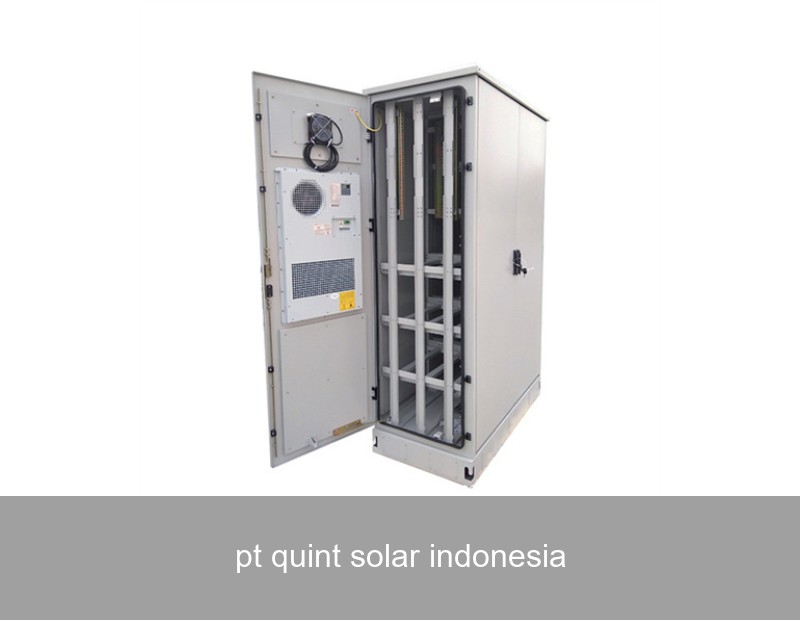
Imagine a remote island community or an off-grid industrial site in the Indonesian archipelago. The sun beats down with incredible energy potential, yet reliable, 24/7 power remains a costly challenge. This is the precise landscape where companies like PT Quint Solar Indonesia operate, bringing solar energy solutions to complex environments. Their work highlights a critical global truth: solar panels alone are not a complete solution. The real game-changer, the key to unlocking true energy independence and grid resilience, is the advanced battery energy storage system (BESS). For projects in Indonesia and similar markets, integrating smart storage transforms intermittent sunlight into a dependable, stable power source for businesses, industries, and communities. As a global leader in this field, Highjoule understands that the success of solar pioneers like PT Quint Solar hinges on the intelligence and durability of the storage technology they choose.
Table of Contents
The Challenge: Beyond the Solar Panel
For solar EPC (Engineering, Procurement, and Construction) firms and developers like PT Quint Solar Indonesia, the primary value delivered to clients is reliable electricity. Solar PV generation, however, is inherently variable. Clouds pass, night falls, and demand peaks may not align with peak production. In remote or island settings, where connection to a national grid is impossible or prohibitively expensive, this variability is a major operational and financial hurdle. Relying on diesel generators as a backup is the traditional answer, but it comes with crippling fuel costs, noise, pollution, and supply chain vulnerabilities. The phenomenon is clear: without storage, a significant portion of solar energy is wasted when production exceeds demand, and power shortages occur when demand exceeds production. This limits both the economic appeal and the operational reliability of solar installations.
The Data: Why Storage is Non-Negotiable
Let's look at the numbers. According to the International Renewable Energy Agency (IRENA), to meet global climate goals, the world needs to expand its battery storage capacity by over 40 times by 2030. Why this urgency? Because storage is the linchpin that allows high penetrations of renewable energy. A study focusing on island grids found that adding storage to a solar PV system can increase the share of renewable energy in the mix from around 30% to over 70%, while drastically reducing generator runtime and fuel consumption. Financially, the Levelized Cost of Storage (LCOS) has fallen dramatically, making solar-plus-storage projects not just technically feasible, but often the lowest-cost power solution for off-grid and weak-grid applications. The data points to an undeniable trend: solar and storage are no longer separate products; they are a single, integrated solution.
Key Benefits of Solar-Plus-Storage:
- Energy Time-Shift: Store excess solar energy for use at night or during peak demand.
- Grid Stability & Frequency Regulation: Provide critical grid services, stabilizing voltage and frequency in microgrids.
- Diesel Optimization: Reduce diesel generator runtime by 80% or more, slashing fuel costs and maintenance.
- Backup Power: Ensure seamless power during outages or when solar generation is low.
The Case Study: PT Quint Solar Indonesia's Remote Resort Project
Let's examine a practical example. PT Quint Solar Indonesia was tasked with powering a high-end eco-resort on a secluded island. The resort previously depended entirely on diesel generators, facing electricity costs exceeding $0.45/kWh, noise pollution, and the constant logistical headache of fuel delivery. Their goal was to achieve near-total energy independence and significantly reduce operational costs.
The Solution Deployed: PT Quint Solar designed a hybrid system featuring a 500 kWp solar array coupled with a 1 MWh battery energy storage system and the existing diesel generators as a final backup. The BESS acts as the brain and buffer of the microgrid: it soaks up midday solar excess, dispatches power during the evening tourist peak, and ensures seamless transitions, minimizing generator use to only a few hours per week during prolonged cloudy periods.

The Results (12 Months Post-Installation):
| Metric | Before Solar+Storage | After Solar+Storage | Change |
|---|---|---|---|
| Fuel Consumption | 200,000 liters/year | ~25,000 liters/year | -87.5% |
| Cost of Electricity | $0.45/kWh | $0.18/kWh | -60% |
| Generator Runtime | 24/7 | <10 hours/week | -94% |
| Carbon Emissions | ~540 tons CO2e/year | ~68 tons CO2e/year | -87% |
This project exemplifies how partners like PT Quint Solar Indonesia are not just selling equipment; they are delivering transformational economic and environmental outcomes. The success, however, critically depended on the performance and reliability of the BESS at its core.
The Solution: Core Principles of a Modern BESS for Tropical Climates
Not all storage is created equal, especially in demanding environments like Indonesia. High heat, humidity, and remote locations require a product built for resilience. A superior BESS for such applications is defined by:
- Thermal Management: Active liquid cooling is often superior to air cooling in hot climates, maintaining optimal cell temperature for longevity and safety.
- Cycling Stability: The battery must withstand daily charge/discharge cycles with minimal degradation over a 10+ year lifespan.
- Advanced Battery Management System (BMS): This is the "brain" that monitors cell health, balances charge, and ensures safe operation.
- Grid-Forming Inverter Capability: In off-grid microgrids, the system must be able to "form" the grid—creating a stable voltage and frequency waveform for other equipment to follow, a task traditionally done by generators.
- Remote Monitoring & Diagnostics: For remote sites, the ability to monitor performance, troubleshoot, and update software remotely is essential for reducing operational costs.
How Highjoule Empowers Solar Integrators and Developers
At Highjoule, we've spent nearly two decades designing energy storage systems specifically for the challenges faced by forward-thinking companies like PT Quint Solar Indonesia. We understand that our success is measured by the success of our partners' projects. Our approach is to provide more than just hardware; we provide a comprehensive, intelligent storage platform.
Our H-Series commercial & industrial (C&I) energy storage systems are engineered for high-cycling, high-reliability applications. They feature industry-leading liquid cooling technology, a robust rack-level design for easy installation and service, and our proprietary JouleOS™ energy management software. JouleOS™ is what makes the system truly intelligent. It can be configured for multiple use cases—from peak shaving and energy arbitrage to grid-forming in a microgrid—all through an intuitive interface. For integrators, this means a flexible, future-proof product that simplifies design and commissioning.

For large-scale or microgrid projects, our MegaJoule Containerized Solutions offer pre-integrated, plug-and-play power. These containerized BESS units arrive site-ready, significantly reducing installation time and complexity in remote locations. They include full fire suppression, climate control, and our advanced safety systems, giving developers and end-users unparalleled peace of mind.
We partner with solar EPCs by providing extensive technical support, system design collaboration, and training, ensuring their team is equipped to deliver and maintain top-tier solar-plus-storage solutions.
The Future: Scaling Sustainable Power Across Islands and Beyond
The work of PT Quint Solar Indonesia is a microcosm of a global movement. From remote islands in Southeast Asia to rural communities in Africa and resilient microgrids in North America, the template is proven: integrate solar with advanced, intelligent storage. The next frontier involves scaling this model and leveraging software to aggregate and optimize distributed storage resources, creating virtual power plants that can support larger grids.
As battery chemistry continues to evolve and costs decline, the economic argument will only strengthen. The question for businesses, utilities, and governments is no longer if they should adopt solar-plus-storage, but how quickly they can implement it to secure their energy future, reduce costs, and meet sustainability targets.
For a solar developer or a business owner considering such a system, what specific operational challenge—whether it's unpredictable fuel costs, grid instability, or a corporate sustainability mandate—is driving you to explore energy storage today?
 Inquiry
 Online Chat