


PV Anlage 10 kWp mit Speicher: Your Complete Guide to Energy Independence
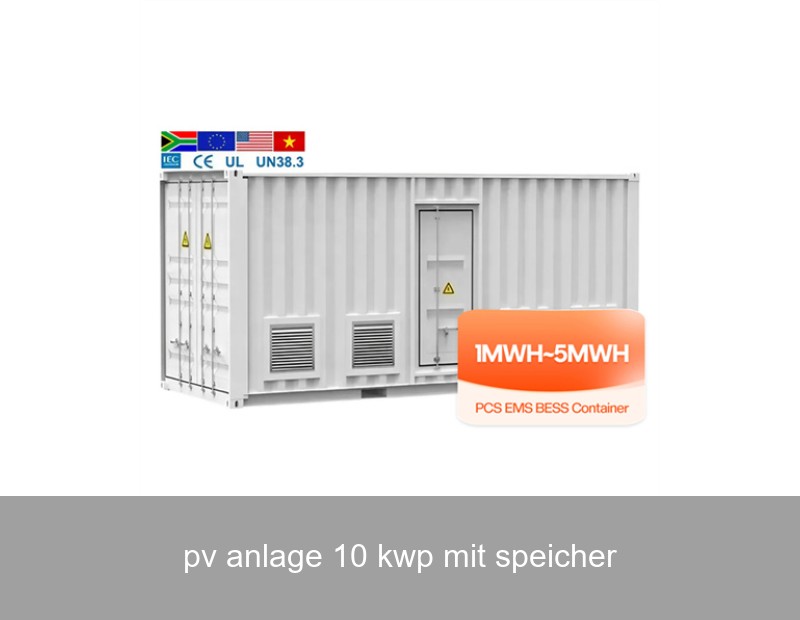
So, you're considering a 10 kWp solar system with a battery. That's a smart move. Across Europe and the US, homeowners and businesses are moving beyond just generating solar power to truly controlling it. A 10 kWp photovoltaic (PV) system is a powerful setup, often capable of covering a significant portion of a typical household's or small business's annual electricity needs. But without a battery, a large chunk of that self-generated, clean energy flows back to the grid when you don't need it, leaving you reliant on the grid at night and on cloudy days. Pairing it with a storage system changes everything. This guide will walk you through why a PV Anlage 10 kWp mit Speicher is becoming the gold standard for energy-savvy consumers, what you need to know, and how companies like Highjoule are making this technology more intelligent and accessible than ever.
Table of Contents
- The Modern Energy Dilemma: High Production, Low Self-Consumption
- Why 10 kWp? Sizing Your System for Maximum Impact
- The Heart of the System: Choosing the Right Battery Storage
- Real-World Performance: A Case Study from Bavaria
- Beyond the Kilowatt-Hour: The Highjoule Intelligent Ecosystem
- Key Components for Your 10 kWp Solar and Storage Project
- Is a 10 kWp PV System with Storage Right for You?
The Modern Energy Dilemma: High Production, Low Self-Consumption
Here's a common scenario for solar owners without storage: Your 10 kWp system peaks at midday, producing a surplus of energy. Meanwhile, you're at work, your appliances are idle, and this valuable power is fed into the grid for a modest feed-in tariff. Come evening, when energy demand spikes with lighting, cooking, and entertainment, your panels are offline, forcing you to buy expensive electricity from the utility. This mismatch is the core challenge. The Fraunhofer Institute for Solar Energy Systems ISE notes that without storage, a typical household's direct self-consumption of solar power might only reach 30-40%. That means over 60% of your self-generated energy is exported, leaving you still vulnerable to volatile market prices.

Adding a battery storage system can dramatically flip this ratio. By storing the midday surplus, you can boost your self-consumption to 70%, 80%, or even higher. This isn't just about economics (though the savings are substantial); it's about resilience. It means having a personal energy reserve during grid outages, contributing directly to grid stability, and maximizing the return on your investment in clean technology.
Why 10 kWp? Sizing Your System for Maximum Impact
A 10 kWp system is a significant but increasingly popular size. But what does it mean? "kWp" stands for kilowatt-peak, indicating the system's maximum theoretical output under ideal laboratory conditions. In the real world, across Europe and the northern US, a 10 kWp system will typically generate between 9,000 to 12,000 kWh of electricity per year, depending on location, orientation, and shading.
This output range makes it an ideal fit for:
- Larger single-family homes with high electricity consumption (e.g., with electric vehicles, heat pumps, or pools).
- Small to medium-sized businesses with daytime operational loads.
- Homeowners planning for future electrification of heating and transport.
However, the key to unlocking its full potential is not just the size of the PV array, but the intelligent integration of a correctly sized battery. A system that's too small won't capture enough surplus, while an oversized system is a poor capital investment. The goal is a harmonious balance.
The Heart of the System: Choosing the Right Battery Storage
The battery is more than just a tank for electrons. It's the brain of your modern energy system. When selecting a battery for your 10 kWp PV system, you should consider:
- Usable Capacity (kWh): This determines how much of your solar surplus you can store. For a 10 kWp system, capacities between 8-15 kWh are common, but the ideal size depends on your consumption profile.
- Power Rating (kW): How much power the battery can deliver at once. A higher rating is crucial if you need to start large motors (like a heat pump) during a grid outage.
- Depth of Discharge (DoD) & Cycle Life: Quality batteries allow for deep discharge (e.g., 90-100%) and are rated for thousands of cycles, ensuring a long operational life of 10+ years.
- System Intelligence: Can it learn your habits? Can it be updated with new features? Can it participate in grid services? This is where modern systems truly shine.
Real-World Performance: A Case Study from Bavaria
Let's move from theory to practice. Consider the Müller family in southern Germany. In 2022, they installed a 10.2 kWp PV system coupled with a 13.5 kWh high-capacity battery from Highjoule. Their goal was to achieve near-total energy self-sufficiency and prepare for an upcoming EV purchase.
The Data Tells the Story (Annual Figures):
| Metric | Without Storage (Estimated) | With Highjoule Storage (Actual) |
|---|---|---|
| Total PV Production | 10,800 kWh | 10,800 kWh |
| Direct Self-Consumption | ~3,500 kWh (32%) | ~5,900 kWh (55%) |
| Battery-Cycled Energy | N/A | ~4,100 kWh |
| Total Self-Consumption | ~3,500 kWh (32%) | ~10,000 kWh (93%) |
| Grid Purchases | 4,500 kWh | ~800 kWh |
By adding intelligent storage, the Müllers increased their effective use of self-generated solar power from 32% to over 90%. Their grid dependence dropped dramatically, insulating them from price spikes. The Highjoule system's AI-driven energy management automatically optimized charging and discharging based on weather forecasts and usage patterns, ensuring the battery was ready for nighttime use and cloudy days.
Beyond the Kilowatt-Hour: The Highjoule Intelligent Ecosystem
At Highjoule, we believe a PV Anlage 10 kWp mit Speicher should be a seamless, intelligent asset. Our solutions, like the Highjoule Hive residential storage system and the Highjoule Matrix for commercial applications, are built on this principle. We don't just provide hardware; we deliver an integrated energy management platform.

Our systems feature:
- Adaptive Learning Algorithms: The system studies your household's rhythm and adjusts its strategy daily to maximize savings.
- Storm Guard Mode: Automatically charges the battery to full when severe weather is forecasted, ensuring backup power.
- Virtual Power Plant (VPP) Readiness: With owner consent, Highjoule systems can aggregate to support the local grid during peak demand, potentially creating a future revenue stream for you. This aligns with advanced grid-support concepts discussed by authorities like the U.S. Department of Energy.
- Future-Proof Design: Our modular architecture allows for capacity expansion and software updates that bring new features over time.
Key Components for Your 10 kWp Solar and Storage Project
To bring your energy-independent future to life, a well-designed system integrates several key components:
- PV Modules: Approximately 25-30 high-efficiency panels (at ~400W each) to achieve 10 kWp.
- Inverters: A hybrid inverter or a combination of a PV inverter and a battery-specific inverter (DC-coupled or AC-coupled). Highjoule systems often use optimized, integrated inverter technology for higher overall efficiency.
- Battery Storage Unit: The core of energy shifting, with lithium-ion chemistry (like LFP) being the standard for safety and longevity.
- Energy Management System (EMS): The software brain—like Highjoule's proprietary platform—that controls the flow of energy.
- Monitoring & Control: An intuitive app that gives you real-time insight and control over your energy production, consumption, and storage from anywhere.
Professional installation and system design are non-negotiable. A certified Highjoule partner will ensure your system is not only compliant with all local regulations (like the VDE standards in Europe or NEC in the US) but also perfectly tuned to your property's unique characteristics and your personal energy goals.
Is a 10 kWp PV System with Storage Right for You?
The journey to energy independence is exciting, but it's also a significant investment. Ask yourself these questions: Is your roof largely unshaded and facing a favorable direction (south in the Northern Hemisphere)? Is your annual electricity consumption above 8,000 kWh, or do you plan to increase it with an EV or heat pump? Are you frustrated by rising electricity bills and seek both financial predictability and environmental impact?
If you answered "yes," then a PV Anlage 10 kWp mit Speicher is likely an excellent fit. The combination of substantial generation capacity and intelligent storage is the most effective way to take charge of your energy costs and carbon footprint today.
What specific energy goal—be it total self-sufficiency, backup power peace of mind, or maximizing ROI—is driving you to explore solar and storage solutions right now?
 Inquiry
 Online Chat