


Understanding PV Panels Specifications: Your Guide to Smarter Solar Choices
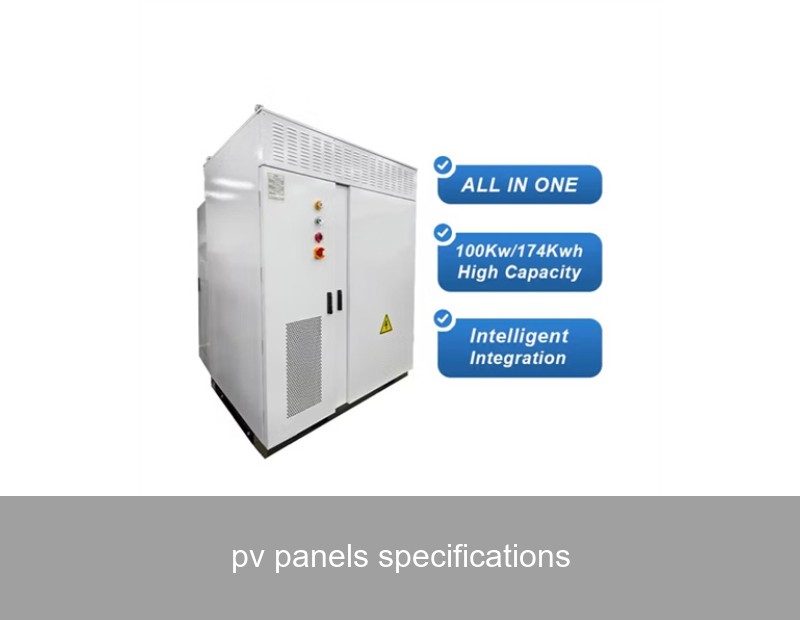
So, you've decided to explore solar energy. That's fantastic! But as you start browsing, you're immediately met with a sea of numbers and technical terms: wattage, efficiency ratings, temperature coefficients. Understanding PV panels specifications can feel like deciphering a foreign language. Yet, these specs aren't just marketing fluff; they are the critical blueprint that determines your system's performance, longevity, and return on investment. This guide will translate these specifications into plain English, helping you, whether you're a homeowner in California or a factory manager in Germany, make an informed decision that aligns with your energy goals. And remember, the right panel is only part of the equation—pairing it with a smart, integrated storage system, like those from Highjoule, unlocks the full potential of your solar investment.
Table of Contents
- The Core Specs: What Do They Actually Mean for You?
- Beyond the Basics: The Hidden Game-Changers in PV Specs
- The Critical Connection: Why PV Panel Specs Dictate Your Storage Choice
- From Spec Sheet to Real World: A German Case Study
- Making Your Choice: It's More Than Just the Panel
The Core Specs: What Do They Actually Mean for You?
Let's break down the three most prominent specifications you'll see on every datasheet.
1. Power Rating (Wattage)
Measured in watts (W), this is the panel's output under ideal laboratory conditions (Standard Test Conditions, or STC). You'll commonly see panels ranging from 400W to 700W for residential and commercial use.
- Phenomenon: "Why does my 400W panel almost never produce 400W?"
- Data & Insight: The STC rating is a benchmark, not a daily promise. Real-world output depends on sunlight intensity, angle, and temperature. A panel's actual yield is better indicated by its performance in NOCT (Nominal Operating Cell Temperature) or PTC (PVUSA Test Conditions) ratings, which simulate more realistic environments. Choosing a panel with a smaller gap between its STC and NOCT ratings often indicates more robust real-world performance.
2. Module Efficiency
This percentage tells you how effectively the panel converts sunlight into electricity. Higher efficiency means more power from the same roof area.
| Panel Type | Typical Efficiency Range | Best For |
|---|---|---|
| Monocrystalline | 18% - 23%+ | Roofs with limited space, maximizing output |
| Polycrystalline | 15% - 18% | Budget-conscious projects with ample space |
| Thin-Film | 10% - 13% | Large commercial roofs, flexible applications |
Insight: Don't chase efficiency alone. A 22% efficient panel might be overkill for a large barn roof, where a slightly less efficient but more cost-effective option could deliver a better overall system ROI.
3. Temperature Coefficient
This is a crucial but often overlooked spec. It tells you how much the panel's power output decreases for every degree Celsius above 25°C. It's always a negative percentage (e.g., -0.35%/°C).
- Phenomenon: A hot, sunny day doesn't always yield peak production.
- Insight: A panel with a temperature coefficient of -0.25%/°C will perform significantly better on a scorching 35°C day than one with -0.40%/°C. This is vital for installations in hot climates like Southern Europe or the American Southwest.
Beyond the Basics: The Hidden Game-Changers in PV Specs
While wattage grabs headlines, long-term value is hidden in the finer details.
Degradation Rate & Warranty
Every panel degrades over time. The specification sheet should state the first-year degradation (often ~2%) and the annual degradation thereafter (typically ~0.45-0.55%). A 25-year performance warranty usually guarantees 80-92% of original output at the end of its term. A lower annual degradation rate is a strong indicator of panel quality and long-term yield.
Tolerance
A power tolerance of 0 to +5% means the panel will perform at or above its rated wattage. A tolerance of ±3% means it could be 3% below rating. Always look for a positive or zero-negative tolerance.

Image: High-efficiency monocrystalline panels. Source: Unsplash
The Critical Connection: Why PV Panel Specs Dictate Your Storage Choice
Here's where the story gets even more interesting. Your PV panels specifications directly influence the type and configuration of the battery storage system you need. This is where an integrated solution becomes paramount.
High-wattage, high-efficiency panels can produce significant power surges on bright days. Your battery system must be able to handle this high DC input efficiently to avoid clipping losses. Furthermore, the degradation profile of your panels should be factored into the long-term energy modeling of your storage system.
This is precisely the challenge Highjoule addresses. Our HPS Series commercial and industrial battery energy storage systems (BESS) are engineered with advanced power conversion and battery management systems that dynamically adapt to the variable input from high-performance PV arrays. For residential clients, our Home Energy Hub seamlessly integrates with modern high-spec panels, ensuring every kilowatt-hour generated is either used, stored, or optimally fed back to the grid. We don't just sell batteries; we provide intelligent energy ecosystems that start with understanding your solar generation profile.
From Spec Sheet to Real World: A German Case Study
Let's look at how specifications played out in a real project. A medium-sized dairy farm in Bavaria, Germany, aimed for energy independence to shield itself from volatile energy prices.
- Challenge: Limited roof space on the main barn, high and consistent daytime energy load for cooling, and a desire to extend self-consumption into the night.
- PV Specification Choice: They selected 285 high-efficiency monocrystalline panels (455W each) with a low temperature coefficient (-0.29%/°C) and a conservative degradation rate (0.45%/year). The positive power tolerance (0/+3%) ensured they met their baseline generation target.
- The Storage Integration: The high DC input capability and cyclic demands of the farm required a robust storage solution. The farm partnered with Highjoule to deploy a containerized HPS-150 system (150 kWh capacity). The BESS was configured to prioritize capturing the midday solar peak that would otherwise be exported at lower feed-in tariffs.
- Data & Result: In the first year, the system generated 142 MWh. The Highjoule BESS increased the farm's self-consumption rate from 35% to 82%. Fraunhofer ISE reports that such integration is key to profitability in markets with declining feed-in tariffs. The project is on track for a return on investment in under 7 years, thanks largely to the synergy between the carefully chosen high-spec panels and the intelligent storage system.

Image: Agricultural solar installation. Source: Unsplash
Making Your Choice: It's More Than Just the Panel
As you evaluate PV panels specifications, remember you are building a system. The panel is the generator, but its true value is unlocked by how you manage, store, and use its output.
- Match Specs to Your Environment: Prioritize temperature coefficient in hot climates, and efficiency/low-light performance in cloudier regions.
- Think in System Terms: Consider the inverter's maximum DC input voltage and current. Will your chosen panel string configuration exceed these limits?
- Plan for Storage from Day One: Even if it's a phase-two addition, design your PV system with DC coupling or inverter-ready for storage. This foresight saves significant cost and complexity later.
Highjoule's approach is to consult on the entire energy asset lifecycle. Our expertise begins with helping you analyze how different panel specifications will perform on your specific site and modeling their interaction with our storage solutions for optimal financial and operational outcomes.
Ready to move beyond the spec sheet and design a resilient energy system for your home or business? What's the biggest uncertainty you face when trying to translate solar panel specifications into a reliable, cost-saving energy solution for your property?
 Inquiry
 Online Chat