


Rechargeable Lithium Battery Pack: The Powerhouse Driving Our Energy Future
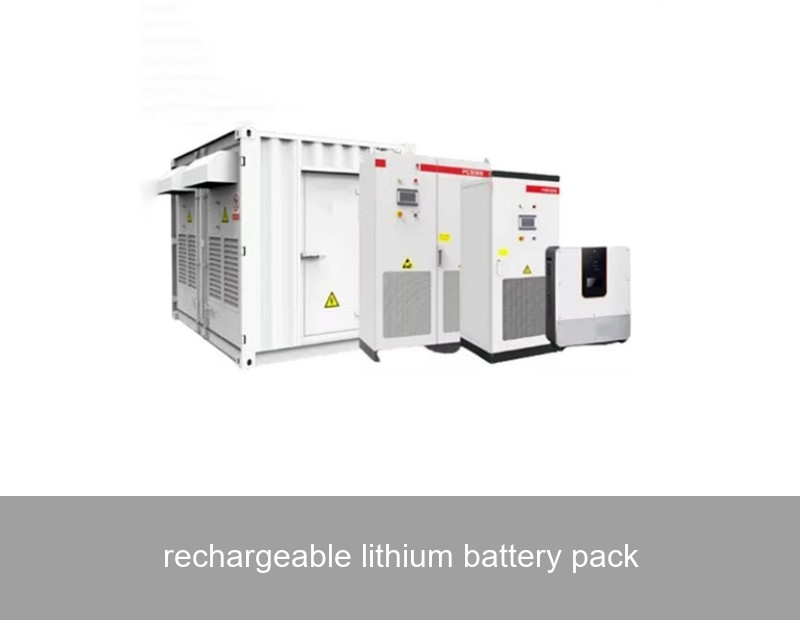
You've likely seen the term "rechargeable lithium battery pack" everywhere—from the smartphone in your hand to the electric vehicle gliding silently down your street. But have you ever stopped to consider the immense role these same energy blocks play far beyond our pockets and garages? Today, we're witnessing a quiet revolution. The same core technology is being scaled up, engineered for resilience, and deployed to solve one of our generation's greatest challenges: building a reliable, sustainable energy grid. As renewable sources like solar and wind become mainstream, their intermittent nature creates a pressing need. The sun doesn't always shine, and the wind doesn't always blow. This is where advanced, large-scale rechargeable lithium battery packs step in, not just as storage devices, but as intelligent hubs stabilizing our power supply and empowering energy independence.
Table of Contents
- The Phenomenon: From Intermittency to Reliability
- The Data: Why Lithium Dominates the Energy Storage Landscape
- Case Study: A California Winery's Journey to Resilience
- Expert Insights: Choosing the Right System for Your Needs
- Highjoule's Intelligent Energy Solutions
- The Future is Modular and Smart
The Phenomenon: From Intermittency to Reliability
Imagine a typical cloudy afternoon in Germany or a calm day in Texas wind country. Solar panels and wind turbines see a dramatic drop in output, yet homes, hospitals, and factories need uninterrupted power. This mismatch is the fundamental hurdle for a green energy transition. The grid, a meticulously balanced system, suddenly faces a potential shortfall. Traditionally, we've relied on fossil-fuel "peaker" plants to ramp up quickly, but this is costly and counterproductive to decarbonization goals.
This is the precise problem that industrial-grade rechargeable lithium battery packs are designed to solve. Think of them as a massive, high-speed buffer for the electrical grid. They absorb excess clean energy when production is high and release it seamlessly when demand peaks or generation falls. This process, called frequency regulation and load shifting, transforms renewables from variable sources into dependable, dispatchable power plants. For businesses, this capability isn't just about sustainability; it's a direct path to significant cost savings by avoiding peak demand charges from utilities and providing a critical backup during outages.

Image Source: Unsplash - A containerized battery energy storage system, similar to commercial solutions.
The Data: Why Lithium Dominates the Energy Storage Landscape
The shift towards lithium-ion technology for large-scale storage isn't accidental. It's driven by compelling performance metrics that outpace older battery chemistries like lead-acid. Let's look at the numbers that make lithium the preferred choice.
| Key Metric | Lithium-ion Battery Pack | Traditional Lead-Acid | Impact for Commercial/Industrial Users |
|---|---|---|---|
| Energy Density | High (150-250 Wh/kg) | Low (30-50 Wh/kg) | More energy storage in less space, crucial for site-constrained projects. |
| Round-Trip Efficiency | 90-95% | 70-80% | More stored energy is usable, improving ROI and sustainability. |
| Cycle Life (to 80% capacity) | 4,000 - 10,000+ cycles | 500 - 1,200 cycles | Longer system lifespan, reducing lifetime cost and replacement frequency. |
| Depth of Discharge | 80-90% recommended | ~50% recommended | More usable capacity per cycle without damaging the battery. |
According to a report by the U.S. Department of Energy, the cost of lithium-ion batteries has plummeted by nearly 90% over the past decade, a key driver for widespread adoption. Furthermore, their superior cycle life directly translates to a lower Levelized Cost of Storage (LCOS), making projects financially viable. For a business, this means the rechargeable lithium battery pack isn't just an expense; it's a strategic asset with a clear and calculable payback period.
Case Study: A California Winery's Journey to Resilience
Let's make this tangible with a real-world example. Consider a premium winery in Napa Valley, California. Their challenges were multifaceted: high energy costs, an unreliable grid prone to public safety power shutoffs (to prevent wildfires), and a strong commitment to sustainable farming. A power outage during fermentation could ruin an entire vintage, representing a massive financial and reputational risk.
The Solution: The winery installed a integrated solar-plus-storage microgrid. The centerpiece was a 500 kWh commercial rechargeable lithium battery pack, coupled with a 300 kW rooftop solar array.
The Results (Data from the first year of operation):
- Energy Cost Savings: Reduced electricity bills by 40% through solar self-consumption and peak shaving.
- Reliability: Successfully rode through 5 grid outages, the longest lasting 12 hours, protecting critical winemaking processes.
- Sustainability: Increased on-site renewable consumption to over 85%, significantly reducing carbon footprint.
- ROI: Achieved a projected payback period of under 7 years, thanks in part to state incentive programs like SGIP (Self-Generation Incentive Program).
This case exemplifies the triple win: economic, operational, and environmental. The rechargeable lithium battery pack provided the crucial buffer that made the winery's solar investment truly resilient and financially optimal.
Expert Insights: Choosing the Right System for Your Needs
So, you're considering a battery storage system? It's more than just buying "a battery." Here’s what we at Highjoule, with nearly two decades of experience, advise our clients to consider:
- Application First: Is your primary goal cost savings (peak shaving, energy arbitrage), backup power, or grid services? The answer dictates system sizing and configuration.
- Chemistry Matters: Within lithium-ion, there are variations. Lithium Iron Phosphate (LFP) is renowned for its exceptional safety, long cycle life, and stability, making it our preferred choice for most stationary storage applications at Highjoule.
- Intelligence is Key: The battery pack is hardware; the brain is the software. An advanced Battery Management System (BMS) and energy management software are vital for safety, performance optimization, and remote monitoring.
- Total Ecosystem: Ensure compatibility between the battery, inverter, solar system, and any existing site controls. A seamlessly integrated system performs better and lasts longer.

Image Source: Unsplash - Advanced monitoring and control is crucial for battery system performance.
Highjoule's Intelligent Energy Solutions
At Highjoule, we've been at the forefront of this energy transition since 2005. We understand that every commercial, industrial, or residential site has unique energy DNA. That's why we don't just sell standardized rechargeable lithium battery packs; we engineer intelligent, tailored power solutions.
Our flagship product line, the Highjoule H-Series, is built around a modular LFP (Lithium Iron Phosphate) battery pack design. This approach offers unparalleled flexibility:
- Scalability: Start with what you need and expand capacity seamlessly as your energy requirements grow.
- Safety by Design: Our proprietary multi-layer BMS provides cell-level monitoring for temperature, voltage, and current, ensuring safe operation within optimal parameters.
- Grid-Interactive: Our systems are designed to communicate with the grid, enabling participation in demand response programs where available, creating an additional revenue stream for our clients.
For larger applications like microgrids or utility-scale projects, our Highjoule M-Grid solutions integrate massive battery storage with advanced control systems to manage generation from solar, wind, and traditional sources, creating self-sustaining energy islands. From a hospital needing 100% uptime to a manufacturing plant aiming to slash energy costs, our team provides end-to-end service—from initial consultancy and system design to installation, commissioning, and 24/7 remote monitoring.
The Future is Modular and Smart
The evolution of the rechargeable lithium battery pack is moving towards even greater intelligence and sustainability. We're researching second-life applications for EV batteries in stationary storage and improving recycling processes to close the material loop. The future grid will be a distributed network of millions of these intelligent energy nodes, communicating and collaborating to balance supply and demand in real-time. It's a vision of resilience, efficiency, and clean power.
The question is no longer if battery storage will be a cornerstone of our energy infrastructure, but how and when you will integrate it into your operations. What is the single biggest energy challenge—cost, reliability, or sustainability—that keeps you up at night, and how might a smart energy storage system change that equation for you?
 Inquiry
 Online Chat