


What is a REMS Energy Supplier and Why Your Business Needs One Now
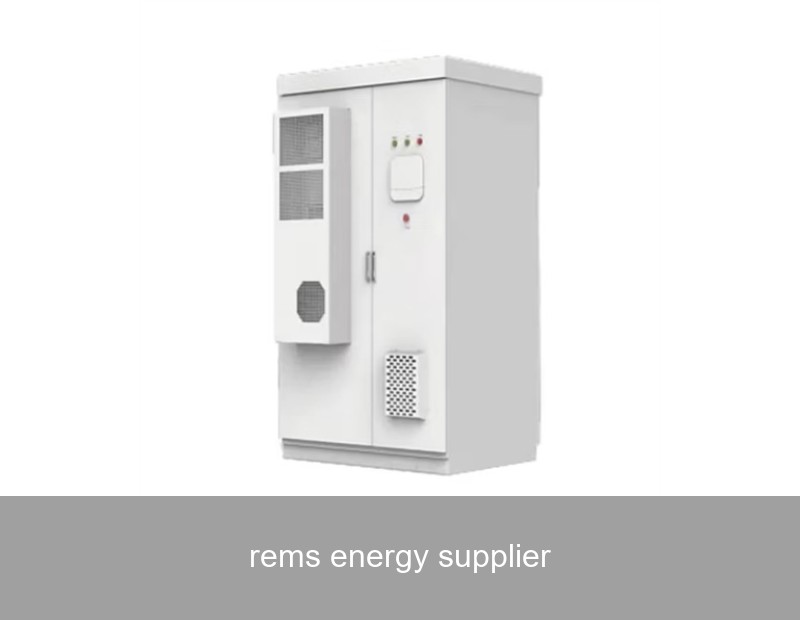
Let's start with a simple question: where does your electricity come from? For decades, the answer was straightforward—the grid. You paid your bill to a utility company, and the power flowed. But today, a powerful shift is underway. Businesses and communities are becoming their own REMS energy supplier. REMS stands for Renewable Energy Microgrid Supplier. It's not just a fancy acronym; it's a transformative approach to power that turns energy consumers into proactive managers and suppliers of their own clean electricity. This model is rapidly gaining traction across Europe and the U.S. as a solution to rising costs, grid instability, and sustainability goals.
Imagine your facility not just using power, but actively generating, storing, and intelligently distributing it. A REMS energy supplier leverages local solar panels, wind, or other renewables, coupled with advanced battery storage, to create a self-sufficient energy ecosystem. It’s about taking control. And in an era of volatile energy markets and increasing climate-related disruptions, this control is becoming a critical component of operational resilience and financial planning.
The Problem: Grid Strain and Unpredictable Costs
The traditional centralized grid model is showing its age. In the U.S., the Department of Energy reports that 70% of the nation's transmission lines are over 25 years old, leading to increased vulnerability. In Europe, the geopolitical landscape has injected unprecedented volatility into wholesale energy prices. For a business owner, this translates to two major pain points:
- Financial Uncertainty: Energy costs are a significant, and often unpredictable, operational expense. Spikes in demand charges or wholesale prices can devastate quarterly budgets.
- Operational Risk: Power outages, whether from storms, heatwaves, or grid overload, can halt production, spoil inventory, and disrupt critical services. The cost of downtime is measured in thousands per minute for many industries.
Relying solely on the grid means being exposed to these risks. The modern business needs a buffer, a plan B, and ideally, a way to turn energy from a cost center into a strategic asset.
The Solution: On-Site Generation and Intelligent Storage
This is where the REMS energy supplier model shines. It's built on a simple but powerful technological triad:
| Component | Role | Benefit |
|---|---|---|
| Renewable Generation (e.g., Solar PV) | Produces clean electricity on-site. | Reduces grid dependence, locks in low long-term energy costs, cuts carbon footprint. |
| Advanced Battery Storage (BESS) | Stores excess generation for use when needed. | Provides backup power, enables load shifting to avoid peak tariffs, stabilizes local power quality. |
| Intelligent Energy Management System (EMS) | The "brain" that optimizes energy flow. | Automates decisions for maximum savings and reliability, integrates with the grid for value-added services. |
Together, these components form a responsive microgrid. On a sunny day, your solar panels might produce more than you need. Instead of selling it back to the grid at a low rate, you store it in your batteries. Then, during the expensive evening peak, you draw from your batteries, not the grid. In a blackout, the system island itself, keeping your lights on. You've become your own primary REMS energy supplier, with the grid as a backup.

Image: A business utilizing solar and battery storage to become a REMS energy supplier. (Source: Unsplash, Photographer: American Public Power Association)
Case Study: A German Bakery's Recipe for Energy Independence
Let's look at a real-world example. Bäckerei Schmidt (name changed for privacy), a mid-sized industrial bakery in Bavaria, Germany, faced crippling energy costs. Their ovens, refrigeration, and cooling systems made them highly energy-intensive. Energy was their second-largest expense after raw materials.
The Phenomenon: Rising German electricity prices and strict baking schedules that coincided with peak grid tariffs.
The Data & Solution: In 2022, they partnered with Highjoule to transform into a REMS energy supplier. The installation included:
- A 250 kW rooftop solar array.
- A Highjoule HJ-Stack Commercial battery energy storage system (BESS) with 500 kWh capacity.
- Highjoule's proprietary SmartMicrogrid Controller for energy management.
The Outcome: The results were measurable within the first year:
- 70% reduction in grid energy consumption during peak hours.
- Annual energy cost savings of €68,000.
- Complete power backup for critical refrigeration, preventing €120,000+ in potential inventory loss during two grid outages.
- Reduction of their carbon footprint by an estimated 185 tons of CO2 annually.
The bakery's owner noted, "We no longer dread the energy bill. Our Highjoule system manages our power like a master baker manages the oven—precisely, efficiently, and reliably. We've baked resilience right into our business model."
Choosing Your Technology Partner: Beyond the Hardware
Becoming a successful REMS energy supplier isn't just about buying panels and batteries. It's about integrating complex technologies into a seamless, reliable system. The choice of partner is crucial. You need a provider with deep expertise in system design, grid interconnection, and long-term performance optimization.
Key considerations include:
- System Intelligence: Can the EMS learn and adapt to your consumption patterns and changing utility rates?
- Safety & Warranty: Are the battery systems built with proven, safe chemistry (like LiFePO4) and backed by strong performance warranties?
- Scalability: Can the system grow with your business needs?
- Service & Support: Does the provider offer 24/7 monitoring and proactive maintenance?
How Highjoule Empowers Your REMS Journey
At Highjoule, with nearly two decades of experience since 2005, we don't just sell components; we deliver turnkey REMS energy supplier capabilities. Our solutions are designed for the specific demands of commercial, industrial, and microgrid applications.
Our core offering, the Highjoule Integrated Microgrid Platform, combines our high-density, containerized or rack-mounted BESS with our award-winning energy management software. For businesses like Bäckerei Schmidt, we provide:
- End-to-End Design & Engineering: Our experts handle everything from site assessment to grid permissioning.
- The HJ-Stack Product Line: Modular battery systems known for their safety, efficiency (over 95% round-trip), and long cycle life.
- SmartMicrogrid OS: This cloud-based platform uses AI to forecast energy production and demand, automatically choosing the most economical and resilient operating mode every minute of the day.
- Performance Guarantee: We stand behind our systems with comprehensive service agreements to ensure your investment delivers promised returns for decades.
We enable you to not just survive grid challenges, but thrive by creating new value streams, such as participating in demand response programs or providing grid stability services.

Image: Intelligent energy management is the brain of a successful REMS operation. (Source: Unsplash, Photographer: ThisisEngineering)
The Future is Local and Resilient
The transition to decentralized, renewable energy is accelerating. Governments are incentivizing it, technology is making it more affordable, and the business case is becoming undeniable. The question is no longer if businesses will adopt this model, but when.
As a REMS energy supplier, you future-proof your operations against inflation, contribute meaningfully to climate goals, and build a reputation as a modern, resilient enterprise. The energy landscape is shifting from a one-way street to a dynamic network of producers and consumers—often called "prosumers." Where does your business stand in this new landscape?
What would the ability to predict and cap your energy costs for the next 15 years do for your business's strategic planning and competitiveness?
 Inquiry
 Online Chat