


Mastering Seasonal Energy Storage: The Key to a Year-Round Renewable Grid
Imagine a world where the sun's summer abundance powers our winter nights, and the fierce winds of autumn calm our spring mornings. This isn't a fantasy; it's the promise of saisonale energiespeicher—seasonal energy storage. As Europe and North America aggressively transition to renewables, a critical challenge emerges: the sun doesn't always shine, and the wind doesn't always blow, especially across seasons. This article delves into why seasonal storage is the missing puzzle piece for a truly resilient, 100% renewable future and how innovative solutions are making it a reality today.
Table of Contents
The Seasonal Mismatch: A Fundamental Renewable Energy Challenge
Let's face a simple truth: energy demand and renewable energy supply are often on different schedules. In much of Europe and the northern US, energy demand peaks in winter for heating and lighting. Yet, solar PV generation hits its lowest point during these short, cloudy days. Conversely, summer often brings a solar surplus. Daily battery storage, which can shift energy from day to night, falls short when dealing with these multi-month imbalances. This saisonale energiespeicher gap is the final frontier in decarbonizing our power grids.
Data from the International Energy Agency (IEA) underscores this. Their models suggest that for countries targeting 100% renewable penetration, the required storage discharge duration extends from hours into weeks or even months. We're no longer just talking about kilowatt-hours (kWh); we're talking about terawatt-hours (TWh) of stored energy to ensure winter reliability.
The Data Behind the Imbalance
Consider this illustrative comparison for a Northern European climate:
| Season | Solar PV Output | Average Energy Demand | Storage Requirement |
|---|---|---|---|
| Summer | High (Peak) | Moderate | Charge Cycle (Excess) |
| Winter | Low (Trough) | High (Peak) | Discharge Cycle (Deficit) |
Bridging this chasm requires technologies that are not only efficient but also capable of storing colossal amounts of energy cost-effectively over long periods with minimal losses.
The Technology Landscape for Seasonal Energy Storage
So, what technologies can perform this seasonal heavy lifting? They generally fall into a few categories, each with its own advantages.
- Power-to-Gas (P2G) / Green Hydrogen: This is a leading contender for true saisonale energiespeicher. Excess renewable electricity is used to electrolyze water, producing green hydrogen. This hydrogen can be stored in vast underground salt caverns (a proven technology for natural gas) for months and then be reconverted to electricity via fuel cells or turbines, or used directly for industry and heating.
- Pumped Hydro Storage (Seasonal Scale): While traditional pumped hydro cycles daily, some large-scale systems with massive upper reservoirs can be managed on a seasonal basis, storing water from spring snowmelt or autumn rains for use in dry summer periods for generation.
- Thermal Energy Storage (Large-Scale): Innovations involve storing heat from summer sun in large, insulated water pits or in underground geological formations. This stored heat can then be distributed via district heating networks during winter. A notable example is the project in Vojens, Denmark.
- Advanced Battery Systems (Supporting Role): While lithium-ion batteries are ideal for short-duration cycles, they are currently too expensive for seasonal storage in terms of cost per massive TWh stored. However, they play a crucial role as the "first line of defense," balancing daily and weekly variations, making the grid more efficient and creating the stable conditions needed for seasonal systems to operate economically.

Image Source: Unsplash (Representative image of renewable generation)
Case Study: The German *WindGas* Model in Practice
Theory is one thing, but real-world implementation is what truly matters. Let's look at a pioneering project in Germany that brings saisonale energiespeicher to life.
The WindGas Falkenhagen project, operated by Uniper, is a flagship Power-to-Gas facility. Launched in 2013, it uses excess wind energy from the region to produce green hydrogen via electrolysis. Here are the key data points that make it a relevant case study:
- Capacity: The electrolyzer has a capacity of 2 MW.
- Output: It produces up to 360 cubic meters of hydrogen per hour.
- Storage & Integration: Critically, the produced hydrogen is directly injected into the existing regional natural gas grid, leveraging the gas network's immense seasonal storage capacity (including underground caverns). This gas grid acts as a massive "battery" that can store energy for weeks or months.
- Impact: This project demonstrates the technical feasibility of converting renewable electricity into a storable gas and utilizing existing infrastructure for long-term, large-scale storage. It's a tangible step toward sector coupling—integrating power, gas, and heat sectors to optimize the entire energy system.
This model shows that the path to seasonal storage doesn't always require building entirely new, standalone infrastructure from scratch. It can involve smartly coupling energy sectors.
Highjoule's Integrated Approach to Grid Resilience
At Highjoule, we view the energy transition as a multi-layered challenge. While true, multi-month saisonale energiespeicher often involves large-scale hydrogen or thermal projects, a resilient grid is built on a foundation of intelligent, shorter-duration storage that maximizes the efficiency of all generation assets, including seasonal ones.
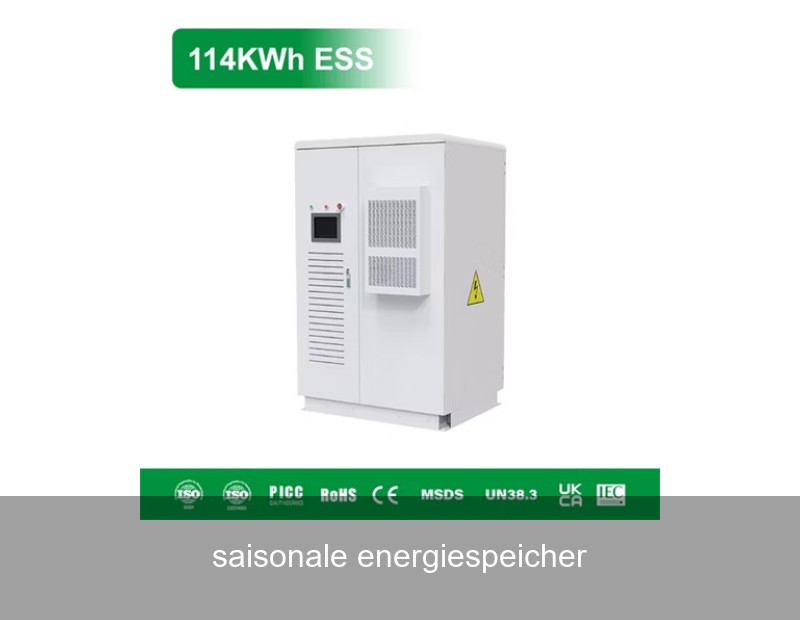
Our role is to provide the critical intelligence and storage infrastructure that makes higher penetration of renewables possible and profitable today, paving the way for seasonal solutions. Our HPS (Highjoule PowerStack) commercial & industrial battery energy storage systems (BESS) and GridMax utility-scale solutions are designed with this holistic view.
How do we contribute to the seasonal storage ecosystem?
- Optimizing Green Hydrogen Production: Our BESS can buffer intermittent wind/solar power, providing a stable, high-quality electricity supply to electrolyzers. This increases their operational hours and efficiency, lowering the levelized cost of green hydrogen—the fuel for seasonal P2G storage.
- Enhancing Microgrid Reliability: For remote communities or industrial sites, our integrated systems combine solar, wind, and storage to create self-sufficient microgrids. By managing seasonal variations through smart forecasting and dispatch algorithms, we reduce dependency on fossil fuel backups, a practical step toward seasonal resilience on a local scale.
- Providing Ancillary Grid Services: A stable grid is essential for large-scale seasonal storage facilities to connect. Our systems provide vital services like frequency regulation and voltage support, maintaining grid stability as more variable renewables and large-scale storage assets come online.

Image Source: Unsplash (Representative image of a modern battery storage system)
The Future Outlook and Economic Drivers
The economics of saisonale energiespeicher are rapidly evolving. Carbon pricing mechanisms in the EU and investment tax credits in the US are making large-scale green hydrogen projects more viable. Furthermore, as mandates for renewable content in industrial processes and heating grow, the demand for stored green energy will skyrocket.
The future grid will likely be a hybrid: a combination of daily battery storage (like Highjoule's solutions), weekly storage via flow batteries or advanced compressed air, and seasonal storage via green hydrogen and thermal systems. The synergy between these layers is key. Efficient daily storage reduces the cost burden on seasonal systems by handling the shorter cycles, allowing them to focus on what they do best: bridging the long gaps.
Your Role in the Energy Transition
The journey to a seasonally-balanced renewable grid is underway, but it requires action at every level. Whether you're a utility planner, a commercial facility manager, or a community energy coordinator, the question is no longer *if* long-duration storage will be needed, but *how* and *when* to integrate it.
Is your organization evaluating how to manage energy across seasons, and what first steps in storage and intelligence could you take today to build that resilient foundation for tomorrow?
 Inquiry
 Online Chat