


Sea Solar Panels for Sale: Unlocking the Power of Offshore Solar Energy
Have you ever looked out at the vast expanse of the ocean and wondered if we could harness the sun's power right there on the water? The concept of sea solar panels for sale is no longer a futuristic fantasy. As land becomes scarce and the push for renewable energy intensifies, floating solar, or "floatovoltaics," is making a significant splash. For businesses and communities in Europe and the U.S. with access to water bodies, this technology offers a compelling path to energy independence and sustainability. But how does it work, and what does a viable offshore solar project look like? Let's dive in.
Table of Contents
What Are Sea Solar Panels?
When we talk about sea solar panels for sale, we're referring to specialized photovoltaic (PV) systems designed to operate on marine or freshwater environments. These aren't your standard rooftop panels. They are mounted on robust, floating platforms made from high-density polyethylene (HDPE) or other corrosion-resistant materials. The systems include marine-grade cables, waterproof connectors, and are engineered to withstand harsh conditions like saltwater corrosion, waves, and high winds.
The core technology is similar to land-based solar, but the environment demands a completely different approach to installation, anchoring, and most importantly, system integration. This is where the conversation must extend beyond just the panels themselves.
Key Benefits of Offshore Solar
Why would a commercial entity or municipality consider looking for sea solar panels for sale? The advantages are substantial:
- Utilizes Unused Space: It repurposes reservoirs, quarry lakes, canals, and coastal areas without competing for valuable land, a crucial factor in densely populated regions of Europe or areas with high land costs in the U.S.
- Increased Efficiency: The natural cooling effect of water can boost panel efficiency by up to 10-15% compared to overheated land-based arrays, leading to more energy production per panel.
- Reduced Water Evaporation: For reservoirs used in water management or agriculture, the floating cover significantly reduces evaporation, conserving precious water resources.
- Alignment with Hydropower: Co-locating with existing hydropower dams creates hybrid power plants, sharing grid connections and allowing for more stable, combined output.

Image Source: Wikimedia Commons, Creative Commons
The Critical Challenge: Energy Storage
Here's the pivotal insight: purchasing sea solar panels for sale is only half of the solution. Solar energy is intermittent—the sun doesn't always shine, and at sea, weather can be unpredictable. To transform a floating solar array from a variable power source into a reliable, dispatchable asset, it must be paired with intelligent energy storage.
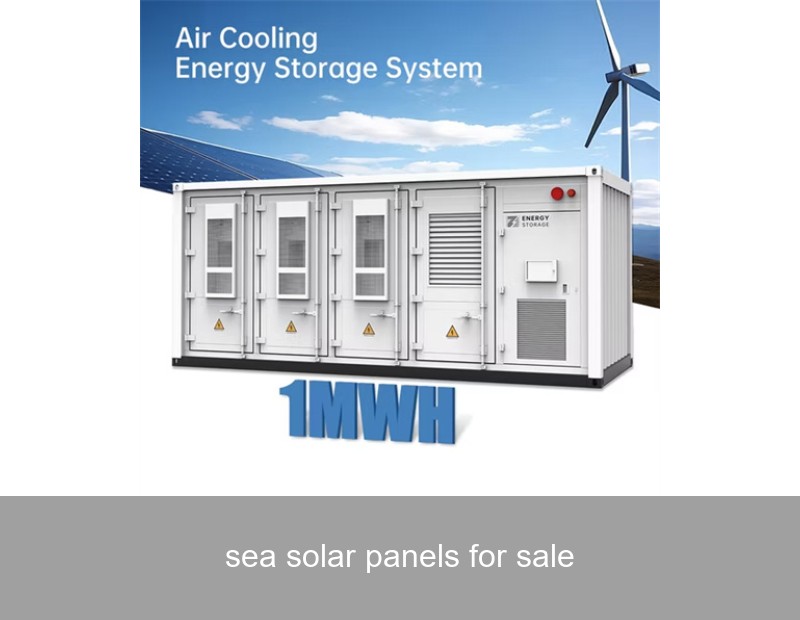
Think of it this way: the floating solar array is an excellent energy harvester. A battery energy storage system (BESS) is the essential manager. It stores excess solar power generated at midday and releases it during evening peaks, during cloudy periods, or to stabilize the local grid. Without storage, much of the potential value, especially for commercial and industrial users seeking predictable energy costs, is lost.
Why the Integration Matters
Simply bolting a standard battery to a floating solar system isn't optimal. The marine environment demands a unified approach. This is Highjoule's expertise. Since 2005, Highjoule has specialized in creating seamless, smart integrations between renewable generation and advanced storage. For an offshore project, we don't just provide components; we provide a unified power system where the storage solution is designed from the outset to handle the specific output profile, environmental conditions, and energy goals of the floating array.
A Real-World Case Study: The Oostvoornse Meer Project
Let's look at concrete data from Europe. The Oostvoornse Meer floating solar project in the Netherlands is a pioneering example. Installed on a deep freshwater lake, this 8.4 MW peak system faced challenges like strong winds and waves.
| Project Metric | Data |
|---|---|
| Location | Oostvoornse Meer lake, Netherlands |
| Peak Capacity | 8.4 MWp |
| Annual Production | Approx. 7,500 MWh |
| Households Powered | ~2,500 |
| Notable Feature | Designed for wind speeds up to 140 km/h and wave heights of 1.5m |
While this project is grid-connected, its success underscores the viability of the technology in challenging conditions. For a commercial or microgrid application, the next logical step—as Highjoule engineers would advocate—is to integrate a BESS. Adding a 3-4 MWh storage system, for instance, could allow a significant portion of that 7,500 MWh to be time-shifted, maximizing self-consumption and providing backup power, thereby increasing the project's financial resilience and energy security. You can read more about this project on the Dutch Solar Planner platform.
Highjoule's Integrated Offshore Energy Solutions
At Highjoule, we view the search for sea solar panels for sale as the starting point of a more comprehensive conversation. Our role is to deliver the complete, intelligent backbone that makes offshore solar a reliable investment.
- Highjoule HPS (Hybrid Power System): Our flagship solution for microgrids and commercial sites. The HPS seamlessly integrates floating solar input with our containerized or modular battery storage, advanced inverters, and intelligent energy management software (EMS). The EMS is the brain, deciding in milliseconds whether to store solar energy, power the facility, or sell to the grid based on weather forecasts and consumption patterns.
- Marine-Adapted BESS: Our battery systems for coastal or offshore applications feature enhanced climate control, corrosion-resistant materials, and safety systems designed for humid, saline environments.
- Full-Service Partnership: From initial site assessment and technical feasibility to system design, integration, and long-term monitoring, we provide end-to-end support. We partner with leading floating structure specialists, allowing you to focus on your energy outcome, not the complexity of component integration.

Image Source: Unsplash (Free to use)
The PAS Framework in Action: A Highjoule Client Scenario
Problem: A coastal industrial facility in Southern California wants to reduce its high grid demand charges and carbon footprint but has no available land for a solar farm.
Agitation: Their energy costs are volatile, and grid power is occasionally unreliable. They find a vendor for sea solar panels for sale to install on an adjacent retention pond but realize the solar output doesn't match their evening operational load.
Solution: Highjoule steps in with a turnkey HPS. We design a system that pairs the 2 MW floating solar array with a 1.5 MWh Highjoule BESS. The system is programmed to charge the batteries during the sunny afternoon and discharge during the 4 PM-9 PM peak rate period, slashing demand charges. The EMS also provides seamless backup power during brief grid outages. The result is a predictable, lower-cost, and resilient energy supply from a previously untapped resource.
Is Offshore Solar Right for You?
The journey to viable offshore solar is more than sourcing sea solar panels for sale. It's about architecting a resilient, water-based power plant. The key questions are about your specific context: Do you have a suitable, calm water body (reservoir, lake, quarry, protected coastal area)? What are your primary energy goals—cost reduction, sustainability targets, or grid independence? How can storage be sized to maximize the economic return of your solar investment?
For further reading on the global potential of floating PV, see this report from the World Bank.
What's the first step your organization would take to assess the potential of the water around you for energy generation?
 Inquiry
 Online Chat