


Finding a Safe Company Supplier for Your Energy Storage System: A Critical Guide
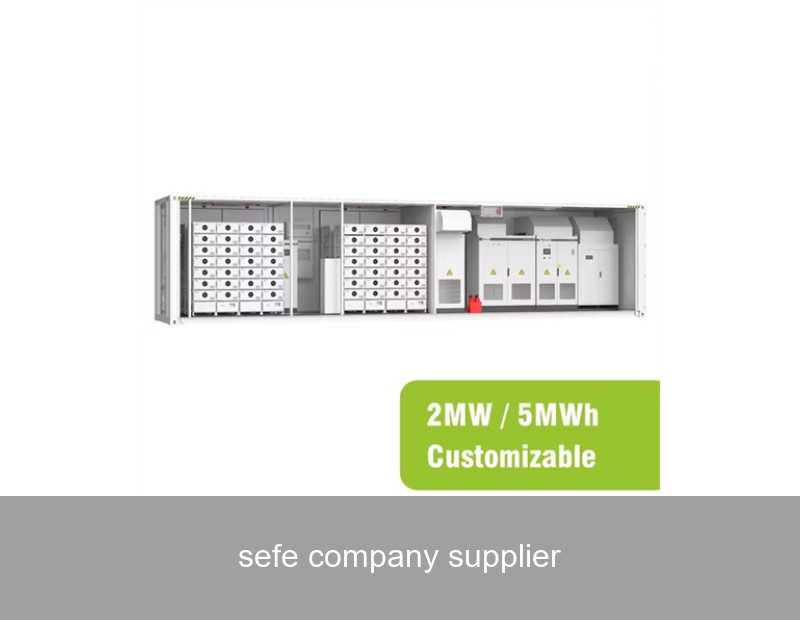
In today's rapidly evolving energy landscape, businesses and homeowners are increasingly turning to battery energy storage systems (BESS) to secure power, reduce costs, and support sustainability. However, the decision goes beyond just kilowatt-hours and price tags. The paramount concern is safety. Choosing a safe company supplier for your energy storage solution isn't just a preference; it's a fundamental requirement for protecting your investment, your property, and the people around it. This article will guide you through the essential criteria for identifying a truly safe and reliable partner in the energy storage market, blending critical safety knowledge with practical insights for the European and U.S. markets.
Table of Contents
The Safety Imperative: More Than Just a Buzzword
Let's be honest: when we hear about battery incidents in the news, it creates a wave of concern. This phenomenon isn't just fear; it's a legitimate reaction to potential risk. The data underscores this. According to a DNV report, while serious incidents are statistically rare, the root cause often traces back to deficiencies in product design, quality control, or installation practices—areas directly under a supplier's control.
This is where the concept of a safe company supplier transforms from a marketing term into a tangible set of engineering principles, certifications, and corporate philosophies. A safe supplier doesn't just add safety features; they integrate safety as the core DNA of their product lifecycle, from initial research and development (R&D) to end-of-life recycling.

Credit: Professional inspection is a hallmark of a safe energy storage system. (Image from Unsplash)
The Three Pillars of a Safe Company Supplier
Identifying a truly safe partner requires looking beyond brochures. Focus on these three non-negotiable pillars:
1. Certified Product Design and Manufacturing
A safe product starts with internationally recognized certifications. These are not mere checkboxes but rigorous third-party validations. For the U.S. market, UL 9540 (the standard for Energy Storage Systems and Equipment) is critical. In Europe, IEC 62619 for safety of industrial batteries and UN 38.3 for transportation safety are essential. A reputable safe company supplier will have these certifications readily available for audit and will design their systems around these standards from day one.
- Cell Selection: Do they use premium, name-brand LiFePO4 (LFP) cells, known for their superior thermal and chemical stability compared to older chemistries?
- System Architecture: Is safety built into the hardware with proper fusing, circuit breakers, and physical segregation?
- Quality Control: What in-house and third-party testing protocols are in place? Look for suppliers who test every module, not just a sample batch.
2. Proactive and Intelligent Software Protection
Hardware is the body, but software is the central nervous system for safety. A top-tier system employs a multi-layered Battery Management System (BMS) that monitors voltage, current, and temperature at the cell, module, and rack level. The true differentiator is predictive analytics. Can the software detect subtle anomalies—a slight temperature gradient, a minor voltage drift—and take corrective action or issue alerts long before a problem escalates? This software intelligence is what separates adequate safety from exceptional safety.
3. Robust Technical Support and Training
Safety extends beyond the factory gate. A safe company supplier invests deeply in the competency of its installer network and offers clear, accessible support for end-users. This includes:
| Support Aspect | Why It Matters for Safety |
|---|---|
| Comprehensive Installer Training | Ensures proper installation, commissioning, and grounding—critical factors in preventing faults. |
| 24/7 System Monitoring & Alerts | Allows for rapid remote response to any operational irregularities. |
| Clear O&M Manuals and Protocols | Empowers site managers to operate the system within its safe design parameters. |
Case Study: Safety as a Business Continuity Strategy for a European Retail Chain
Consider the real-world example of a major German retail chain with over 150 stores. Their challenge was twofold: mitigate rising energy costs and ensure refrigerated goods were never compromised by grid outages. A simple, low-cost storage system was not an option; they needed a safe company supplier that could deliver resilience without introducing new risks.
They partnered with Highjoule to deploy integrated solar-plus-storage systems across 20 pilot locations. Highjoule's H-series commercial storage systems were selected specifically for their UL 9540 and IEC 62619 certifications and their patented multi-stage thermal management system. The intelligent energy management software was configured to prioritize backup power for refrigeration circuits.
The Data-Driven Result: During a localized grid failure in Munich in 2023, one store's 100 kWh Highjoule system seamlessly took over critical loads for 5 hours. The internal BMS logged and managed a simultaneous spike in cooling demand, preventing overload while maintaining safe temperature bands for all battery cells. The store avoided an estimated €85,000 in potential spoiled inventory loss. This case demonstrates how choosing a supplier with engineered safety directly translates to financial risk mitigation and business continuity.

Credit: A well-installed commercial BESS in a warehouse environment. (Image from Unsplash)
The Highjoule Approach: Engineering Safety from the Cell Up
At Highjoule, our philosophy is that safety is the foundation of performance and reliability. As a global provider since 2005, we build our commercial, industrial, and residential storage solutions with this principle at the core.
- Inherently Safe Chemistry: We utilize LiFePO4 (LFP) chemistry exclusively across our product lines for its excellent thermal runaway characteristics.
- Defense-in-Depth Architecture: Our systems feature cell-level fusing, module-level disconnect, and rack-level isolation. Our proprietary Sentinel BMS™ operates with redundant monitoring paths for critical parameters.
- Global Compliance: Highjoule systems are designed to meet and exceed key international standards (UL, IEC, CE) for our markets in Europe and North America, providing our customers with verified peace of mind.
- Full-Service Partnership: We provide more than hardware. Our services include detailed site feasibility studies, design support, certified installer training, and remote monitoring via our Highjoule Energy Cloud platform, creating a true safety ecosystem around every installation.
Key Questions to Ask Your Potential Supplier
Empower your evaluation with these direct questions:
- "Can you provide the full certification reports (UL 9540, IEC 62619) for the exact model you are proposing?"
- "What specific design features in your BMS actively prevent thermal runaway propagation between modules?"
- "What is your process for vetting and training installers, and can you share your installation guidelines?"
- "What is your protocol for handling and investigating a safety alert generated by your system?"
- "Can you share a reference case where your system's safety features were actively challenged or demonstrated?"
A truly safe company supplier will welcome these questions and provide detailed, transparent answers. They understand that this dialogue is the first step in building a resilient energy future together.
What specific safety concern about energy storage is most pressing for your organization's upcoming project?
 Inquiry
 Online Chat